


Foamy Urine Causes: When Is It Kidney Damage vs. Harmless Bubbles?

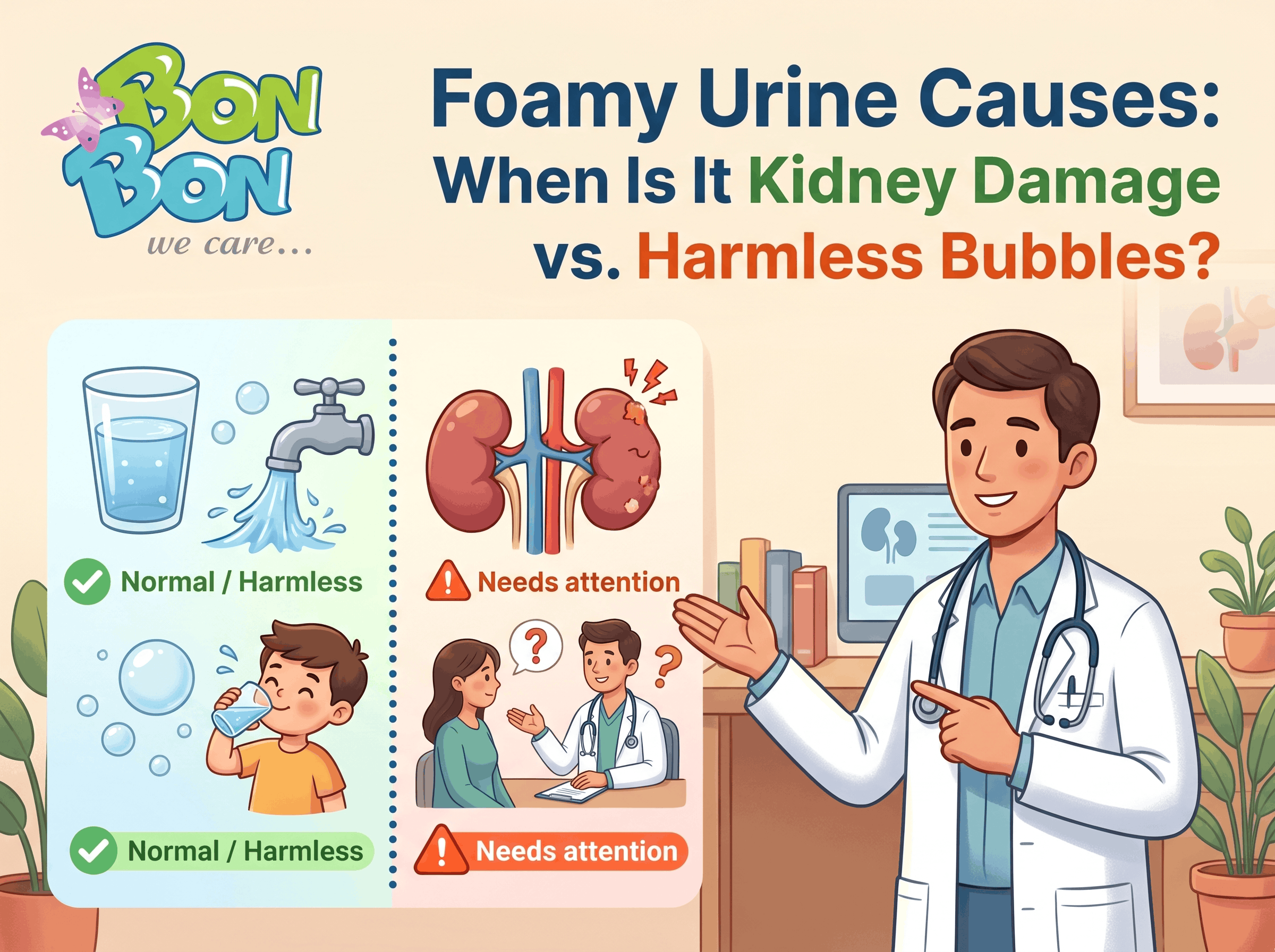
Occasional bubbles in your pee are almost always harmless and caused by a rapid, forceful urine stream, mild dehydration, or toilet bowl cleaning detergent residue. However, if your urine consistently forms a thick, persistent white froth (resembling beer foam or whipped egg whites) that requires multiple flushes to clear, it indicates proteinuria (excess protein leaking into urine). This is often an early warning sign of diabetic nephropathy, high blood pressure, or chronic kidney disease (CKD), requiring a routine spot urine test (Urine Albumin-to-Creatinine Ratio).
Foamy Urine vs. Normal Bubbles: The 5-Minute “Toilet Test”
Seeing bubbles in the toilet bowl frequently triggers health anxiety. Fortunately, there is a clear physical difference between harmless mechanical bubbles and true clinical protein foam. Use this diagnostic comparison table:
| Diagnostic Feature | Normal “Bubbly” Urine (Harmless) | True “Foamy” Urine (Proteinuria) |
|---|---|---|
| Visual Appearance | Clear, single-layer large transparent bubbles with visible liquid beneath | Thick, white, opaque froth resembling beer foam or shaving lather |
| Dissipation Time | Pops and vanishes completely within 30 to 60 seconds | Persists for minutes; remains floating long after voiding |
| Flushability | Clears cleanly with a single toilet flush | Requires 2 or more flushes; clings to porcelain sides |
| Primary Cause | Urinary stream velocity, concentrated urine from mild dehydration | Albumin protein spillage due to increased glomerular filter permeability |
| Action Needed | Harmless — Drink 1–2 glasses of water | Doctor Evaluation — Order a Urine Routine & Microscopy (Urine R/M) test |
4 Harmless & Temporary Causes of Foamy Urine
Before assuming kidney distress, rule out these four common benign explanations:
1. Rapid or Forceful Urine Stream
When you hold your pee for hours or wake up with a full bladder, the velocity of urine striking toilet water traps ambient air, creating temporary froth. This mechanical foam pops almost immediately.
2. Dehydration & Concentrated Urine
When fluid intake drops—especially during Indian summers or religious fasting—urine becomes dark amber and concentrated with solutes. Concentrated urine has higher natural surface tension, producing more bubbles and often a sharp ammonia smell in urine. Read our guide on dark yellow and amber urine causes & remedies to spot dehydration early.
3. Toilet Bowl Cleaning Chemicals
Surfactants and bleach tablets in toilet cisterns react instantly with urine minerals to create soapy, bubbling foam. To test: urinate in a clean disposable cup; if no foam forms, your toilet cleaner is the culprit.
4. Intense Exercise or High-Protein Meals
Strenuous gym sessions, marathons, fever, or an unusually heavy whey protein/meat meal can cause transient, harmless protein spillage (physiological proteinuria) that resolves within 24 hours.
5 Serious Medical Causes of Persistent Foamy Urine
If your pee remains foamy day after day across morning and evening voids, medical evaluation is required. The primary clinical conditions include:
1. Proteinuria (Glomerular Filter Damage)
The kidneys contain millions of microscopic filtering units called nephrons. Within each nephron, a delicate mesh called the glomerulus cleans metabolic waste while holding back vital blood cells and albumin. When these filters are injured or inflamed, albumin spills into the urinary tract. Albumin acts as a natural surfactant—lowering liquid surface tension and causing persistent, thick foam.
2. Diabetes & Diabetic Nephropathy (Cloudy & Foamy Urine)
Chronic high blood glucose overworks kidney filtration units, causing microscopic scarring (glomerulosclerosis). In India, diabetic nephropathy is the leading cause of early protein leakage. Patients often notice bubbly urine years before experiencing physical fatigue. Furthermore, high urine sugar (glucosuria) encourages bacterial and fungal growth, causing cloudy urine with diabetes alongside persistent foam.
3. Hypertension (High Blood Pressure)
Uncontrolled blood pressure constricts and hardens renal blood vessels, reducing blood supply and damaging filter membranes. This allows protein to slip through into the urine, which manifests as stubborn foam in the toilet bowl.
4. Retrograde Ejaculation (In Men)
In men with nerve damage (frequently from diabetes or prostate surgery), the bladder neck sphincter fails to shut during climax. Semen is pushed backwards into the bladder instead of exiting the urethra. When passing urine shortly after intercourse, the semen mixes with urine, causing a cloudy, foamy appearance.
5. Chronic Kidney Disease (CKD), Autoimmune Disorders & Preeclampsia
Autoimmune conditions like Lupus (Systemic Lupus Erythematosus) or primary kidney disorders like Glomerulonephritis and Amyloidosis cause progressive kidney tissue inflammation, leading to heavy protein leakage (Nephrotic Syndrome).
In severe kidney filtering disorders, heavy lipiduria and chyluria can impart an opalescent milky sheen; learn more in our clinical guide to what causes milky white urine. This lipid and lymph leakage often accompanies nephrotic-range protein loss and warrants urgent nephrology review.
During pregnancy, sudden foamy urine accompanied by elevated blood pressure is a critical diagnostic indicator of preeclampsia. Pregnant women should review our comprehensive trimester guide on pregnancy urine color changes to distinguish benign prenatal vitamin hues from kidney stress.
Early kidney decline impairs the body’s natural anti-diuretic hormone mechanism, forcing the kidneys to produce dilute urine throughout the night. Review our clinical breakdown of frequent night urination and nocturnal polyuria to assess kidney-related fluid shifts.
If foamy urine is accompanied by any of the following systemic symptoms, consult a nephrologist or physician promptly:
- Swelling (Edema): Puffy eyelids in the morning, or pitting swelling in feet, ankles, and hands.
- Unexplained Fatigue & Weakness: Feeling exhausted despite sleeping well.
- Frequent Nighttime Urination (Nocturia): Waking up 3 or more times every night to pee.
- Loss of Appetite & Nausea: A metallic taste in the mouth or persistent morning queasiness.
- Shortness of Breath: Fluid buildup around lungs due to low blood albumin.
Kidney Failure Urine Color Chart: How Urine Changes Across CKD Stages
Many patients assume kidney failure always causes dark or bloody urine. In reality, Chronic Kidney Disease (CKD) alters urine color, clarity, and bubble formation in distinct phases as filtration rates decline. Use this clinical kidney failure urine color chart to understand how pee appearance shifts across stages 1 through 5:
| CKD Stage & eGFR Range | Urine Color & Clarity | Foam & Protein Characteristics | Daily Volume & Frequency | Clinical Next Step |
|---|---|---|---|---|
| Stage 1: Kidney Damage with Normal GFR (eGFR ≥ 90 mL/min) |
Normal pale straw to amber yellow. Often appears completely normal or clear transparent. | Occasional light bubbles; microscopic microalbuminuria (30–300 mg/g) may cause subtle morning froth. | Normal output (1,200–2,000 mL/day). No major changes in voiding patterns. | Routine Monitoring — Control BP and blood glucose; check annual UACR. |
| Stage 2: Mild Kidney Function Loss (eGFR 60–89 mL/min) |
Concentrated amber in mornings; darkens quickly with mild fluid restriction. | Fine white foam that lingers for 1–2 minutes before bursting; macroalbuminuria begins. | Mild nocturia (waking up 1 time per night to urinate). | Lifestyle Care — Reduce dietary sodium, manage diabetes, review nephrotoxic medications. |
| Stage 3: Moderate Kidney Damage (eGFR 30–59 mL/min: 3A & 3B) |
Hazy, turbid, or deep brownish-yellow. May turn abnormally pale as concentration ability diminishes. | Thick, stubborn, multi-layered white lather (resembling beer froth) that takes 2–3 flushes to clear. | Moderate nocturia (waking 2–4 times per night); kidneys lose day-night volume regulation. | Nephrologist Consult — Prescription ACE inhibitors/ARBs, dietary protein adjustment, KFT testing. |
| Stage 4: Severe Kidney Function Loss (eGFR 15–29 mL/min) |
Pale and watery (inability to concentrate waste) OR dark tea-colored urine from uremic toxins. | Dense, persistent foam with cloudy precipitates; heavy nephrotic-range proteinuria. | Oliguria begins (total daily urine drops under 800 mL); night incontinence or severe urgency common. | Urgent Specialist Care — Dialysis preparation, strict fluid and electrolyte restriction. |
| Stage 5: End-Stage Renal Disease (ESRD) (eGFR < 15 mL/min) |
Dark brown, cola-colored, smoky, or minimal to zero urine passed. | Heavy soapy lather if any urine is produced, indicating extensive filtration breakdown. | Severe oliguria (<400 mL/day) progressing to anuria (<100 mL/day); severe fluid retention. | Immediate Intervention — Hemodialysis, peritoneal dialysis, or kidney transplantation. |
How Doctors in India Test & Diagnose Foamy Urine
Diagnosing the exact cause of foamy urine is quick, affordable, and painless. In India, leading diagnostic centers (such as Dr. Lal PathLabs, SRL Diagnostics, and Metropolis Healthcare) perform the following standard clinical workup:
| Diagnostic Test | What It Checks | Normal Range | Significance of Abnormal Result |
|---|---|---|---|
| Urine Routine & Microscopy (Urine R/M) | Dipstick check for protein, pus cells, sugar, pH, and red blood cells | Negative / Nil Protein | Trace to 3+ indicates active protein spillage, infection, or microscopic hematuria. |
| Urine Albumin-to-Creatinine Ratio (UACR) | Spot first-morning urine measuring micro-albumin against creatinine | < 30 mg/g | 30–300 mg/g = Microalbuminuria (early renal stress); >300 mg/g = Clinical macroalbuminuria. |
| Kidney Function Test (KFT / RFT) | Serum Creatinine, Blood Urea Nitrogen (BUN), and calculated eGFR | Creatinine: 0.7–1.3 mg/dL eGFR: > 90 mL/min |
Elevated creatinine or eGFR below 60 confirms reduced renal clearance capacity. |
| Ultrasound KUB (Kidney, Ureter, Bladder) | Visual sonography measuring kidney dimensions, cortical thickness, and stones | Normal kidney length (~10–12 cm) | Shrunken kidneys indicate chronic parenchymal disease; enlarged kidneys suggest diabetic swelling. |
The Link Between Kidney Health, Nocturia & Incontinence
When kidneys struggle to concentrate urine due to protein spillage or diabetic nephropathy, the body compensates by producing larger volumes of dilute urine during the night. This condition—known as nocturia—forces elderly individuals and diabetic patients to wake up 3 to 5 times every night.
For seniors dealing with arthritis, sleep disruption, or diabetic nerve weakness (neuropathy), rushing to the bathroom multiple times in the dark significantly increases slip-and-fall risks and often leads to overflow or urge incontinence. If you are confused by medical terms or doctor prescriptions, read our clinical overview on incontinence meaning and clinical types.
Overnight Protection & Dignity: BonBon Factory-Direct Adult Diaper Pants
Managing nighttime urination from diabetes, kidney health, or mobility challenges? BonBon India manufactures clinical-grade, high-absorbency adult pull-up diaper pants designed specifically for Indian seniors and caregivers.
Equipped with breathable cloth-like backsheet, wetness indicator, and dermatologically tested anti-rash protection for bedridden care and nighttime peace of mind.
How to Prevent & Manage Foamy Urine
While definitive medical treatment depends on your laboratory findings, following these foundational kidney-protection habits preserves renal function and prevents worsening proteinuria:
- Maintain Balanced Hydration: Drink 2 to 2.5 liters of clean water daily unless your nephrologist has placed you on strict fluid restriction due to advanced heart or kidney disease.
- Tight Blood Sugar & Blood Pressure Control: Target an HbA1c below 7% and keep blood pressure around 120/80 mmHg to stop microscopic glomerular capillary damage.
- Reduce Dietary Salt: Limit sodium intake to under 2,000 mg/day (less than one level teaspoon of salt) to decrease intraglomerular pressure.
- Avoid Overuse of Painkillers (NSAIDs): Frequent consumption of non-steroidal pain medicines (like ibuprofen, diclofenac, or naproxen) is a leading hidden cause of drug-induced acute kidney injury in India.
Kidney-Healthy Dietary Habits: What to Eat & What to Limit
What you eat directly impacts renal filtration workload. If you are experiencing foamy urine or recovering from urinary tract irritation, adopt these evidence-backed dietary adjustments:
- Kidney-Healthy Foods to Prioritize: Include antioxidant-rich berries, bottle gourd (lauki), ridge gourd (torai), fresh cucumber, steamed cauliflower, and lean plant proteins like well-cooked lentils and moong dal. Review our nutritional guide on foods to eat and avoid for urinary tract health.
- Foods to Moderate or Avoid: Restrict heavily salted snacks, processed meats, ultra-spicy pickles, artificial sweeteners, carbonated sodas, and excess dairy if phosphorus levels are elevated.
If your urine also appears unusually dark or amber despite adequate hydration, review our guide on dark yellow and amber urine causes and remedies — these shades can be an early sign of concentrated urine, dehydration, or hepatic stress. Furthermore, concentrated or stagnant urine often produces a noticeable strong urine smell that signals an underlying metabolic imbalance.
Frequently Asked Questions (Foamy Urine FAQs)
No. In more than 60% of occasional cases, foamy urine is caused by harmless factors such as a fast urine stream striking toilet water, mild dehydration, or leftover toilet disinfectant. It only indicates potential kidney damage if the foam is persistent, thick, and lasts across several days.
Bubbly urine consists of large, clear, single-layer bubbles that burst within 30 to 60 seconds and clear with one flush. Foamy urine consists of thick, dense, multi-layered white froth (like beer foam) that floats for minutes and often requires multiple flushes to wash away.
During 6 to 8 hours of sleep, fluid intake ceases, causing urine to become naturally concentrated. Furthermore, your bladder is fuller, resulting in a stronger, faster stream that traps air. If the foam disappears after drinking water during the day, it is harmless.
If the foam is caused by dehydration or concentrated urine, drinking 2 to 3 glasses of water will clear it within hours. However, if the foam is caused by protein leakage (proteinuria) from kidney disease or diabetes, drinking water will dilute the urine but will not cure the underlying filter defect.
Yes. Chronic high blood sugar damages the delicate filters of the kidneys, causing diabetic nephropathy. This allows albumin protein to leak into the urine, which lowers surface tension and creates thick, persistent foam. Furthermore, excess sugar in urine can encourage mild bacterial growth, causing a cloudy or hazy appearance.
In early kidney failure (Stages 1–2), urine may appear normal pale yellow or concentrated amber in mornings. In moderate kidney damage (Stage 3), urine turns hazy, turbid, or persistent frothy white. In advanced kidney failure (Stages 4–5), urine can become very pale and watery due to loss of concentrating power, or dark brown/tea-colored from uremic toxins and blood leakage, often accompanied by severe oliguria (sharply reduced urine volume).
Prioritize kidney-friendly foods with high water and fiber content, such as bottle gourd, cucumbers, apples, berries, and moderate portions of plant-based protein. Avoid high-sodium foods (pickles, papads, processed snacks), excessive animal red meat, high-potassium foods if advised by your doctor, and artificial carbonated drinks.
Explore Our Complete Urinary Health & Incontinence Series
- Urine Color Chart: What Your Pee Color Means (Full Guide) — The master pillar guide to every urine shade.
- Cloudy and Turbid Urine Causes — Pus cells, infections, and treatment options.
- Milky White Urine Causes & Chyluria — Lipiduria, chyle leakage, and phosphate precipitation.
- Pregnancy Urine Color Guide — Trimester changes, prenatal vitamins, and preeclampsia warnings.
- Foods to Avoid with Bladder & Urine Infections — Dietary habits for kidney and bladder wellness.
- Dark Yellow & Amber Urine Causes — Dehydration, liver signals, and remedies.
- Clear Urine Causes & Overhydration — When transparent pee signals kidney fluid regulation issues.
- Brown & Tea-Colored Urine Causes — Liver markers, myoglobinuria, and kidney injury.
- Smelly Urine Causes — Ammonia, fishy, or sweet odors and how to treat them.
- Blood in Urine (Hematuria) Guide — Causes, kidney stones, and when to seek urgent care.
- Adult Diaper Size Chart — Finding the right leak-proof fit for seniors.
- Best Adult Diapers for Night Use — Overnight leak protection guide for uninterrupted rest.
- Tape-Style vs. Pull-Up Adult Diapers — Clinical comparison for bedridden vs. active seniors.
- Adult Diaper Pants (Factory Direct) — High-absorbency pull-up underwear for active seniors and nighttime care.
