


How to Put on Adult Diapers for Elderly Parents

How to Put on Adult Diapers for Elderly Parents
Caring for aging parents often involves navigating sensitive territory, and assisting with adult diapers can feel particularly challenging. The good news is that with the right approach, empathy, and practical techniques, you can transform this daily task into a dignified, comfortable experience for everyone involved. This comprehensive guide will walk you through everything you need to know about helping elderly parents with adult diapers while preserving their dignity and your relationship.
Creating a Respectful Foundation Before You Begin
The emotional aspect of incontinence care matters just as much as the physical process. Before the first diaper change, have an open, compassionate conversation with your parent. Acknowledge that this transition can feel uncomfortable, but reassure them that millions of people use incontinence products successfully. Frame adult diapers as practical solutions that enable independence rather than symbols of lost dignity.
Establish a private, warm space for changes. Ensure the room has adequate heating, especially during colder months, as seniors are more sensitive to temperature changes. Gather all supplies beforehand including adult diapers, disposable gloves, cleansing wipes, barrier cream, and a disposal bag. Having everything within reach prevents awkward interruptions and demonstrates your preparedness.
Language matters profoundly in these moments. Avoid infantilizing terms like “changing” in favor of “assisting with” or “helping you freshen up.” Ask permission before touching your parent and explain each step as you proceed. This communication reinforces their agency and involvement in their own care, which is psychologically essential for maintaining self-esteem.
Step-by-Step Guide for Standing or Ambulatory Seniors
For elderly parents who can stand with or without support, pant-style adult diapers offer the easiest solution. These pull-on products closely resemble regular underwear and promote independence, allowing many seniors to manage changes themselves with minimal assistance.
Begin by having your parent stand securely, using a walker, countertop, or your support as needed. Gently lower their existing clothing to mid-thigh level. If removing a used diaper, carefully tear the side seams of pant-style products or open tape-style fasteners. Roll the used diaper inward to contain moisture and odors, then dispose of it in a sealed bag.
Before putting on the fresh diaper, perform gentle cleansing with specialized adult incontinence wipes or warm water and mild soap. Pat the skin completely dry, paying special attention to skin folds where moisture can linger. Apply barrier cream to prevent irritation and breakdown, especially if your parent experiences frequent incontinence episodes.
Open the new pant-style diaper and hold it at knee height, guiding one leg through at a time. Ensure the product is oriented correctly—the wider panel typically goes toward the back. Pull the diaper up gradually, checking that it sits comfortably at waist level without bunching. The leg elastics should rest snugly against the thighs without creating red marks or discomfort. Run your finger along the leg edges to ensure the leak guards stand upright, which is critical for preventing leaks.
Proper Techniques for Bedridden or Mobility-Limited Parents
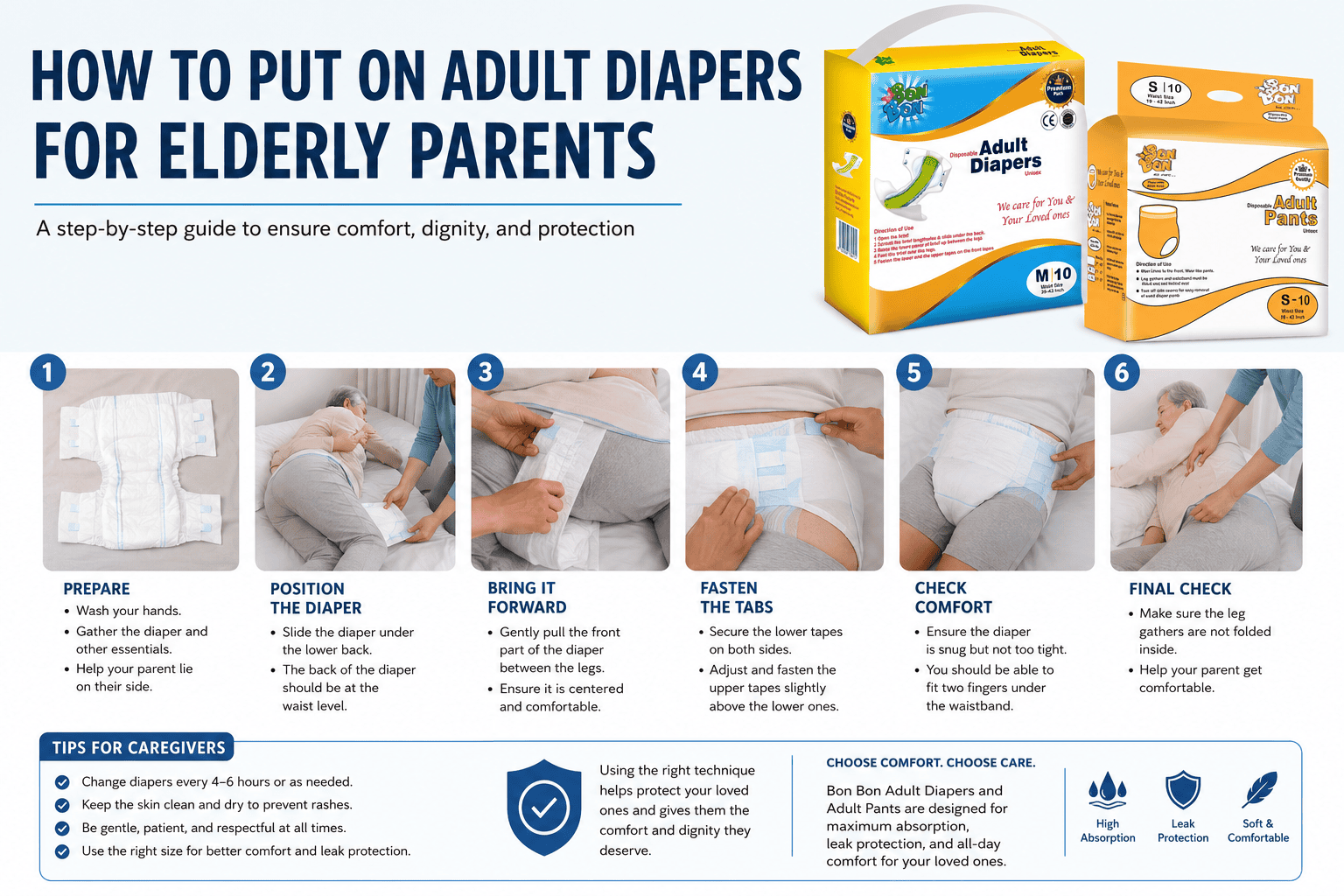
When assisting a parent with limited mobility or who is bedridden, tape-style adult diapers typically work best due to their easier application angle. Position your parent on their back on a comfortable bed or changing surface covered with a waterproof pad for protection.
Gently roll your parent onto their side, supporting their shoulder and hip. Position the opened diaper behind them with the tape tabs at the back, aligned roughly with the natural waistline. The center panel should run along the spine. Roll your parent onto their back so they’re now lying on the diaper.
Bring the front panel up between the legs, smoothing it over the lower abdomen. The diaper should cover from the front waistline to the back waistline. If your parent is male, ensure proper positioning for their anatomy to prevent leaks. Unfasten the lower tape tabs first and attach them diagonally upward toward the waist. Then secure the upper tabs, aiming slightly downward. This creates optimal fit and leak protection.
Check the fit by sliding two fingers between the diaper and your parent’s waist—this indicates comfortable snugness without restriction. Inspect the leg openings and gently adjust the leak guards to stand upright. A properly fitted adult diaper should feel secure without gaps or excessive tightness.
Throughout this process, maintain conversation about neutral topics or ask your parent about their comfort level. This distraction can ease awkwardness while keeping you informed about any discomfort.
Choosing the Right Product for Your Parent’s Needs
Not all adult diapers are created equal, and selecting appropriate products dramatically impacts comfort, skin health, and leak protection. BonBon Products offers premium adult diapers specifically engineered for the Indian market, with high absorbency and skin-friendly materials that address the climate challenges many caregivers face.
Assess your parent’s incontinence level honestly. Light incontinence requires different absorbency than moderate or heavy incontinence. Nighttime products typically need greater capacity than daytime options. BonBon Products provides both pant-style and tape-style varieties in multiple absorbency levels, allowing you to match the product precisely to your parent’s needs.
Consider mobility and independence when selecting styles. Pant-style diapers empower more independent seniors to manage their own care with minimal assistance, preserving dignity and encouraging self-sufficiency. Tape-style products offer greater adjustability and easier application for caregivers assisting bedridden individuals.
Pay attention to sizing charts rather than assuming standard clothing sizes translate directly. Measure your parent’s waist and hips, then consult manufacturer sizing guides. An improperly sized diaper—whether too large or too small—will leak regardless of quality, causing frustration and potential skin issues.
Maintaining Skin Health and Preventing Complications
Regular diaper changes form the foundation of skin health, but timing matters. Adults experiencing incontinence should be checked every 2-4 hours during the day and at least once during overnight hours for those with heavy incontinence. Extended contact with moisture causes skin breakdown, infections, and painful rashes.
Beyond frequency, proper cleansing techniques protect delicate aging skin. Use gentle, pH-balanced products specifically formulated for incontinence care rather than regular baby wipes, which may contain irritating ingredients. Always cleanse from front to back to prevent bacterial contamination, and ensure thorough drying before applying a fresh diaper.
Barrier creams containing zinc oxide or dimethicone create protective layers between skin and moisture. Apply these products liberally to high-risk areas including the buttocks, inner thighs, and lower back. For seniors with existing skin breakdown, consult healthcare providers about advanced treatment creams and healing protocols.
Encourage physical activity within your parent’s capability range, as movement promotes circulation and reduces pressure point risks. According to guidance from health organizations like the NHS exercise guidance, even gentle movement supports overall health and can improve bowel and bladder function over time.
Managing the Emotional Journey for Caregiver and Parent
The emotional weight of intimate caregiving affects both parties profoundly. Many adult children struggle with role reversal, while elderly parents grapple with perceived loss of independence and dignity. Acknowledging these feelings openly rather than suppressing them creates healthier dynamics.
Establish boundaries that work for your family. Some seniors prefer same-gender assistance for intimate care when possible. If you’re not the appropriate person to provide hands-on help, professional caregivers can step in while you manage other aspects of care coordination. There’s no shame in recognizing your limitations.
Celebrate small victories and maintain focus on quality of life rather than dwelling on challenges. Adult diapers enable your parent to participate in family gatherings, outings, and daily activities they might otherwise avoid due to incontinence anxiety. This perspective shift transforms the products from symbols of decline into tools of empowerment.
Connect with caregiver support groups, either locally or online, where you can share experiences and strategies with others facing similar situations. The emotional support and practical advice from those who understand your journey can be invaluable during difficult moments.
Conclusion
Assisting elderly parents with adult diapers need not be a source of embarrassment or strain. By approaching this aspect of care with preparation, respect, and compassionate communication, you can maintain your parent’s dignity while ensuring their comfort and health. The right techniques, appropriate products like those from BonBon Products, and emotional awareness transform potentially awkward moments into expressions of love and practical support. For a comprehensive overview of available options, check out our guide to best diapers for adults. Remember that millions of families navigate this journey successfully, and with patience and practice, you’ll develop a routine that works for your unique situation. Your willingness to provide this intimate care demonstrates profound respect and affection for the parents who once cared for you. You can also explore different adult diaper brands to find the perfect fit.
