


Why Incontinence Gets Worse at Night

Why Incontinence Gets Worse at Night
For many individuals experiencing urinary incontinence, nighttime presents unique challenges. What may be manageable during the day can suddenly become a significant concern once the sun sets. If you or a loved one have noticed that incontinence symptoms worsen at night, you’re not alone—and there are medical explanations for this phenomenon.
Understanding why incontinence intensifies during nighttime hours is the first step toward finding effective solutions that can restore confidence and improve sleep quality for both individuals and their caregivers.
The Medical Reasons Behind Nighttime Incontinence
Several physiological and medical factors contribute to worsening incontinence at night. Your body undergoes specific changes during sleep that can exacerbate urinary control issues.
Nocturia and Nocturnal Polyuria
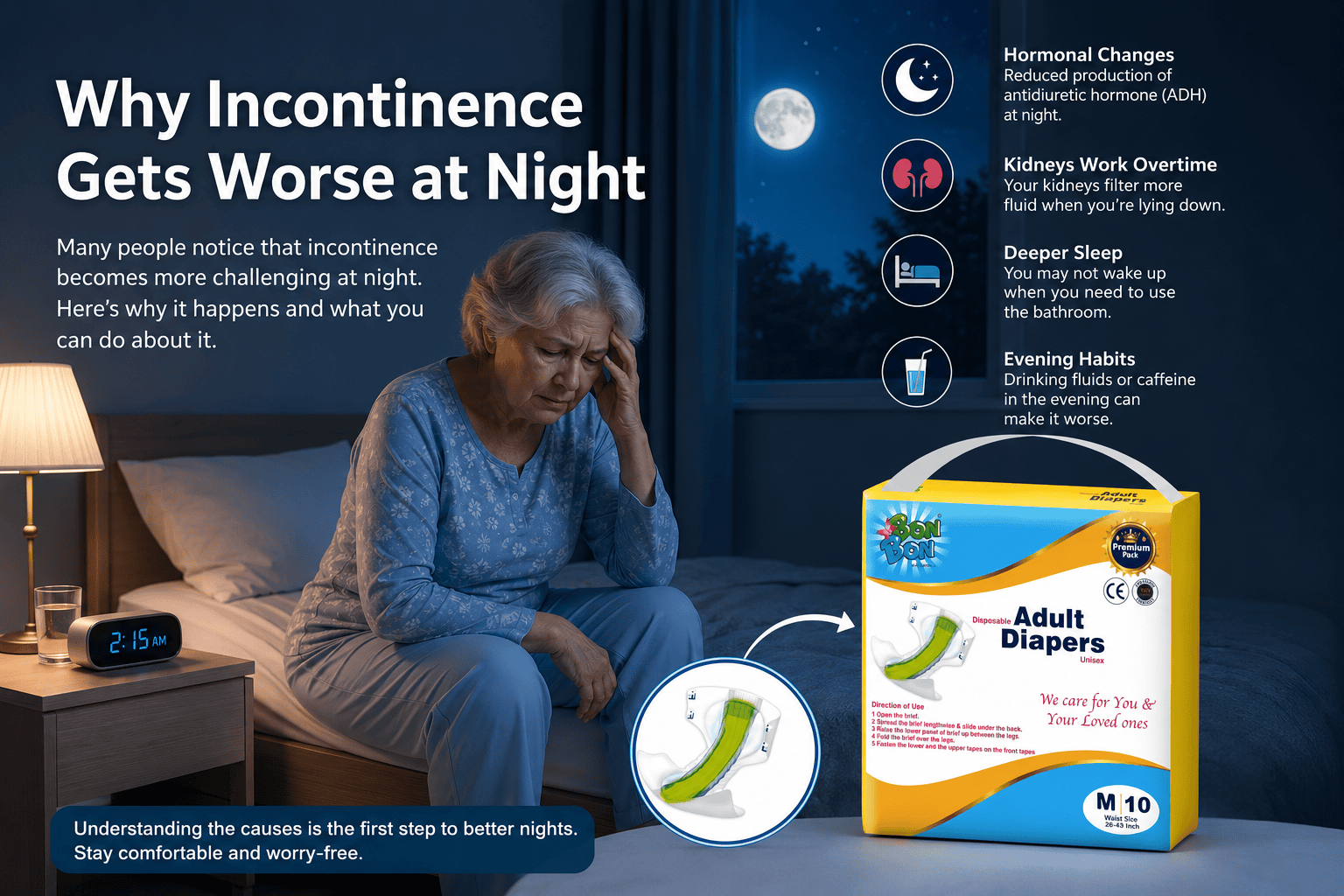
Nocturia refers to waking up two or more times during the night to urinate. Nocturnal polyuria occurs when your body produces more urine at night than during the day. This condition affects the elderly population more significantly, as antidiuretic hormone (ADH) production decreases with age. ADH normally signals the kidneys to produce less urine during sleep, but when this mechanism fails, bladder capacity becomes overwhelmed.
Weakened Pelvic Floor Muscles
During sleep, your conscious control over pelvic floor muscles diminishes. While awake, you may compensate for weak pelvic muscles through conscious control, but this ability disappears during sleep. The horizontal position of lying down also changes the pressure dynamics within your abdomen and bladder, potentially triggering involuntary urine release.
Chronic Health Conditions
Several chronic conditions worsen nighttime incontinence. Diabetes can lead to excess glucose in urine, pulling more water into the bladder. Congestive heart failure causes fluid to accumulate in the legs during the day, which redistributes when lying down, increasing kidney filtration. Sleep apnea creates pressure changes that stimulate urine production. Additionally, an overactive bladder sends urgent signals that become harder to control during sleep.
Medication Effects
Certain medications contribute to nighttime incontinence. Diuretics prescribed for high blood pressure or heart conditions increase urine production. Even when taken in the morning, their effects can extend into evening hours. Other medications, including some antidepressants, sedatives, and calcium channel blockers, can relax bladder muscles or increase urine production.
Behavioral and Environmental Factors
Beyond medical causes, daily habits and environmental factors significantly impact nighttime incontinence severity.
Evening fluid intake plays a crucial role. Drinking large amounts of water, caffeinated beverages, or alcohol in the hours before bed directly increases nighttime urine production. Caffeine and alcohol act as bladder irritants and diuretics, compounding the problem.
Diet choices matter as well. Spicy foods, citrus fruits, tomatoes, and artificial sweeteners can irritate the bladder lining, increasing urgency and frequency during the night. Consuming these items at dinner can lead to nighttime symptoms even if they don’t cause issues during daytime hours.
Physical inactivity during the day can contribute to fluid retention in the lower extremities. When you lie down at night, this fluid redistributes, increasing kidney function and urine production. Regular physical activity, as recommended by health authorities like the CDC and NHS, helps maintain better fluid balance throughout the body.
Practical Solutions for Nighttime Incontinence
Addressing nighttime incontinence requires a multi-faceted approach combining lifestyle modifications, medical interventions, and appropriate protective products.
Fluid Management Strategies
Rather than restricting fluids entirely—which can lead to dehydration and concentrated urine that irritates the bladder—focus on timing. Consume most of your daily fluid intake during morning and afternoon hours. Limit liquids to small sips in the two to three hours before bedtime. Avoid caffeine after early afternoon and eliminate alcohol in the evening.
Bladder Training Techniques
Bladder training strengthens your ability to hold urine longer. Start by scheduling bathroom visits at regular intervals during the day, gradually extending the time between visits. Before bed, practice double voiding: urinate, wait a few minutes, then try again to ensure your bladder is completely empty. This technique can reduce nighttime volume and urgency.
Pelvic Floor Exercises
Strengthening pelvic floor muscles through Kegel exercises can improve nighttime control. Contract the muscles you would use to stop urine flow, hold for five seconds, then relax for five seconds. Repeat this cycle 10 to 15 times, three times daily. Consistency yields results within weeks to months, improving both daytime and nighttime continence.
Bedroom Modifications
Create an environment that facilitates safe, quick nighttime bathroom access. Install nightlights along the path from bed to bathroom to prevent falls. Keep a bedside commode or urinal nearby if mobility is limited. Elevate your legs for a few hours before bed to reduce fluid accumulation that redistributes during sleep.
Medical Interventions and Professional Care
When lifestyle modifications alone don’t provide sufficient relief, medical interventions may help.
Consult with a healthcare provider to review all medications. Your doctor might adjust dosing schedules for diuretics or consider alternative medications with fewer urinary side effects. For nocturnal polyuria, desmopressin can reduce nighttime urine production, though it requires careful monitoring, especially in older adults.
Treatment of underlying conditions is essential. Managing diabetes through diet and medication reduces excessive urine production. Treating sleep apnea with CPAP therapy can significantly improve nighttime continence. Addressing constipation relieves pressure on the bladder and improves control.
Physical therapy with a pelvic floor specialist provides targeted exercises and biofeedback techniques that strengthen bladder control muscles more effectively than self-directed exercises alone.
The Role of Quality Protective Products
While working toward improved bladder control, appropriate incontinence products provide security and maintain quality of life. Nighttime incontinence products differ significantly from daytime options, offering higher absorbency and leak protection designed for extended wear during sleep.
BonBon Products specializes in premium adult diapers specifically engineered for Indian consumers facing urinary incontinence challenges. Their nighttime range features enhanced absorbency cores that lock away moisture, keeping skin dry throughout the night. The leak-proof barriers prevent accidents that can disrupt sleep and damage bedding.
These products incorporate skin-friendly materials that reduce irritation risk during prolonged contact, which is especially important during 6-8 hours of nighttime wear. Available in both pant and tape styles, BonBon Products offers options suited to different mobility levels and preferences. The discreet design allows users to maintain dignity while ensuring reliable protection.
Proper product selection makes a significant difference. Choose nighttime-specific products with appropriate absorbency levels based on your individual needs. Change immediately upon waking to minimize skin exposure to moisture. Use barrier creams to protect skin integrity when wearing overnight protection.
Moving Forward with Confidence
Nighttime incontinence doesn’t have to diminish quality of life. By understanding the medical causes—from hormonal changes and weakened muscles to chronic conditions and medications—you can work with healthcare providers to develop targeted solutions.
Implementing lifestyle modifications such as fluid timing, bladder training, and pelvic exercises creates a foundation for improvement. When combined with appropriate medical interventions and high-quality protective products like those offered by BonBon Products, individuals experiencing nighttime incontinence can reclaim restful sleep and maintain confidence.
Remember that seeking help is a sign of strength, not weakness. Healthcare professionals, including urologists, gynecologists, and geriatric specialists, possess expertise in managing incontinence effectively. Don’t let embarrassment prevent you from accessing solutions that can dramatically improve your nighttime comfort and overall well-being.
With the right combination of understanding, strategy, and support, nighttime incontinence becomes a manageable condition rather than an insurmountable challenge.
