


Why More Indians Are Openly Using Adult Diapers

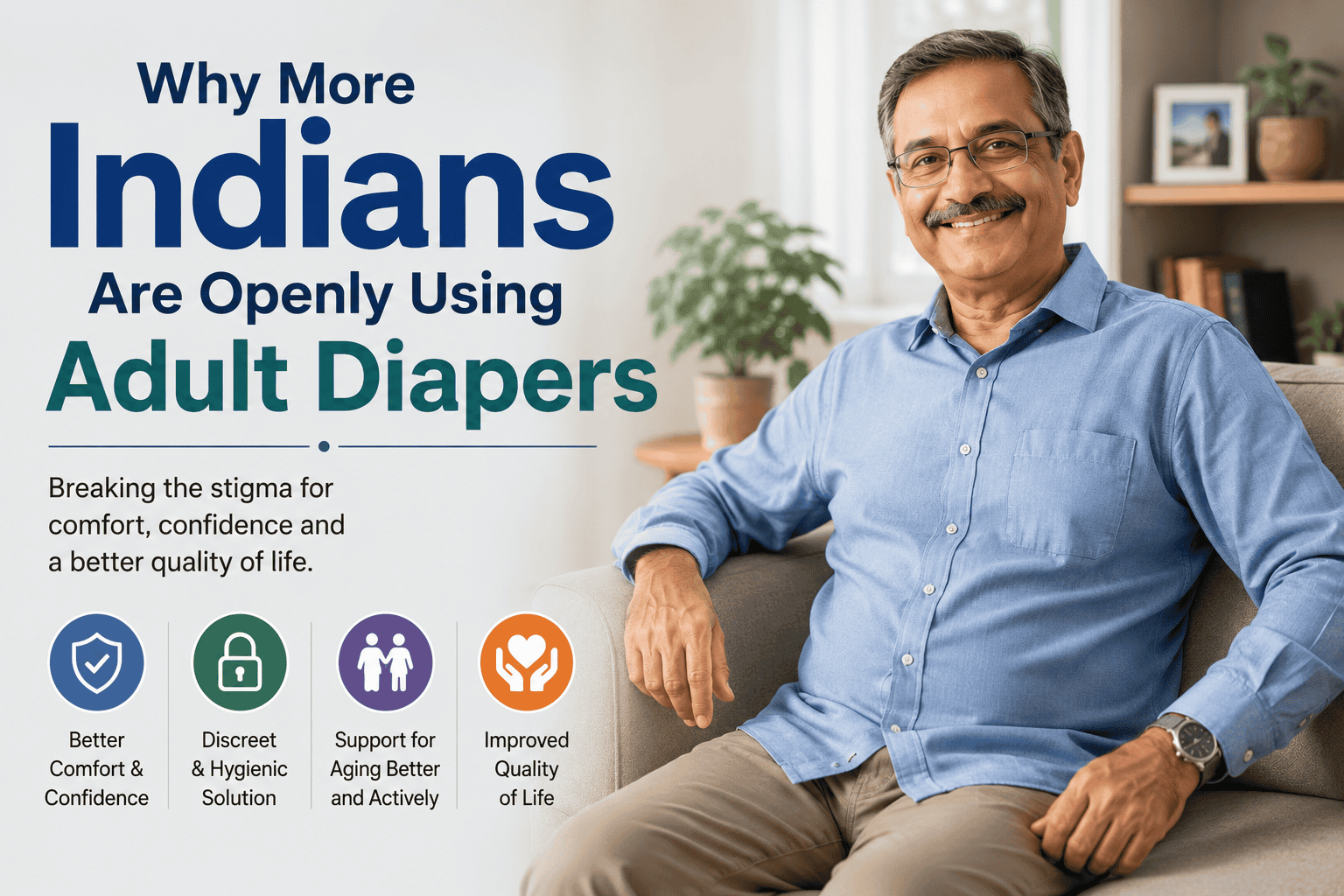
Something Is Quietly Changing Across India
Picture this scene, repeated in millions of Indian homes every day.
An elderly mother whispers to her daughter that she had another accident last night. She washes her own bedsheets before anyone wakes up. She has stopped attending the neighbour’s puja because she is afraid of what might happen. She has quietly reduced her water intake and stopped eating certain foods. She has never once spoken to her doctor about it.
Now picture a different scene — one that is becoming increasingly common in 2026.
The same woman walks into a pharmacy, picks up a pack of adult diapers without hesitation, and asks the pharmacist for the best option for overnight use. Or her son orders it online, having found detailed, helpful information about incontinence management on the internet. Or her doctor mentions it as part of her care plan, the same way eyeglasses or a blood pressure monitor are mentioned — as a practical health tool, not something to be ashamed of.
This is the shift happening across India right now. Slowly, meaningfully, and with genuine momentum — the stigma around adult diapers is breaking.
In this article, we explore why this change is happening, who is driving it, what barriers remain, and why products like bonbon adult diapers and bonbon pant style adult diapers are part of a broader movement toward dignified, confident incontinence care in India.
The Scale of the Problem — and the Silence Around It
Urinary incontinence is far more common in India than most people realise — or admit.
Research suggests that urinary incontinence affects a significant portion of India’s adult population, with the elderly, post-surgical patients, diabetics, new mothers, and people with neurological conditions among the most affected groups. Yet for decades, the condition has existed in near-total silence — managed privately, suffered quietly, and never discussed openly.
The India adult diaper market was valued at USD 188.95 million in 2024 and is expected to reach USD 355.76 million by 2030, rising at a compound annual growth rate of 11.12%. This is not just a market statistic. It represents millions of Indians making a decision they once would never have made openly — choosing to manage their incontinence with dignity, with the right product, and without shame.
Another critical trend is the gradual reduction of stigma surrounding incontinence. Education, digital health content, and open medical discussions have made people more comfortable seeking solutions. This cultural shift plays an essential role in expanding the adult incontinence products market, as more individuals acknowledge symptoms and opt for reliable management options rather than ignoring the condition.
The silence is breaking. But to understand why — and why it matters so much — we first need to understand where it came from.
Where the Stigma Came From: Understanding the Indian Context
The stigma around adult diapers in India is rooted in a complex mix of cultural, social, and generational attitudes.
1. Incontinence as Shameful Rather Than Medical
In Indian culture, bodily functions — particularly loss of bladder or bowel control — have long been associated with shame, weakness, and loss of dignity. For elderly people especially, admitting to incontinence felt like admitting to a fundamental failure of the body. Many would rather suffer in silence than be seen as a burden or lose their sense of self-respect in front of family members.
The stigma surrounding the use of adult diapers is a complex issue. It is based on cultural and societal norms that view urinary incontinence as a shameful and embarrassing condition, leading to a lack of acceptance and understanding about the use of adult diapers. The reluctance to discuss or acknowledge urinary incontinence has created an environment where those who need adult diapers are often excluded or made to feel ashamed, preventing them from seeking the necessary assistance.
2. The “Only for the Very Old or Very Sick” Perception
For a long time, adult diapers were perceived in India as a product exclusively for bedridden patients in hospitals or nursing homes — a last resort rather than a practical daily tool. This framing made it psychologically difficult for anyone who was not yet at that stage to consider using one, even when it would have meaningfully improved their quality of life.
3. Lack of Open Conversation
Unlike many health topics that have seen growing awareness in India — diabetes management, mental health, reproductive health — incontinence was rarely discussed publicly. There were no awareness campaigns, no doctor-led conversations, and no cultural permission to speak about bladder control openly. This silence reinforced the shame and kept millions of people from seeking solutions that were readily available.
4. Limited Product Availability and Awareness
Historically, adult diapers were poorly stocked, difficult to find, and rarely marketed in India. The absence of visible, accessible products meant that even people willing to try them often did not know where to look or what to buy. This created a self-reinforcing cycle: low awareness meant low demand, which meant limited availability, which further suppressed awareness.
Why the Stigma Is Breaking Now: 7 Forces Driving the Change
The shift happening in India in 2026 is not accidental. It is the result of several powerful forces converging at the same time.
1. India’s Rapidly Aging Population
Projections indicate that by 2050, individuals aged 60 and above will account for over 20% of India’s population, with the elderly expected to outnumber children aged 0 to 15 by 2046. As the sheer number of elderly Indians grows, the experience of incontinence becomes more common within families — normalising conversation and reducing the sense that it is an unusual or shameful occurrence.
When your neighbour’s parent, your friend’s mother, and your own elderly relative are all managing the same condition, it becomes harder to maintain the fiction that it is rare, extreme, or something to hide.
2. The Rise of E-Commerce and Private Purchasing
One of the most significant practical barriers to adult diaper adoption in India was the discomfort of purchasing them in public — asking a pharmacist loudly for a product associated with incontinence, or being seen buying them in a shop by someone you know.
Online retail has further accelerated this trend, offering private, convenient purchasing options. The ability to order adult diapers from Amazon India, Flipkart, or 1mg — discreetly, at home, delivered in plain packaging — has removed one of the biggest practical barriers to first-time purchase. This single shift has brought adult diaper care within reach of millions of Indians who would never have walked into a pharmacy to ask for them.
3. Growing Health Awareness and Digital Information
The explosion of health information online — through websites, YouTube channels, WhatsApp health groups, and doctor-patient forums — has given millions of Indians access to accurate information about incontinence for the first time.
By emphasising the importance of managing incontinence for overall health and well-being, these campaigns encourage individuals with conditions like diabetes, prostate problems, and obesity to seek solutions like adult diapers. Heightened awareness reduces stigma and prompts healthcare providers to recommend adult diapers as part of comprehensive patient care.
When people understand that incontinence is a medical condition with a medical cause — not a personal failure or a sign of weakness — the shame dissolves and practical decision-making takes its place.
4. Product Innovation — Diapers That Don’t Look Like Diapers
A generation ago, adult diapers in India were bulky, crinkly, and unmistakably visible under clothing. Wearing one was, in many ways, a public declaration of incontinence.
Innovations in product design — such as slim, undergarment-like pull-ups and odour-controlling materials — have enhanced comfort and discretion, increasing consumer confidence.
Today’s modern pull-up adult diapers — like bonbon pant style adult diapers — are slim, soft, and designed to feel and look exactly like regular underwear. Wearing one under a saree, kurta, or office trousers is virtually undetectable. This design evolution has made it psychologically and practically possible for active, mobile, working Indians to use adult diapers without any visible sign — fundamentally changing who feels able to use them.
5. Changing Family Structures and Caregiver Awareness
The rise of nuclear families and dual-income households across India’s urban centres has changed the nature of elderly care. With fewer family members available to assist full-time, practical solutions — including adult diapers — have become essential rather than optional.
Younger generations of Indian caregivers are also more health-literate, more willing to discuss medical topics openly, and more comfortable researching and purchasing incontinence products than their parents were. This generational shift in caregiver attitude has been one of the most powerful forces normalising adult diaper use within Indian families.
6. Healthcare Professionals Beginning to Lead the Conversation
Doctors, nurses, physiotherapists, and geriatric care specialists across India are increasingly integrating incontinence management — including adult diapers — into their patient care recommendations. When a trusted physician recommends a product as part of a care plan, the psychological barrier drops dramatically.
As a result, the adult diaper market is experiencing a surge in demand as more individuals recognise these products’ role in maintaining their health, hygiene, and quality of life.
7. The COVID-19 Turning Point
The pandemic accelerated the normalisation of adult diapers in India in unexpected ways. Healthcare workers on long shifts in PPE suits, elderly patients in home isolation, and post-COVID recovery patients experiencing incontinence symptoms all contributed to a rapid expansion of the adult diaper user base beyond the traditional elderly demographic.
The pandemic’s emphasis on personal hygiene and healthcare led to a substantial surge in demand for adult diapers. This heightened demand wasn’t confined solely to the elderly but extended to individuals recovering from COVID-19, grappling with post-recovery incontinence.
Who Is Using Adult Diapers in India in 2026?
One of the most significant aspects of the stigma shift is the broadening of who uses adult diapers in India. It is no longer only the bedridden elderly patient in a hospital. Today’s adult diaper user in India looks like this:
The Active Elderly Person A 72-year-old retired teacher in Pune who wears bonbon pant style adult diapers under his regular clothes to attend his morning walk group, his grandson’s school function, and his weekly chess club — without anyone knowing and without the anxiety of incontinence limiting his social life.
The Post-Surgical Recovery Patient A 58-year-old woman in Chennai recovering from a hysterectomy, using bonbon adult diapers in the first weeks after surgery when bladder control is temporarily compromised — recommended by her gynaecologist as part of her recovery protocol.
The Working Professional Managing a Medical Condition A 45-year-old man in Mumbai with diabetes-related bladder issues, wearing bonbon pant style adult diapers discreetly under his business attire during long client meetings — maintaining his professional confidence without restriction.
The New Mother A 32-year-old new mother in Bengaluru experiencing postpartum urinary incontinence in the weeks after delivery, choosing bonbon pant style adult diapers as a comfortable, discreet option while her pelvic floor recovers.
The Long-Distance Traveller A 65-year-old devotee from Ahmedabad embarking on the Char Dham Yatra, carrying bonbon adult diapers to manage bladder urgency during long bus journeys and crowded temple visits — enabling her to complete the pilgrimage she has planned for years.
The Caregiver’s Choice A 40-year-old daughter in Delhi managing her bedridden mother’s care at home, using bonbon adult diapers for its re-fastenable tabs, overnight absorbency, and skin-gentle construction — making the daily care routine manageable for both of them.
This is who uses adult diapers in India today. The user has changed — and so has the conversation.
The Role of Products Like bonbon adult diapers in Breaking the Stigma
Product quality plays a direct role in stigma reduction. Here is why.
When a product works — when it genuinely prevents leaks, keeps skin dry, controls odour, and feels comfortable — users no longer associate it with failure. They associate it with freedom. The diaper becomes the thing that lets them attend the wedding, complete the pilgrimage, sleep through the night, and go to work without fear.
bonbon adult diapers and bonbon pant style adult diapers are specifically designed to deliver that experience for Indian users:
bonbon adult diapers — for bedridden patients, heavy incontinence, overnight protection, and caregiver-managed care — delivers:
- Multi-layer SAP core absorbency that keeps skin dry for extended wear
- Re-fastenable adhesive tabs for easy caregiver management
- Double leg leak guards for reliable containment in any position
- Built-in odour neutralisation for dignity throughout the day and night
- Soft, breathable non-woven cover gentle on sensitive elderly skin
- Affordable pricing for sustainable long-term daily use
bonbon pant style adult diapers — for mobile, active, independent users — delivers:
- Underwear-like slim fit that is virtually invisible under any Indian clothing
- Stretchable elastic waistband that moves naturally with the body
- Tearable side seams for quick, discreet removal in public restrooms
- Reliable moderate absorbency for light to moderate daily incontinence
- Odour control that keeps users fresh and confident throughout the day
- The psychological experience of wearing underwear — not a diaper
This cultural shift, supported by awareness campaigns and increased dialogue from healthcare professionals, is making adult diapers more acceptable across age groups and medical conditions. Products designed with dignity at their core — like bonbon adult diapers and bonbon pant style adult diapers — are part of making that acceptance real and practical.
What Still Needs to Change: The Barriers That Remain
The shift is real — but the work is not complete. Several barriers continue to prevent millions of Indians from accessing the incontinence care they need:
Rural Access While urban India has seen significant normalisation, rural and semi-urban areas still have limited product availability, lower health literacy around incontinence, and stronger cultural resistance to discussing or purchasing adult diapers.
Gender Disparity in Acknowledgement Women in India — who experience higher rates of incontinence due to childbirth, menopause, and anatomical factors — often face greater social pressure to suffer silently. The cultural expectation that women manage household health quietly creates a specific barrier for female incontinence acknowledgement.
The Language Gap Most accurate, helpful information about incontinence and adult diapers is available in English. For the majority of India’s population who consume content in Hindi, Tamil, Telugu, Kannada, Marathi, Bengali, or other regional languages, reliable information in their mother tongue remains scarce.
Doctor Reluctance While improving, many Indian general practitioners still do not proactively raise incontinence in patient consultations — leaving patients without the professional permission and guidance that would most effectively break down their personal stigma.
How You Can Help Break the Stigma
If you are a caregiver, a family member, or someone managing incontinence yourself, here is how you can personally contribute to the cultural shift:
Talk about it. Simply acknowledging that incontinence is a medical condition — in a family conversation, with a friend who is struggling, or with a parent who is hiding it — dismantles the shame more powerfully than any campaign.
Use the right words. Terms like “protective underwear”, “incontinence briefs”, or “adult hygiene wear” carry less stigma than older language. How we refer to the product shapes how we — and others — feel about it.
Normalise the purchase. Buying bonbon adult diapers or bonbon pant style adult diapers the same way you would buy any other health product — without secrecy, without embarrassment — signals to the people around you that this is ordinary, practical healthcare.
Share information. If someone you know is managing incontinence without support, share this article. Share a product recommendation. Share a doctor’s contact. The right information at the right moment changes lives.
Frequently Asked Questions
Q: Is adult diaper use becoming more common in India?
A: Yes — significantly. The India adult diaper market is growing at over 11% annually and is projected to nearly double in value by 2030, driven by an aging population, growing health awareness, and the reduction of social stigma.
Q: Are adult diapers only for very old or very sick people?
A: No. Adult diapers are used by a wide range of people including post-surgical recovery patients, new mothers, people with diabetes or neurological conditions, long-distance travellers, and active working adults managing mild to moderate incontinence.
Q: Will people know I am wearing an adult diaper?
A: Not with a well-designed pull-up product. bonbon pant style adult diapers features a slim, discreet profile that is virtually invisible under any Indian clothing — sarees, kurtas, formal trousers, or casual wear.
Q: Where can I buy bonbon adult diapers discreetly in India?
A: bonbon adult diapers and bonbon pant style adult diapers are available online on Amazon India, Flipkart, and 1mg — delivered in discreet packaging to your home. They are also available at select pharmacies and medical stores across India.
Q: What is the best adult diaper for an active Indian adult who wants discretion?
A: bonbon pant style adult diapers is specifically designed for active, mobile users who want a slim, discreet, underwear-like fit that allows them to live fully — at work, at social events, during travel, and at religious gatherings.
Q: What is the best adult diaper for a bedridden elderly parent?
A: bonbon adult diapers (tape-style) is the best choice for bedridden patients — with its re-fastenable tabs for caregiver management, maximum overnight absorbency, double leak guards, and skin-gentle breathable cover.
Conclusion: Dignity Is Not Something to Be Ashamed Of
The stigma around adult diapers in India was never about the product. It was about what the product was assumed to mean — weakness, decline, dependence, the end of a full life.
But the story millions of Indians are quietly writing in 2026 is a different one.
It is the story of a grandmother who sleeps through the night for the first time in years. A man who attends his son’s graduation without anxiety. A woman who completes her Char Dham Yatra. A new mother who returns to work with confidence. A patient who focuses on rehabilitation instead of accidents.
These are not stories of defeat. They are stories of people choosing dignity, choosing freedom, and choosing to manage their health — on their terms, without shame.
bonbon adult diapers and bonbon pant style adult diapers are proud to be part of that story — designed for the Indian user, priced for the Indian family, and built around the belief that every person deserves to live fully, comfortably, and without limitation.
The stigma is breaking. And it is breaking because millions of Indians are choosing to let it.
Shop bonbon adult diapers and bonbon pant style adult diapers available on Amazon India, Flipkart, meesho and offline diaper store and at select pharmacies and medical stores across India.
Disclaimer: This article is for informational and awareness purposes. If you or a loved one is experiencing urinary or bowel incontinence, please consult a qualified healthcare professional for proper diagnosis and treatment.
