


How to Dispose Adult Diapers Properly

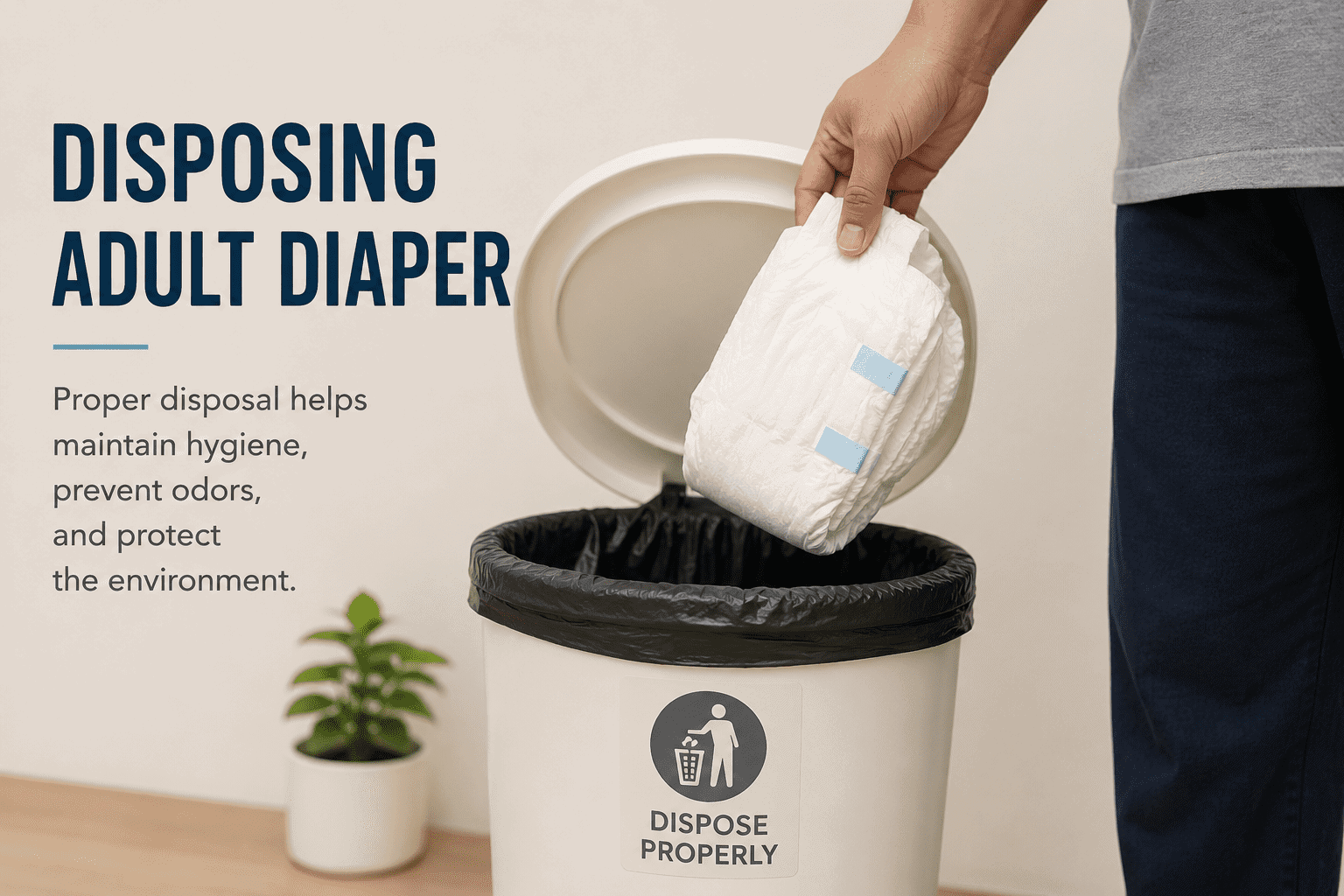
The Part of Incontinence Care Nobody Talks About
When it comes to adult incontinence care, most guides focus on choosing the right diaper, managing skin health, or supporting your loved one emotionally. Very few address the practical, daily reality that follows every diaper change — what do you actually do with it afterwards?
Improper disposal of adult diapers is more common than you might think — and its consequences go well beyond an unpleasant smell. Used diapers that are not sealed and disposed of correctly can spread harmful bacteria, attract pests, contaminate surfaces, create serious plumbing problems, and contribute unnecessarily to environmental waste.
For caregivers managing multiple changes per day, disposal can feel like a minor chore. But done consistently and correctly, it protects the health of the wearer, the caregiver, household members, and the environment.
In this guide, we walk you through the complete process — step by step — for disposing of adult diapers properly at home, in public, and in care settings, along with practical tips for odour control, hygiene, and reducing environmental impact.
Why Proper Adult Diaper Disposal Matters
Before the how, it helps to understand the why. Improper disposal of adult diapers creates several real risks:
Health Risks
Used adult diapers contain urine and often faecal matter — both of which carry bacteria, viruses, and pathogens. Improper disposal of adult diapers can spread bacterial and viral infections, such as gastrointestinal illnesses and skin infections, by contaminating surfaces and hands. Inadequate sealing or exposure to waste can also attract pests, increasing the risk of respiratory infections and diseases.
Odour Problems
An improperly wrapped used diaper releases ammonia and other compounds that rapidly create an unpleasant smell throughout a room, hallway, or shared living space — affecting the dignity of the wearer and the comfort of everyone nearby.
Plumbing Damage
Adult diapers must never be flushed down the toilet. Never flush adult diapers as they can clog plumbing. The super-absorbent materials inside a diaper expand dramatically when wet, and flushing them causes severe blockages that require expensive professional plumbing repair.
Environmental Impact
Adult diapers are made from non-biodegradable materials, and improper disposal can contribute to landfill waste. If not disposed of correctly, they can take years to decompose. While landfill disposal is currently unavoidable for most users, the way a diaper is prepared for disposal directly affects how much it contaminates surrounding waste.
Step-by-Step: How to Dispose of Adult Diapers at Home
Whether you are a caregiver or managing your own incontinence care, follow these steps every time for safe, hygienic, and odour-controlled disposal.
Step 1 — Put on Disposable Gloves
Always begin with hand protection. Consider utilising a pair of disposable gloves prior to starting the process. Nitrile gloves are the most practical option — durable, widely available, and effective.
Step 2 — Empty Solid Waste into the Toilet
If there is any faecal matter present, empty any solid waste into the toilet. This step not only minimises odour but also helps prevent plumbing issues when flushing. This step also reduces the volume and bacterial load of the waste going into your bin — which directly reduces odour and contamination risk.
Step 3 — Roll and Seal the Diaper
Wrap the diaper securely in a disposable bag to prevent leakage and contain any odours. Make sure the bag is sealed tightly to avoid any unpleasant smells.
For tape-style diapers like bonbon adult diapers, this step is particularly straightforward — the re-fastenable adhesive tabs can be used to fold and secure the diaper into a compact roll before bagging, making the entire disposal process neater and more contained. The tight roll minimises surface area exposure and dramatically reduces odour release.
For pull-up style diapers like bonbon pant style adult diapers, tear the side seams, fold inward, and roll tightly before placing in a disposal bag.
Step 4 — Double Bag for Extra Protection
Place used diapers in a plastic bag before disposing of them in the trash. For extra odour control and hygiene, use a second outer bag — a scented disposal bag, a grocery bag tied tightly, or a dedicated hygiene waste bag. This double barrier is especially important in warm weather or for diapers with faecal content.
Step 5 — Place in a Dedicated Lidded Bin
Use a dedicated disposal bin to keep them all in one place. This reduces the chance of contamination and odours, keeping the environment clean and fresh.
Choose a bin with a tight-fitting lid — ideally a foot-pedal operated model so it can be opened hands-free. Line the bin with a plastic bag for easy, hygienic emptying. Keep this bin in the bathroom or the room where changes are performed — never in the kitchen or dining area.
Step 6 — Empty the Bin Regularly
Do not let the diaper or garbage bin sit full for too long. Empty them regularly to reduce odours and minimise bacteria buildup. How often depends on how often you use incontinence supplies, but aim for at least every couple of days.
For homes managing 4–6 diaper changes per day, emptying the bin daily is advisable — particularly in India’s warm climate, where bacterial growth and odour development are accelerated by heat.
Step 7 — Clean and Sanitise the Bin Regularly
After you take out the disposal bag, wipe down the inside of the bin with a disinfectant wipe or a mild cleaning solution, like vinegar and water. If your disposal bin has been exposed to leakage, you will want to perform a deep, disinfecting clean to kill the germs.
Step 8 — Wash Hands Thoroughly
Always wash hands with soap and water for at least 20 seconds after every diaper change and disposal — even if gloves were worn. If a sink is not immediately available, use an alcohol-based hand sanitiser of at least 60% concentration.
How to Dispose of Adult Diapers in Public
Managing a diaper change away from home requires additional planning and discretion. Here is how to handle it cleanly and respectfully.
Carry a Disposal Kit
When going out, always carry a small disposal kit:
- 2–3 spare diapers (bonbon adult diapers or bonbon pant style adult diapers based on your need)
- A small pack of disposable gloves
- Scented or odour-blocking sealable disposal bags
- Wet wipes and hand sanitiser
- A small changing mat or pad
Use Public Restroom Waste Bins — Not Toilets
Carry sealable disposal bags in your bag at all times. After changing, roll the diaper, seal it in the bag, and place it in any available trash receptacle. Many public restrooms have large-capacity waste bins.
Always use the general waste bin in a public restroom — never attempt to flush an adult diaper. If no bin is present inside the stall, seal the bagged diaper and carry it to the waste bin near the restroom exit.
Never Leave Diapers in Inappropriate Places
Never leave used diapers in hotel drawers, airplane seat pockets, or other inappropriate locations. This is both a hygiene issue and a matter of basic courtesy and dignity. A sealed diaper in a scented bag can safely be carried until an appropriate bin is available.
Choose bonbon pant style adult diapers for Outings
For public and social settings, bonbon pant style adult diapers is the most practical choice. Its tearable side seams allow for fast, clean removal in a public restroom cubicle — the diaper can be torn, folded, and sealed in a disposal bag in under a minute. Its slim, discreet profile also means less bulk to manage during the disposal process when space is limited.
How to Dispose of Adult Diapers in a Care Home or Hospital Setting
In institutional care settings — nursing homes, hospitals, or care centres — adult diaper disposal follows specific protocols to protect both patients and staff.
Use Yellow Clinical Waste Bags Where Required
In professional care environments, soiled diapers — particularly those containing faecal matter — may be classified as clinical or infectious waste depending on the patient’s condition. In such settings, yellow clinical waste bags should be used instead of standard household waste bags, and collection should follow the facility’s medical waste disposal schedule.
Dedicated Medical Waste Bins
Care facilities should maintain separate, clearly labelled medical waste bins for soiled incontinence products — distinct from general waste. These should be emptied on a fixed schedule by trained staff wearing appropriate personal protective equipment.
Caregiver Hand Hygiene Protocol
In care settings, hand washing with soap and water — not just hand sanitiser — is the standard after every diaper change and disposal. Disposable aprons and gloves should be used for each change and discarded immediately afterwards.
Odour Control: Practical Tips for Indian Homes
Odour management is one of the most significant challenges of adult diaper disposal, particularly in smaller Indian homes with limited ventilation. Here are practical, affordable solutions:
Baking Soda in the Bin Sprinkle a small amount of baking soda at the bottom of your disposal bin before inserting the bin liner. Baking soda neutralises ammonia odours naturally and cost-effectively.
Scented Disposal Bags Use scented or antibacterial disposal bags as your inner wrap — these are widely available at pharmacies and online. Even a basic scented grocery bag creates a significant odour barrier when sealed tightly.
Ventilation Keep the room where diaper changes occur well ventilated — open a window or run an exhaust fan during and after changes to clear airborne odour quickly.
Frequent Bin Emptying In India’s warm climate, even a well-sealed bin can develop odour rapidly. Empty the diaper waste bin at least once daily if managing 4+ changes per day. Take the sealed bag directly to an outdoor waste receptacle rather than leaving it near the door.
Start with a Better Diaper The diaper itself plays a significant role in odour management at the disposal stage. bonbon adult diapers features a built-in odour-neutralising layer that captures and neutralises ammonia and other incontinence odours within the diaper during wear. This means less odour escapes into the diaper at the time of removal — directly reducing the smell challenge during disposal. Starting with a better-quality product like bonbon adult diapers makes every step of the disposal process cleaner and easier.
Common Adult Diaper Disposal Mistakes to Avoid
❌ Flushing adult diapers down the toilet This is the most damaging mistake. Adult diapers expand significantly in water and will block plumbing pipes rapidly. Always bin — never flush.
❌ Throwing diapers directly into a bin without wrapping An unwrapped used diaper releases odour and bacteria into the surrounding environment immediately. Always roll, seal, and bag before binning — every time.
❌ Placing diapers in recycling bins Dirty diapers belong in landfills, not in recycling bins. Neither adult nor baby diapers are recyclable through standard curbside recycling programmes. Always put them in the regular trash outside with a secure lid.
❌ Leaving the disposal bin unemptied for days A bin that is not emptied regularly becomes a source of bacteria, odour, and pest attraction. In India’s warm climate this is particularly problematic — empty at minimum every 1–2 days.
❌ Not washing hands after disposal Gloves do not replace handwashing. Always wash hands with soap and water after every change and disposal — this is the single most effective action to prevent the spread of infection in a caregiving environment.
❌ Disposing of diapers in public spaces Leaving used diapers in parks, roads, or open areas is a public health hazard and an offence under municipal sanitation rules in most Indian cities. Always carry disposal bags when travelling and use proper waste receptacles.
The Environmental Impact of Adult Diaper Disposal — and What You Can Do
Adult diapers are one of the largest contributors to non-recyclable household waste globally. A single disposable adult diaper takes an estimated 500 years to decompose in a landfill. For families managing 4–6 changes per day, that represents a significant environmental footprint over time.
While there is currently no mainstream diaper recycling programme in India, there are responsible practices that reduce environmental harm:
Empty Solid Waste Before Disposal
Always flush solid faecal matter down the toilet before bagging the used diaper. This removes a significant portion of biological waste from the landfill and reduces the risk of groundwater contamination from the disposed diaper.
Use Biodegradable Disposal Bags
Environmentally sensitive solutions, such as using biodegradable disposal bags or a dedicated diaper pail, can help manage the disposal of soiled adult diapers more effectively. Biodegradable bags are widely available online and reduce the plastic contribution of every diaper disposal.
Minimise Unnecessary Changes
Using a high-quality adult diaper like bonbon adult diapers — with its multi-layer SAP core and extended wear capacity — reduces the total number of diapers used per day. Fewer changes mean less waste. This is one of the most direct ways a quality product choice contributes to both cost savings and environmental responsibility.
Check for Local Disposal Guidelines
Waste management guidelines vary across Indian cities and municipalities. Some larger urban municipalities are beginning to introduce segregated collection for hygiene and medical products. Check with your local municipal corporation or resident welfare association about any specific guidelines for disposing of incontinence products in your area.
Quick Reference: Adult Diaper Disposal Checklist
Use this checklist at every diaper change to ensure consistent, hygienic disposal:
- Put on disposable gloves before removing the used diaper
- Empty solid waste into the toilet and flush
- Roll the diaper tightly and secure with adhesive tabs (bonbon adult diapers tabs make this easy)
- Place rolled diaper into a sealed disposal bag
- Double bag if faecal content is present
- Place sealed bag in a dedicated lidded waste bin
- Empty the bin every 1–2 days
- Clean and disinfect the bin weekly
- Wash hands thoroughly with soap and water
- Dispose of gloves in the same bin
Frequently Asked Questions
Q: Can adult diapers be flushed down the toilet?
A: No — never. Adult diapers expand dramatically in water and will block and damage plumbing. Always seal in a bag and place in a waste bin.
Q: How often should I empty the adult diaper disposal bin at home?
A: At minimum every 1–2 days. If managing 4+ changes daily, empty every day — especially important in India’s warm climate where bacteria and odour develop faster.
Q: Are adult diapers recyclable?
A: Not through standard recycling programmes. Adult diapers must go into general household waste, prepared and sealed properly to minimise environmental impact.
Q: What is the best way to control odour when disposing of adult diapers?
A: Start with a quality diaper like bonbon adult diapers — its built-in odour-control layer reduces smell at the source. Then roll tightly, seal in a scented disposal bag, and use a lidded bin with baking soda at the base.
Q: How should I dispose of adult diapers in public?
A: Roll tightly, seal in a sealable scented bag, and place in the general waste bin in a public restroom. Never flush, and never leave in inappropriate locations. bonbon pant style adult diapers’ tearable sides make quick, clean public restroom disposal simple.
Q: Is there a specific medical waste protocol for adult diapers in India?
A: For home care, standard household waste disposal with proper sealing is adequate. For institutional care settings, follow your facility’s clinical waste management protocol. Check with your local municipal corporation for any updated guidelines.
Conclusion: Small Habits, Big Difference
Proper adult diaper disposal is not complicated — but it does require consistency. Roll, seal, bag, bin, empty, sanitise, and wash hands. Done every time, these simple steps protect your household from bacterial spread, eliminate odour problems, preserve your loved one’s dignity, and reduce environmental impact.
And it all starts before the disposal stage — with the choice of diaper itself. bonbon adult diapers is designed with built-in odour control and re-fastenable tabs that make the entire disposal process cleaner, faster, and more manageable at every change.
Because proper care — from the first change to the last step of disposal — is what truly dignified incontinence management looks like.
Shop bonbon adult diapers and bonbon pant style adult diapers available on Amazon India, Flipkart, meesho and offline diaper store and at select pharmacies and medical stores across India.
