


Best Diapers for Adults: Complete 2026 Guide

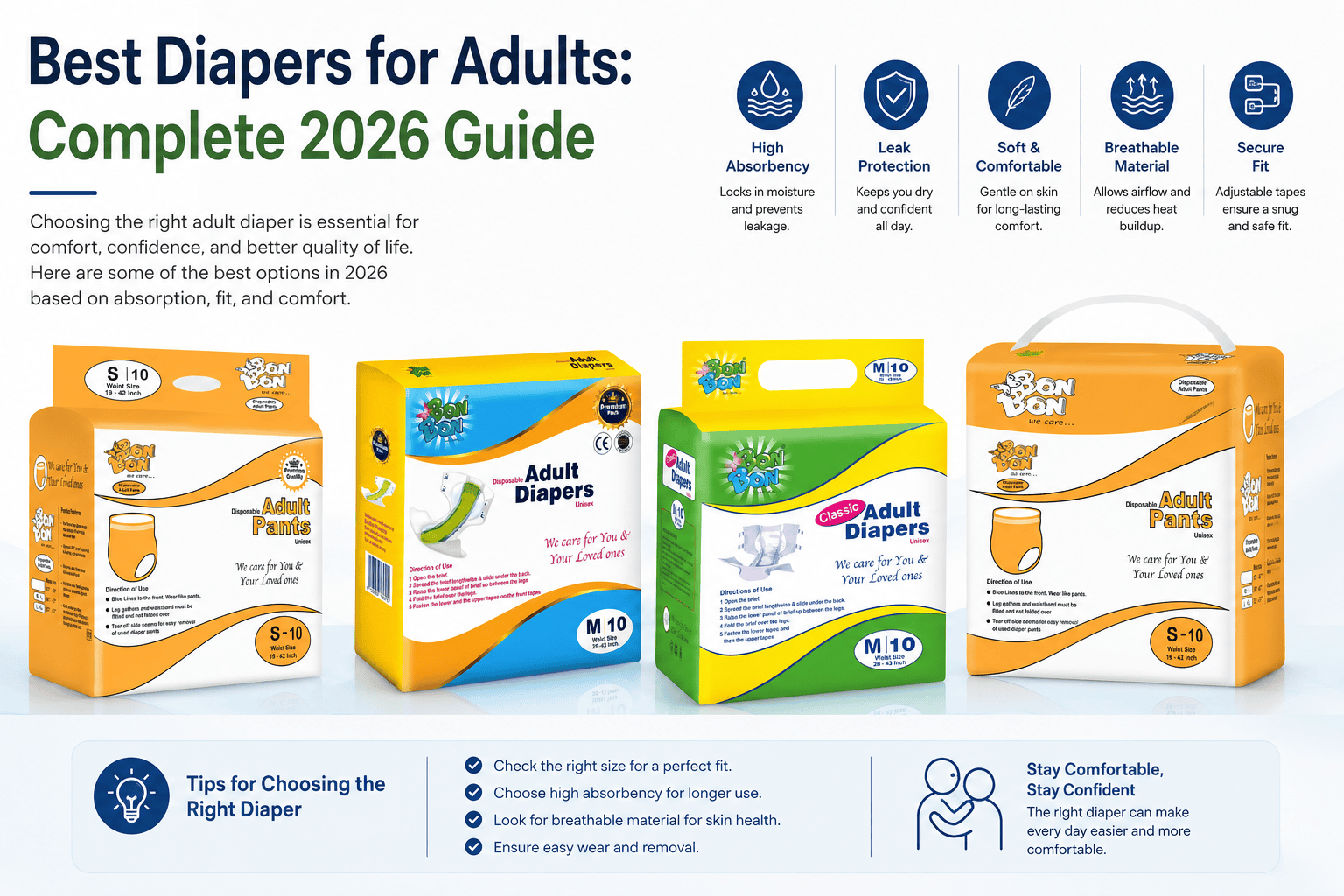
Choosing the right adult diaper can dramatically improve quality of life for millions living with urinary incontinence. This 2026 guide goes beyond brand lists — it shows you how to choose, how to size, how to use, and how to calculate real cost, with India-specific advice for climate, clothing, and caregivers.
1. Understanding Adult Incontinence and Diaper Needs
Urinary incontinence affects a large share of adults globally, with causes ranging from ageing and medical conditions to postpartum recovery and mobility limitations. The best adult diaper addresses several concerns at once: absorbency, leak protection, skin health, comfort during movement, and discretion under clothing.
The first step is identifying your incontinence level — light, moderate, or heavy — because it determines the absorbency class you need. If you are comparing product types, see our guide to adult diaper types for a full breakdown.
Modern adult diapers have evolved significantly. Today’s premium options feature breathable materials, odour-control technology, and designs that closely mimic regular underwear. For active adults, maintaining independence means choosing products that won’t interfere with work, travel, or social life.
2. Key Features of the Best Adult Diapers
Superior absorbency technology
The cornerstone of any quality adult diaper is its absorbent core. Premium diapers use multi-layer cores with super-absorbent polymers (SAP) that lock away moisture quickly. High-absorbency products can hold well over 1500 ml, with some premium options claiming 2000 ml+ — enough for extended daytime use and overnight protection.
Leak-proof design
Leak protection is more than absorbency. Look for standing leak guards, elastic leg cuffs, and a secure waistband. These create multiple barriers, especially important during sleep when position changes are frequent. Wetness indicators that change colour help caregivers know exactly when to change.
Skin-friendly materials
Skin health is paramount during extended wear. Choose hypoallergenic, dermatologically tested materials that allow air circulation and prevent moisture build-up. Breathable outer layers reduce the risk of irritation, rashes, and infections.
Comfort and fit
Proper fit determines both comfort and effectiveness. Adult diapers come in sizes small through extra-large, based on waist/hip measurement — not clothing size. A well-fitted diaper stays in place without being too tight. Look for stretchable side panels, soft inner linings, and ergonomic shaping.
3. Pant Style vs Tape Style: Choosing the Right Type
| Factor | Pant style | Tape style |
|---|---|---|
| Best for | Mobile, self-dressing, active users | Bedridden, limited mobility, caregiver-assisted |
| How it wears | Pulled on like underwear | Fastened with adjustable tabs |
| Changing | Remove like underwear (tear sides if needed) | Open tabs, adjust without full removal |
| Discretion | Excellent under clothing | Good, but bulkier |
| Caregiver ease | Moderate | High — can change lying down |
Quick rule: if the user can walk and dress themselves, pant style is usually better. If the user is bedridden or needs help, tape style is easier and safer to change.
4. Day vs Night Protection: Different Needs
Daytime diapers prioritise discretion and comfort during movement. They may have slightly lower absorbency but fit better under clothing. Many users change every 4–6 hours depending on need.
Nighttime diapers feature maximum absorbency designed to last 8–10 hours, with reinforced leak guards and higher capacity for prolonged horizontal positioning. Using the right product for each situation optimises both protection and cost.
For a deeper look, read our guide to choosing adult diapers for night use.
5. Size Self-Check: Why Most Leaks Are a Sizing Problem
Most “leaks” reported by users are not caused by insufficient absorbency — they are caused by the wrong size. A diaper that is too large gaps at the legs; one that is too small cannot contain the core.
- Measure the widest part of the hips/waist, not the clothing size.
- Stand and measure (or measure lying down if the user is bedridden).
- Check the brand’s own size chart — sizing varies between brands.
- If between sizes, choose the larger size for overnight, the smaller for daytime mobility.
- Re-check size after significant weight change.
See the full adult diaper size chart for measurement-to-size conversion.
6. Special Considerations for Indian Users
India’s hot, humid climate demands exceptional breathability to prevent heat rash and discomfort. Products designed for the Indian market account for these conditions with airflow-friendly back sheets and lighter constructions.
Cultural considerations matter too. Discretion remains paramount, with many users requiring products that function invisibly under traditional clothing such as sarees, kurtas, and salwar kameez. Premium brands design accordingly — slimmer profiles, softer edges, and quieter materials.
Availability is also a factor: choose brands with strong distribution across cities, towns, and smaller pharmacies, both offline and online, so reordering is never a struggle.
7. Brand Quick Comparison (India 2026)
The table below gives a neutral overview of brands commonly available in India. Use it as a starting point, then check the brand’s own size chart and current pricing before buying.
| Brand | Styles | Notable features | Approx. price/pack | Best for |
|---|---|---|---|---|
| Friends | Pant, Tape | High absorbency, odour control, skin-friendly | ₹400–₹700 | All-round performance |
| Seni | Pant, Tape | Breathable, dermatologically tested | ₹500–₹900 | Sensitive skin |
| Dignity | Pant, Tape | Affordable, easy to wear | ₹350–₹650 | Budget-conscious users |
| Liberty | Pant | Skin-friendly, lightweight, discreet | ₹350–₹600 | Daytime use |
| Kare-In | Pant | Comfortable fit, good absorbency | ₹400–₹600 | Active, mobile users |
| BonBon Products | Pant, Tape | Advanced absorbency core, breathable, India-focused design | Check current listing | Premium protection |
Prices are indicative and change frequently. Always verify on the retailer page.
8. Cost per Use: The Real Math
Premium diapers often cost more per pack but prove cheaper long-term. Superior absorbency means fewer changes; better leak protection prevents clothing and bedding replacement.
Formula: Cost per use = Pack price ÷ Number of diapers in pack
Then multiply by daily changes (typically 3–4 for moderate incontinence, more for heavy). A pack that looks expensive may win on cost-per-use once absorbency is factored in. For a worked example, see our cost-of-incontinence guide.
9. Skin & Care Checklist
- Barrier cream at every change — zinc oxide creams are the key to preventing rash and pressure sores.
- Change promptly after soiling — even if capacity remains, change within about an hour of soiling; skin damage starts fast.
- Clean gently — mild wipes or warm water; pat dry fully before applying a new diaper.
- Prioritise breathability — in humid Indian conditions, airflow matters more than thickness.
- Check skin daily — look for redness, breaks, or odour that doesn’t clear.
10. Caregiver Operation Checklist
- Keep spare diapers, wipes, and barrier cream within arm’s reach of the bed.
- Set a regular checking schedule (every 2–3 hours daytime, once at night unless needed).
- Use underpads on beds and chairs for an extra layer of protection.
- Maintain privacy and reassure — dignity is part of care.
- Log changes and skin condition to spot patterns early.
11. Common Mistakes to Avoid
- Buying by clothing size instead of measuring the hips/waist.
- Choosing the cheapest pack without checking cost per use.
- Using a daytime product overnight — night diapers have reinforced guards and higher capacity.
- Skipping barrier cream — the most common cause of preventable rash.
- Ignoring breathability in humid climates.
- Bulk-buying before testing — try a small pack first.
12. Frequently Asked Questions
How many hours can an adult diaper be used?
Typically 6–8 hours, depending on incontinence level and absorbency. For overnight or heavy use, choose a high-absorbency option.
How do I choose an adult diaper?
Base your choice on absorbency level, comfort, size, and specific needs such as mobility or overnight use. Look for leak guards, odour control, and skin-friendly materials.
Can adults wear diapers at night?
Yes. Overnight diapers offer extra absorbency and protection for uninterrupted sleep.
Who needs adult diapers?
People with urinary incontinence, mobility issues, or certain medical conditions. They also help post-surgery and during long travel.
Pant style or tape style — which is better?
Pant style suits mobile, self-dressing users. Tape style suits bedridden or caregiver-assisted users because it can be changed lying down.
Conclusion
Selecting the best adult diapers requires balancing absorbency, comfort, skin health, and lifestyle needs. In 2026, advanced products offer unprecedented protection and dignity. Whether choosing pant style for active days or tape style for caregiving convenience, prioritise high absorbency, leak-proof construction, skin-friendly materials, and proper fit.
The right adult diaper transforms incontinence management from a limiting condition into a manageable part of daily life — ensuring comfort, health, and the freedom to live fully.
