


Pregnancy Urine Color: Changes by Trimester, Chart & When to Worry

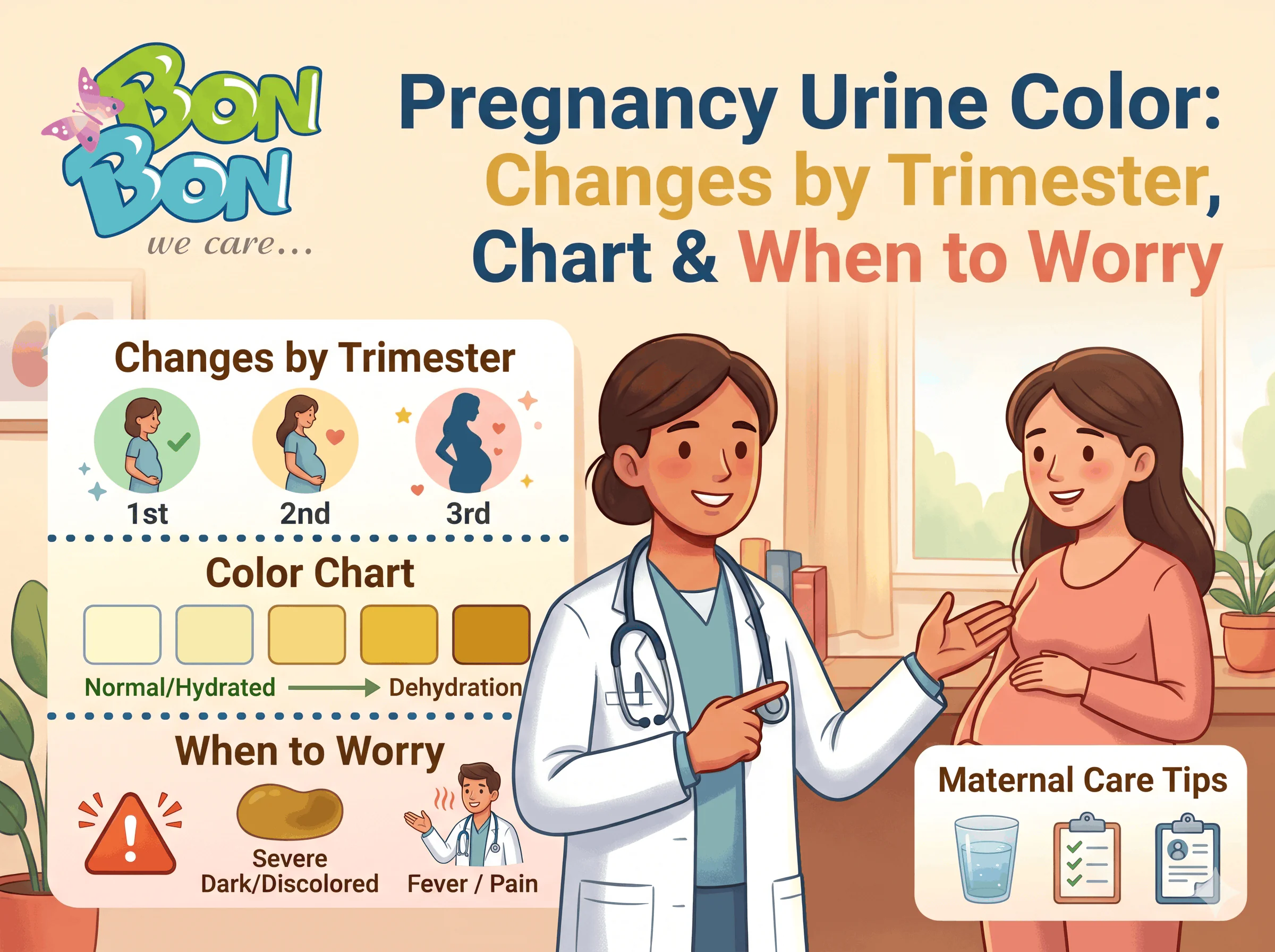
Pregnancy urine color changes naturally as your blood volume expands and metabolic demands shift. Healthy urine during pregnancy ranges from pale straw to light transparent yellow. The most common changes are: (1) Bright neon yellow (harmless excretion of excess Vitamin B2/riboflavin from prenatal supplements), (2) Dark amber or deep yellow (dehydration caused by morning sickness or vomiting), and (3) Cloudy or pinkish-red (warning signs of a urinary tract infection or kidney stones). Urine color reflects hydration and vitamins—it cannot predict baby gender.
Noticing a sudden shift in your urine color during pregnancy is one of the most common surprises expecting mothers face. From the moment of conception, your body experiences dramatic hormonal surges, a 45% increase in total blood volume, and rapid changes in kidney filtration.
While a deep amber tint in the morning or neon brightness after taking your daily prenatal tablet is completely normal, certain urine shades signal underlying medical conditions that require prompt attention.
As part of our clinical urology library—including our master urine color chart and our guide to cloudy urine and pus cells—this guide provides a doctor-reviewed pregnancy urine color chart, explains trimester-by-trimester changes, debunks gender myths, and highlights critical warning signs.
What Does Your Pee Shade Mean During Pregnancy?
Urine gets its natural yellow pigment from urochrome (a byproduct of normal red blood cell breakdown). During pregnancy, several factors alter how diluted or concentrated this pigment appears:
1. Pale Straw to Transparent Yellow (Optimal Hydration)
Pale yellow urine color pregnancy is the clinical gold standard. It indicates that you are drinking enough fluids to support your expanding amniotic fluid levels and your kidneys are filtering waste efficiently.
Aim to maintain this pale straw hue by drinking 2.5 to 3 liters of fluids daily, including water, tender coconut water, and light homemade soups.
2. Bright / Neon Yellow (Prenatal Vitamin Effect)
Waking up or voiding bright, fluorescent neon yellow urine is almost always caused by your prenatal multivitamins.
Prenatal supplements are rich in water-soluble B-complex vitamins, particularly Vitamin B2 (Riboflavin). Because your body absorbs only what it needs, the excess riboflavin is filtered by the kidneys and excreted into your urine, giving it a luminous neon glow. This is 100% harmless to you and your baby.
3. Dark Yellow or Amber (Dehydration / Morning Sickness)
Concentrated amber urine means your kidneys are conserving water because your fluid intake is too low. In early pregnancy, early pregnancy urine color often turns dark amber due to nausea, morning sickness, or Hyperemesis Gravidarum (severe pregnancy vomiting).
If you are losing fluids through vomiting, sip electrolyte-rich drinks like coconut water (*nariyal pani*) or oral rehydration solutions (ORS) throughout the day, as detailed in our guide on dark yellow and amber urine causes.
4. Cloudy or Whitish Urine (Possible UTI or Vaginal Discharge)
Cloudy, murky, or whitish urine is common in pregnancy due to increased physiological cervical discharge (*leukorrhea*) washing into the toilet bowl.
However, if the cloudiness is accompanied by a pungent odor, lower abdominal aching, or burning while peeing, it signals a Urinary Tract Infection (UTI) caused by high pus cells. Pregnant women are at heightened risk of UTIs because progesterone relaxes the ureters, slowing urine flow. For dense white urine, see our guide on milky white urine causes.
5. Pink, Red, or Cola-Colored Urine (Medical Alert)
Pink or reddish urine indicates red blood cells (hematuria). While harmless dietary triggers like eating beetroot can cause temporary pink urine, blood in urine during pregnancy can signal a severe UTI, kidney stone irritation, or vaginal spotting.
Dark brown or tea-colored urine can also indicate pregnancy-related liver congestion (such as Intrahepatic Cholestasis of Pregnancy). Consult your obstetrician promptly if urine turns red or tea-colored, as outlined in our guide on brown urine causes and blood in urine.
Master Pregnancy Urine Color Chart by Trimester
Your urinary system adapts continuously as your baby grows. Here is what to expect during each trimester of pregnancy:
| Pregnancy Stage | Typical Urine Shade | Primary Biological Drivers | Recommended Clinical Action |
|---|---|---|---|
| 1st Trimester (Weeks 1–12) | Dark amber OR bright neon yellow | hCG hormone surge, morning sickness vomiting causing dehydration; starting prenatal vitamins (B-complex). | Sip fluids slowly (coconut water, ginger-infused water); take vitamins with a meal to avoid nausea. |
| 2nd Trimester (Weeks 13–27) | Pale straw to light yellow (ideal) | Blood volume expands by 40–50%; nausea subsides; increased kidney glomerular filtration rate (GFR). | Maintain regular hydration (2.5L daily); routine antenatal urine microscopy to screen for asymptomatic bacteriuria. |
| 3rd Trimester (Weeks 28–40) | Clear/pale yellow OR cloudy / foamy | Baby’s head presses directly against the bladder; higher risk of urinary stasis; preeclampsia screening (proteinuria). | Watch for foamy urine or swelling; manage frequent urges and stress leaks with breathable hygiene protection. |
Can Urine Color During Pregnancy Predict Baby Gender? Myth vs. Fact
Many expecting mothers search for urine color during pregnancy gender prediction myths to guess if they are carrying a boy or a girl:
- The Myth: Dark, dull, or cloudy yellow urine means you are carrying a baby girl; bright neon yellow or clear urine means you are carrying a boy (or vice versa).
- The Scientific Reality: Completely false. A baby’s biological sex is determined at conception by chromosomes (XX or XY) and has zero influence on maternal urinary pH, urochrome excretion, or liver metabolism.
Any color shift you observe is dictated entirely by your fluid intake, foods, and vitamin supplements. The only accurate ways to confirm fetal sex are medical ultrasounds and non-invasive prenatal genetic testing (NIPT) conducted by healthcare professionals.
Pregnancy Complications Indicated by Urine Changes
Routine antenatal visits in India always include a quick dipstick urinalysis. Your doctor is monitoring for three major pregnancy-specific conditions:
1. Preeclampsia (Protein in Urine & Foamy Appearance)
Preeclampsia is a serious condition characterized by high blood pressure developing after week 20 of pregnancy. When high pressure damages renal filtering units, large amounts of albumin protein spill into your urine (*proteinuria*).
This creates persistent, dense foam or froth that does not disappear when flushed. If you notice frothy urine along with facial swelling, sudden headaches, or blurry vision, contact your obstetrician immediately. Learn more in our guide on foamy and bubbly urine causes.
2. Gestational Diabetes (Excessive Clear Urine & Thirst)
Gestational diabetes causes elevated blood glucose levels. When your kidneys exceed their glucose reabsorption threshold, excess sugar spills into the urine, pulling vast amounts of water with it through osmotic diuresis.
This leads to voiding large volumes of completely clear, colorless urine accompanied by extreme thirst and frequent nighttime urination. Learn more in our guide to clear urine causes and overhydration.
3. Asymptomatic Bacteriuria & Acute UTIs
During pregnancy, high progesterone relaxes the smooth muscles of the bladder and ureters, causing urine to pool and flow sluggishly. Bacteria like E. coli can multiply without causing typical burning pain (*asymptomatic bacteriuria*).
Left untreated, a simple bladder infection can travel up to the kidneys, causing acute pyelonephritis and increasing the risk of preterm labor.
Managing Bladder Pressure, Frequency & Leaks in Pregnancy
As your pregnancy enters the second and third trimesters, your growing uterus and baby exert immense downward pressure on your pelvic floor muscles and bladder neck.
Over 50% of pregnant women experience Stress Urinary Incontinence (SUI)—leaking small drops or sudden bursts of urine when coughing, sneezing, laughing, or walking. While pelvic floor exercises (Kegels) help strengthen these muscles, managing leaks cleanly and preventing rashes is critical for expectant mothers.
Comfortable, Rash-Free Protection for Pregnancy & Postpartum Leaks
Whether you are navigating third-trimester bladder pressure or preparing for postpartum recovery (*lochia* and delivery-related bladder weakness), relying on bulky pads that bunch up or shift is uncomfortable and stressful.
As India’s trusted direct-from-factory manufacturer, BonBon Products provides ultra-soft, breathable pull-up pant protection designed for active expectant mothers and postpartum healing:
Crafted with an advanced High-Absorbency Japanese SAP (Super Absorbent Polymer) Core, breathable cottony waistband, and dual leak-guard cuffs, BonBon pull-up pants fit discreetly under maternity kurtas and leggings without show-through lines. For detailed guidance on delivery recovery, explore our clinical guide on incontinence after delivery and postpartum bladder care, or read our comparison of tape-style vs pull-up diapers.
Contact your doctor or visit your maternity hospital immediately if you notice:
- Pink, bright red, or dark bloody urine accompanied by abdominal cramps.
- Persistent foamy or frothy urine with swelling in your hands, face, or ankles (preeclampsia risk).
- High fever, chills, or mid-back kidney pain.
- Dark brown or tea-colored urine with yellowing of the eyes or severe skin itching (cholestasis risk).
- Severe pain or burning when passing urine that lasts more than 24 hours.
Frequently Asked Questions About Pregnancy Urine Color
Explore Our Complete Clinical Urine Health Library
Understanding urinary variations provides critical insights into your hydration, kidney health, and overall well-being. Explore our doctor-reviewed guides:
- Master Urine Color Chart: Doctor-Reviewed Visual Hydration & Health Guide
- Urine Infection Foods to Eat & Avoid: Complete Indian UTI Diet Guide
- Incontinence After Delivery: Postpartum Bladder Care & Recovery Guide
- Cloudy Urine & Pus Cells: Causes, Urinalysis pH, Crystals & Treatment
- Milky White Urine Causes: Chyluria, Phosphaturia, Male & Female Remedies
- Clear Urine Causes: Why Is My Pee Clear Like Water & Overhydration Risks
- Dark Yellow & Amber Urine: Dehydration, Summer Heat & Home Remedies
- Orange Urine Causes: Liver, Bile Congestion, Medications & Remedies
- Brown & Tea-Colored Urine: Rhabdomyolysis, Liver Disease & Kidney Warnings
- Foamy & Bubbly Urine: Kidney Disease, Proteinuria vs. Normal Bubbles
- Blood in Urine (Hematuria): Infection, Kidney Stones & Critical Warning Signs
