

Managing Incontinence in Joint Family Homes

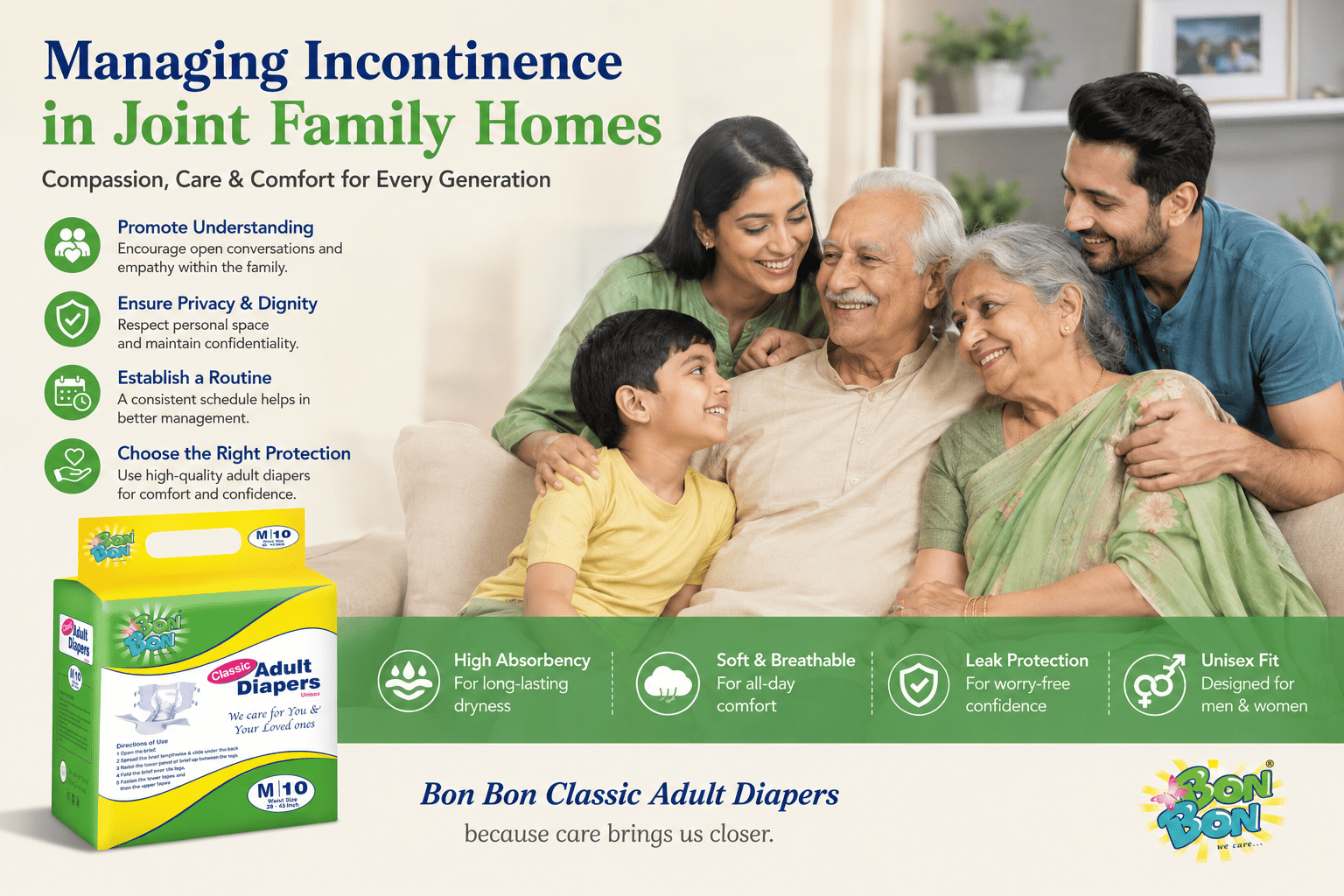
Managing Incontinence in Joint Family Homes
Living in a joint family home offers warmth, support, and shared responsibilities—benefits that become especially valuable when caring for a family member with urinary incontinence. However, managing incontinence in a multigenerational household also presents unique challenges, from maintaining privacy and dignity to coordinating care among multiple family members. Understanding how to navigate these situations with sensitivity and practical strategies can transform the experience for everyone involved.
In 2026, approximately 30-40% of older adults in India experience some form of urinary incontinence, and many live within joint family structures. This reality requires families to develop comprehensive approaches that balance medical needs with emotional well-being, all while preserving the close-knit dynamics that make joint families special.
Creating a Supportive and Private Environment
Privacy stands as one of the most critical concerns when managing incontinence in joint family homes. The person experiencing incontinence deserves dignity and personal space, even within a bustling household.
Start by designating a private area for changing and personal care. If possible, ensure the affected family member has access to an attached bathroom or one located nearby. Install simple privacy measures like curtains, screens, or locks that signal when assistance is not needed. These small adjustments communicate respect and help maintain independence.
Storage solutions also play a vital role. Keep incontinence supplies like adult diapers in discreet, easily accessible locations. Use opaque containers or dedicated cabinets in the bathroom or bedroom. This prevents unnecessary exposure and allows the individual to manage their condition with minimal interference from well-meaning but intrusive family members.
Consider noise and odor management as well. Proper ventilation, regular disposal routines, and the use of high-quality, odor-controlling products help maintain a comfortable environment for everyone. BonBon Products offers leak-proof and skin-friendly options that minimize odor concerns while providing reliable protection.
Educating Family Members About Incontinence
Misconceptions about urinary incontinence can lead to stigma, embarrassment, and inadequate care. Education becomes essential in joint families where multiple generations may hold different beliefs about aging, health, and bodily functions.
Organize a family meeting to discuss incontinence openly and compassionately. Explain that incontinence is a medical condition—not a sign of laziness, lack of hygiene, or inevitable decline. According to the NHS, certain lifestyle modifications and exercises can actually improve bladder control, demonstrating that incontinence is manageable and often improvable.
Address common myths directly. Many family members may believe that restricting fluids helps reduce accidents, but proper hydration is actually crucial for bladder health. Others might assume that incontinence products are uncomfortable or ineffective, when modern solutions like those from BonBon Products offer both comfort and high absorbency.
Encourage younger family members to approach the situation with empathy and maturity. Children and teenagers living in the home should understand the basics without being burdened with caregiving responsibilities beyond their capacity. Age-appropriate conversations help normalize the condition and prevent teasing or insensitive remarks.
Establishing Coordinated Care Routines
In joint families, multiple caregivers often share responsibilities. While this distribution of duties can prevent burnout, it also requires careful coordination to ensure consistent, quality care.
Create a simple care schedule that outlines who assists with what tasks and when. This might include reminders for bathroom visits, diaper changes, medication administration, and laundry duties. A shared calendar or mobile app can help everyone stay informed and accountable.
Standardize care procedures so that regardless of who provides assistance, the approach remains consistent. Document preferences for specific products, changing techniques, skin care routines, and comfort measures. Given that some individuals may be bedridden patients, specific considerations for their care, including product choice and changing techniques, become especially vital. BonBon Products offers various styles including pant and tape options, so note which type works best for different times of day or activity levels.
Regular caregiver check-ins allow family members to share observations, concerns, and updates. These meetings also provide opportunities to rotate responsibilities, preventing any single person from becoming overwhelmed. Recognize that caregiving is demanding work, and mutual support among family members strengthens everyone’s capacity to help.
Consider the CDC’s physical activity guidance when planning daily routines. Encouraging appropriate exercise and movement can improve bladder control and overall health, reducing incontinence episodes over time.
Selecting the Right Incontinence Products
The quality of incontinence products dramatically affects comfort, confidence, and quality of life. With numerous options available in 2026, choosing the right solution requires understanding individual needs and product features.
Consider absorbency levels first. Daytime needs may differ from nighttime requirements, and activity levels influence how much protection is necessary. High-absorbency products prevent leaks during extended wear periods or for individuals with more severe incontinence.
Fit and style matter significantly. Pant-style diapers offer convenience for those who can dress independently and prefer underwear-like discretion. Tape-style options provide adjustability and easier changes for caregivers assisting individuals with limited mobility. For those requiring timely supplies directly to their doorstep, an adult diapers home delivery India order guide can be incredibly helpful. BonBon Products provides both styles, allowing families to choose based on specific circumstances.
Skin health deserves priority attention. Products should be breathable and designed with skin-friendly materials that prevent rashes, irritation, and pressure sores. In India’s varied climate conditions, moisture management becomes especially important. Look for products with features that wick moisture away from skin while maintaining reliable leak protection.
Cost-effectiveness matters in joint families managing multiple expenses. However, investing in quality products often reduces overall costs by preventing leaks that damage clothing and bedding, minimizing skin problems that require medical treatment, and preserving dignity that supports emotional well-being.
Addressing Emotional and Social Challenges
The psychological impact of incontinence affects both the individual experiencing it and the family members providing care. Joint family dynamics can either exacerbate or alleviate these emotional challenges.
Maintain open communication without making incontinence the defining feature of family interactions. Continue involving the affected family member in decisions, celebrations, and daily life. Social isolation often develops when individuals fear embarrassment, so reassurance and inclusion become vital.
Respect the person’s autonomy and preferences. Even when providing care, offer choices whenever possible—which product to use, when to schedule changes, how to arrange their personal space. These decisions affirm their agency and prevent feelings of helplessness.
Address caregiver stress proactively. Family members providing intimate care may experience emotional strain, physical fatigue, and conflicted feelings. Creating space for these caregivers to express frustrations, seek respite, and maintain their own health prevents resentment and burnout.
Consider professional support when needed. Healthcare providers, counselors, and support groups offer valuable resources beyond what family alone can provide. In 2026, both in-person and virtual support options make professional guidance more accessible than ever.
Maintaining Household Hygiene and Comfort
Practical hygiene measures protect everyone’s health and comfort in joint family homes where space is shared and generations mingle.
Establish clear disposal procedures for used incontinence products. Sealed disposal bags and designated waste bins with tight-fitting lids prevent odor and contamination. Regular trash removal prevents accumulation and maintains freshness throughout the home.
Implement protective measures for shared furniture and sleeping areas. Waterproof mattress protectors, washable chair covers, and easy-clean surfaces reduce anxiety about accidents and simplify cleanup when they occur. These precautions allow the affected family member to participate fully in household activities without constant worry.
Create efficient laundry systems for managing soiled clothing and linens. Quick treatment of stains, appropriate detergents, and sufficient supplies ensure that laundry never becomes overwhelming. Some families designate specific loads for incontinence-related items, while others integrate them into regular washing with proper sanitary practices.
Maintain adequate ventilation throughout the home. Fresh air circulation, air purifiers, and natural light contribute to a pleasant environment for all residents. While not directly related to managing incontinence, it’s worth noting that incontinence isn’t exclusive to older adults; for example, adult diapers for women after childbirth are a common and effective solution for postpartum recovery. These measures benefit everyone’s respiratory health and emotional well-being, not just those affected by incontinence.
Conclusion
Managing incontinence in joint family homes requires practical strategies, emotional intelligence, and quality products that support dignity and comfort. By creating private spaces, educating all family members, coordinating care effectively, selecting appropriate products, addressing emotional needs, and maintaining household hygiene, families can navigate this challenge successfully.
The joint family structure offers unique advantages in caregiving—multiple supporters, shared responsibilities, and deep emotional bonds that sustain both caregivers and care recipients through difficult times. With the right approach and reliable products like those from BonBon Products, families can ensure that incontinence becomes a manageable condition rather than a defining limitation.
Embrace open communication, prioritize dignity, and remember that quality incontinence solutions make a profound difference in daily life. Every family member deserves comfort, respect, and the opportunity to thrive within the warmth of their joint family home.
