


Incontinence After Delivery: Causes, Symptoms, Recovery & Ways to Manage Urine Leakage

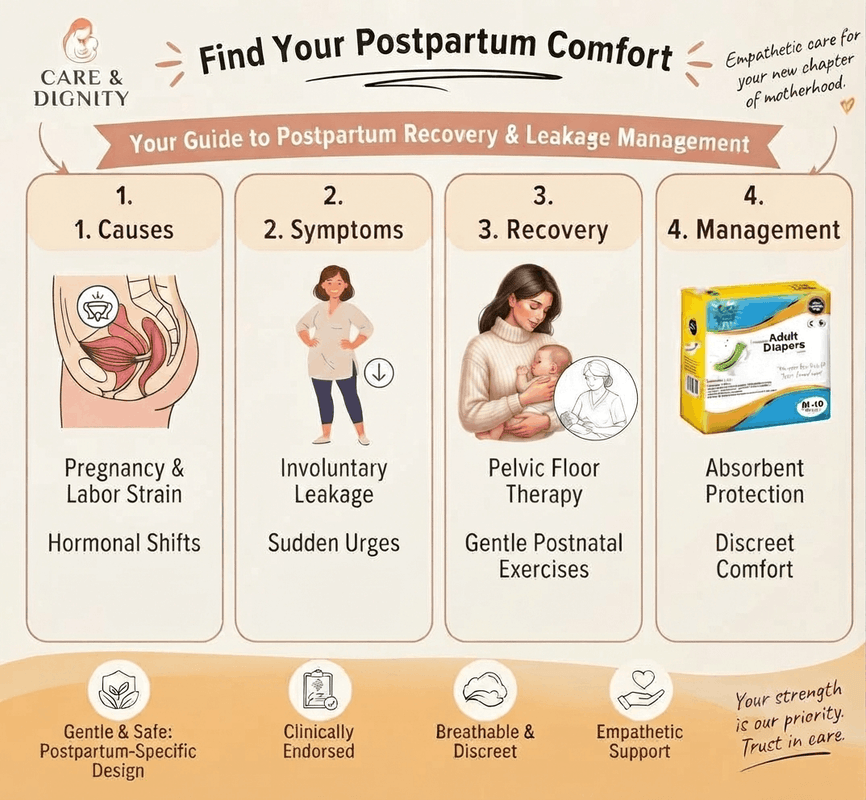
Urine leakage after delivery is common, especially when coughing, sneezing, laughing, exercising, or suddenly feeling the need to urinate. Pregnancy and childbirth can temporarily affect the pelvic floor muscles and the structures that help control the bladder. For many women, symptoms improve during recovery, while persistent or bothersome leakage should be discussed with a healthcare professional.
Postpartum incontinence can be uncomfortable or embarrassing, but it is a health issue that can be managed. Understanding the causes, symptoms, recovery process, pelvic floor exercises, and practical protection options can make the postpartum period easier.
What Is Incontinence After Delivery?
Incontinence after delivery means unintentionally leaking urine after giving birth. It can range from a few drops when you sneeze or cough to more frequent leakage or a sudden inability to reach the toilet in time.
Urinary incontinence is different from normal postpartum vaginal bleeding. Urine leakage is related to bladder control, while postpartum bleeding is part of the body’s recovery after childbirth.
Is Urine Leakage After Childbirth Normal?
Some urine leakage after childbirth is common. The pelvic floor muscles support the bladder, uterus and other pelvic organs, and pregnancy and childbirth can stretch, weaken or otherwise affect these muscles and surrounding tissues.
However, common does not mean you have to ignore it. If urine leakage continues, becomes troublesome, or affects daily activities, speak with a doctor, obstetrician-gynaecologist, or pelvic health physiotherapist.
NHS guidance specifically recommends discussing bladder-control problems at the postnatal check if pelvic floor exercises are not helping.
What Causes Incontinence After Delivery?
Several factors can contribute to postpartum urinary incontinence.
1. Pelvic Floor Weakness
The pelvic floor is a group of muscles that helps support the bladder and other pelvic organs. Pregnancy and childbirth can place significant stress on these muscles.
When the pelvic floor does not provide enough support, urine may leak when pressure is placed on the bladder.
2. Pregnancy and Vaginal Birth
Pregnancy itself can contribute to urinary incontinence. Vaginal delivery may further stretch or affect the pelvic floor and surrounding tissues.
This is why some women notice urine leakage when coughing, laughing, sneezing, lifting, or changing position after childbirth.
3. Changes to Muscles and Nerves
Pregnancy and childbirth can affect the muscles, connective tissues and nerves involved in pelvic floor function. In some women, these changes recover naturally; in others, symptoms can persist and require assessment or treatment.
4. Other Postpartum Factors
Constipation, changes in bladder habits, pelvic floor dysfunction and other health conditions can also contribute to urinary symptoms.
Because the cause can vary from person to person, persistent leakage should not automatically be assumed to be caused only by childbirth. The American College of Obstetricians and Gynecologists (ACOG) notes that pelvic floor disorders can have multiple contributing factors.
Types of Incontinence After Childbirth
Postpartum urine leakage can happen in different ways. The Mayo Clinic classifies urinary incontinence into several types.
Stress Incontinence
Stress incontinence happens when urine leaks because pressure is placed on the bladder.
Common triggers include:
- Coughing
- Sneezing
- Laughing
- Exercising
- Jumping
- Lifting something
This type of leakage is commonly associated with weakness or dysfunction of the pelvic floor and urinary sphincter.
Urge Incontinence
Urge incontinence occurs when a sudden, strong urge to urinate is followed by urine leakage.
You may feel that you need to reach the toilet immediately but cannot always get there in time.
Mixed Incontinence
Some women experience both stress and urge incontinence. The symptoms can therefore vary depending on the situation.
Common Symptoms of Postpartum Incontinence
Postpartum urinary incontinence can include:
- Small urine leaks when coughing or sneezing
- Leakage while laughing
- Urine leakage during physical activity
- A sudden strong urge to urinate
- Difficulty reaching the toilet in time
- Frequent urination
- Urine leakage during the night — see our guide on adult diapers for night use
Some women experience only occasional drops, while others may have more frequent leakage.
How Long Does Incontinence After Delivery Last?
There is no single recovery timeline for every woman.
Some bladder-control symptoms improve as the body recovers after childbirth. Others can continue for weeks or longer and may require pelvic floor exercises, physiotherapy or medical evaluation.
The important point is not to assume that ongoing incontinence must simply be accepted as part of motherhood.
If leakage is still bothering you during your postpartum recovery, mention it during your postnatal check or contact your healthcare professional sooner.
Can Pelvic Floor Exercises Help After Delivery?
Pelvic floor muscle exercises can help strengthen the muscles involved in bladder control. They are commonly recommended for urinary incontinence and postpartum pelvic floor recovery.
A basic pelvic floor exercise involves gently tightening the muscles used to control urine and bowel movements, holding the contraction, and then relaxing.
However, technique matters. Some women may accidentally use the wrong muscles or perform the exercises incorrectly. A pelvic health physiotherapist can assess your pelvic floor and provide an exercise programme suited to your condition.
Do not repeatedly stop your urine stream as a regular exercise. Instead, learn to identify and contract the pelvic floor muscles separately from normal urination. See the NHS pelvic floor exercise guide for step-by-step instructions.
Other Ways to Manage Urine Leakage After Delivery
Treatment depends on the type and severity of incontinence.
A healthcare professional may recommend:
- Pelvic floor muscle training
- Bladder training
- Lifestyle changes
- Pelvic health physiotherapy
- Further assessment if symptoms persist
- Other medical treatments when appropriate
Bladder training may help some people improve control over urinary urgency and the time between toilet visits.
It is also useful to pay attention to constipation, fluid habits and drinks that may irritate the bladder, such as caffeinated beverages. Your healthcare professional can advise you based on your individual symptoms.
When Should You See a Doctor for Postpartum Incontinence?
You should discuss urinary incontinence with a healthcare professional if it is persistent, worsening, difficult to manage, or affecting your everyday life.
You should also seek medical advice if you have symptoms such as:
- Difficulty emptying your bladder
- Painful urination
- Significant pelvic pain
- Persistent or worsening urinary symptoms
- Accidental bowel leakage
- A feeling of pelvic pressure or bulging
- Symptoms that are affecting your physical or emotional wellbeing
Postpartum pelvic floor problems are treatable in many cases, and specialist pelvic health services may be appropriate when symptoms continue.
Can You Use Adult Diapers After Delivery?
Yes. Absorbent incontinence products can be used as a practical way to manage urine leakage after delivery.
For women experiencing occasional or regular postpartum leakage, suitable absorbent protection can help protect clothing and bedding and make everyday activities more comfortable.
The right product depends on the amount of leakage, body size, mobility and personal preference.
For lighter leakage, an absorbent pad may be sufficient. For heavier leakage or situations where longer protection is needed, adult diaper pants may provide additional coverage. See our guide on adult diapers that don’t leak for review-backed recommendations.
Importantly, absorbent products manage leakage; they do not treat the underlying cause of incontinence. Persistent symptoms should still be discussed with a healthcare professional.
How to Choose Adult Diaper Pants for Postpartum Leakage
If you decide to use adult diaper pants after delivery, focus on four things:
1. Correct Size
A good fit should feel secure without being excessively tight.
An incorrect size can contribute to discomfort and may increase the chance of leakage. Use our adult diaper size chart to find your perfect fit. Popular postpartum sizes include adult diaper pants small size, adult diaper M size, adult diaper large size, and adult diaper XL size.
2. Absorbency
Choose absorbency according to your actual level of urine leakage rather than automatically selecting the highest absorbency available. For heavier leakage, our leak-proof adult diapers are a good starting point.
3. Comfort
A stretchable waistband and soft materials can make a difference when the product is worn for extended periods.
4. Discretion
For postpartum use, many women prefer protection that fits comfortably under everyday clothing without unnecessary bulk. Read our adult diapers for women guide for more tips on discreet wear.
BON BON Adult Diaper Pants for Women
BON BON adult diaper pants for women are designed as pull-up-style protection that can be worn similarly to underwear.
The product range includes different sizes, making it important to check the size chart before purchasing.
For women experiencing postpartum urinary leakage, adult diaper pants can provide practical absorbent protection while they work on recovery and bladder control.
Remember: adult diapers are a management and protection option, not a replacement for medical evaluation or pelvic floor rehabilitation.
Postpartum Incontinence: What You Should Remember
Incontinence after delivery is common, but it should not be something you feel ashamed to discuss.
Pregnancy and childbirth can affect the pelvic floor and bladder-control system. Some women improve naturally as they recover, while others benefit from pelvic floor exercises, physiotherapy or additional medical care.
If you’re dealing with urine leakage after childbirth, focus on two things: supporting recovery and managing leakage comfortably while you recover.
Absorbent products such as adult diaper pants can provide practical protection when needed, while persistent or troublesome symptoms deserve professional attention. If you’re new to using adult diapers, see our guide for first-time users.
Frequently Asked Questions
Is incontinence after delivery common?
Yes. Urine leakage can occur after childbirth, particularly when coughing, sneezing, laughing or moving suddenly. Pregnancy and childbirth can affect the pelvic floor muscles involved in bladder control.
Can postpartum incontinence go away on its own?
It can improve as the body recovers after childbirth, but recovery varies. Persistent symptoms should be discussed with a healthcare professional rather than simply ignored.
What exercises help postpartum urinary incontinence?
Pelvic floor muscle exercises, commonly called Kegel exercises, can help strengthen the muscles involved in bladder control. Correct technique is important, and a pelvic health physiotherapist can provide personalised guidance. See the NHS pelvic floor exercise guide for details.
Can I wear adult diapers after giving birth?
Yes. Adult diaper pants can be used as absorbent protection for urine leakage after childbirth. They can help manage leakage while the underlying symptoms are being addressed. See our adult diaper pants collection and our guide on adult diapers for women.
Should I be embarrassed about postpartum incontinence?
No. Urinary incontinence is a common health problem, and healthcare organisations recommend discussing bladder-control symptoms with healthcare professionals.
When should I seek help for urine leakage after delivery?
Speak with your doctor, midwife, obstetrician-gynaecologist or pelvic health physiotherapist if leakage persists, becomes troublesome, or is accompanied by other concerning symptoms.
Where can I buy adult diaper pants for postpartum leakage?
You can buy adult diaper pants online in India with discreet delivery. If you need bulk quantities for a longer recovery or for caregiving, see our adult diaper pants wholesale options.
Final Takeaway
Incontinence after delivery is a common postpartum concern, but it is manageable and worth discussing. Pelvic floor recovery, appropriate exercises, professional guidance and practical absorbent protection can all have a role.
If urine leakage is affecting your confidence or daily routine, you don’t have to simply live with it. Get appropriate medical guidance and choose comfortable protection while your body recovers. If you have questions about the right product for your situation, contact our team — we’re happy to help.
Medical & Trust References
This article is intended for general educational purposes and is not a substitute for individual medical advice. Information about postpartum bladder control, pelvic floor exercises and when to seek professional support has been cross-checked against guidance from the following trusted sources:
