


Urine Leakage: Causes, Symptoms and How to Manage It

Last updated: October 2026 | Reviewed by: BonBon Health Team | Sources: NIDDK (NIH), NHS UK, Cleveland Clinic
Urine Leakage: Causes, Symptoms and How to Manage It
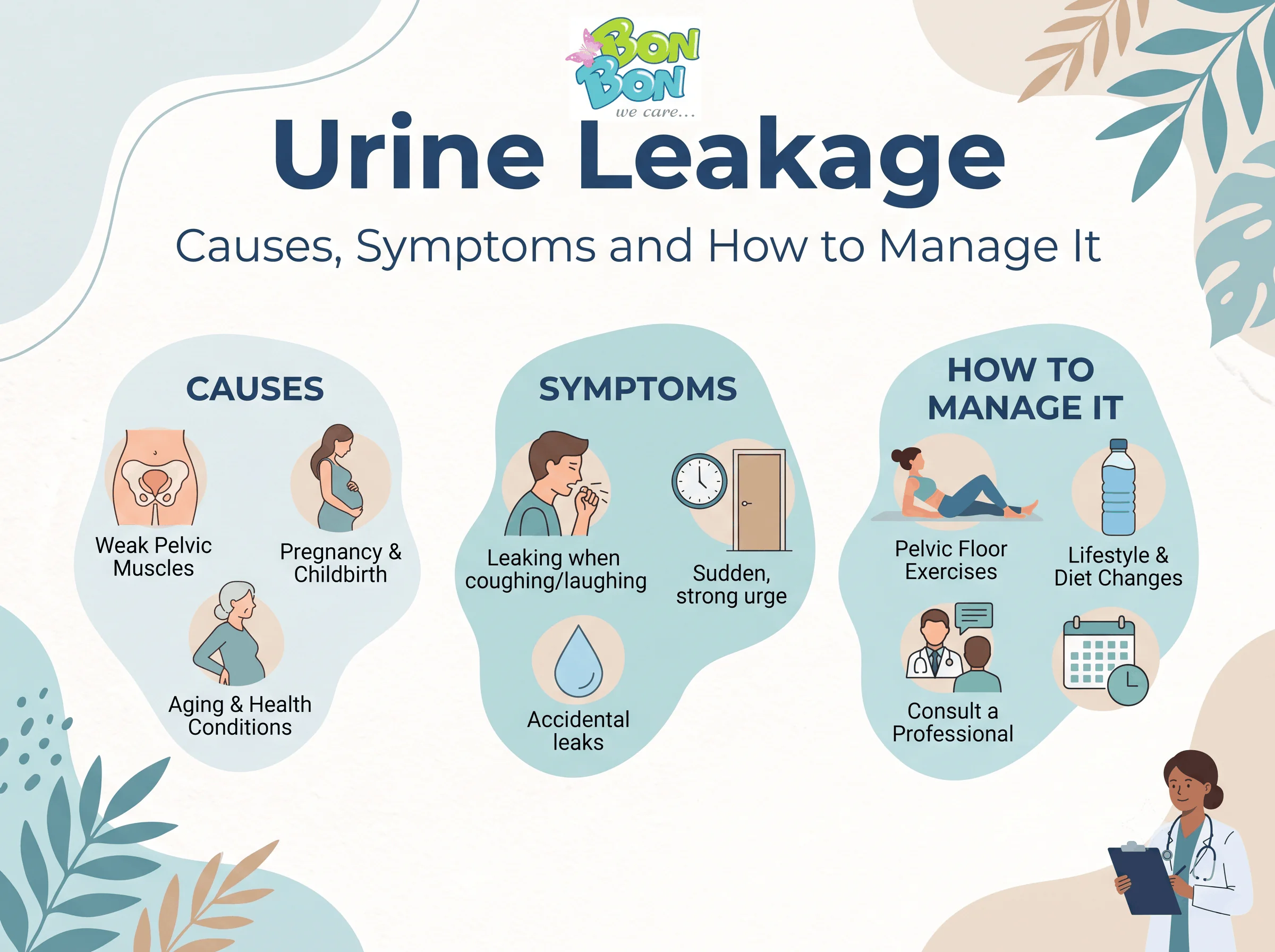
Urine leakage, also called urinary incontinence, is the accidental loss of urine. It happens when the muscles that control your bladder are weakened, when your bladder contracts unexpectedly, or when it doesn’t empty completely. It is common, it is not a normal part of ageing, and effective help is available.
If you are leaking urine, the first step is understanding why. The cause determines the right treatment.
Quick Answers: Common Urine Leakage Questions
| Question | Answer |
|---|---|
| Why do I leak when I cough or sneeze? | This is stress incontinence. Sudden pressure on your pelvic floor muscles overcomes them, allowing urine to escape. |
| Why do I suddenly need to pee and can’t hold it? | This is urge incontinence (overactive bladder). Your bladder muscle contracts before you are ready. |
| Why do I dribble after urinating? | This is post-micturition dribble. Urine gets trapped in the urethra and leaks out shortly after you finish. |
| Is it dangerous? | Leakage itself is not dangerous. But blood in urine, painful urination, or inability to pass urine needs immediate medical attention. |
Types of Urinary Incontinence
There are several types. You may have more than one at the same time (mixed incontinence).
Stress Incontinence
Leakage during coughing, sneezing, laughing, lifting, or exercise. The pelvic floor muscles or urethral sphincter are too weak to hold urine when pressure increases.
Urge Incontinence
A sudden, intense urge to urinate followed by involuntary leakage. Often part of overactive bladder syndrome, where the detrusor muscle contracts without warning. See our overnight diapers guide if you are affected at night.
Overflow Incontinence
The bladder never empties completely. Urine trickles out frequently because the bladder is always partially full.
Mixed Incontinence
A combination of stress and urge symptoms. Common in women, especially after childbirth or menopause.
Post-Micturition Dribble
Leakage immediately after finishing urination. Most common in men. Caused by urine trapped in the urethra.
Why Does Urine Leakage Happen?
Urine leakage happens when the normal storage-and-release system fails. This can be due to muscle weakness, nerve problems, bladder overactivity, or blockages.
Causes in Women
- Pregnancy and childbirth — pressure on the bladder and stretching of pelvic floor muscles.
- Menopause — reduced oestrogen weakens the urethra.
- Pelvic organ prolapse — weakened support allows the bladder to sag.
- Hysterectomy or pelvic surgery.
Causes in Men
- Prostate enlargement (BPH) — blocks urine flow and causes overflow.
- Prostate surgery — can weaken the sphincter.
- Post-micturition dribble — trapped urine in the urethra.
Causes in Both
- Urinary tract infections (UTIs) — irritate the bladder. See our guide on foods to avoid with a UTI.
- Constipation — presses on the bladder.
- Obesity — increases pressure on the pelvic floor.
- Chronic coughing — from smoking or lung conditions.
- Neurological conditions — stroke, Parkinson’s, spinal injury.
Urine Leakage During Pregnancy
Pregnancy is a major cause of stress incontinence. The growing uterus presses on the bladder, and pregnancy hormones soften pelvic floor muscles.
How common is it? One study found 27.7% of first-time mothers experienced leakage during pregnancy. This dropped to 14.3% six months after birth.
Does it go away? For many women, yes. Bladder control usually returns within 3 to 6 months after delivery. However, women who leak during pregnancy are 3 to 4 times more likely to still leak postpartum.
When to seek help: If leakage continues 6 weeks or more after birth, speak to your doctor. Pelvic floor rehabilitation is a protective factor against long-term leakage.
For more, see our guide on incontinence after delivery. If you are caring for an older adult, see our diapers for older adults guide.
How to Manage Urine Leakage
Management depends on the type and severity. Most people start with lifestyle changes and pelvic floor exercises before considering medication or surgery.
1. Pelvic Floor Muscle Exercises (Kegels)
What they do: Strengthen the muscles that support your bladder and urethra.
How to do them:
- Squeeze the muscles you would use to stop passing gas or stop urine mid-flow.
- Hold for 3 seconds. Relax for 5-10 seconds.
- Work up to 10-15 repetitions, 3 times a day.
- Do them lying down, sitting, and standing for best results.
- Do not practise stopping urine flow during actual urination. This can cause incomplete emptying and infection.
- Do not overdo it. Overworking the pelvic floor can cause tension and make leakage worse.
- Get professional guidance if you are unsure you are squeezing the right muscles. A pelvic floor physiotherapist can confirm technique.
How long until results? Most people notice improvement after 3 to 6 weeks of consistent practice.
2. Bladder Training
What it does: Helps you urinate on a schedule, gradually increasing the time between bathroom visits.
Best for: Urge incontinence and overactive bladder.
How to start:
- Keep a bladder diary for 3 days. Note when you urinate and when you leak.
- Plan bathroom visits based on your diary. For example, every 2 hours.
- Gradually extend the interval by 15-30 minutes each week.
- Use urge suppression techniques — deep breathing, distraction, or quick pelvic floor squeezes — when you feel a sudden urge.
3. Lifestyle Changes
Weight management: Losing weight reduces pressure on the bladder. Even modest weight loss can reduce leakage.
Diet and fluids:
- Reduce caffeine, alcohol, and carbonated drinks. These irritate the bladder and increase urine production.
- Stay hydrated. Drinking less water concentrates urine, which irritates the bladder and makes urgency worse.
- Increase fibre to prevent constipation, which presses on the bladder.
Stop smoking: Smoking causes chronic coughing, which weakens pelvic floor muscles and triggers stress incontinence.
4. Post-Micturition Dribble Techniques (Men)
Urethral milking: After urinating, gently press upward on the skin behind the scrotum (perineum) and move your fingers toward the base of the scrotum. Then shake the penis gently to drain remaining urine.
Targeted pelvic floor exercises: Tighten the rectal muscles, hold for 5 seconds, relax for 10 seconds. Repeat 15 times morning and night.
5. Absorbent Products
Incontinence pads and underwear are for management, not treatment. They allow you to stay comfortable and confident while you work on the underlying cause.
How to choose:
- Light leakage: Discreet liners or incontinence underwear.
- Moderate leakage: Absorbent pads or pull-up style diapers.
- Heavy leakage or overnight: Higher absorbency tape-style diapers.
For a full range of protective options, see our adult diaper pants and tape-style diapers.
6. Medical Treatments
If lifestyle measures and pelvic floor exercises do not help enough, your doctor may discuss:
- Medications for overactive bladder (anticholinergics, beta-3 agonists).
- Topical oestrogen for post-menopausal women.
- Surgical options for stress incontinence, such as sling procedures.
- Biofeedback or electrical stimulation to help you identify and strengthen the right muscles.
When to See a Doctor
- Blood in your urine
- Painful urination
- Difficulty passing urine or feeling your bladder never empties
- Leakage that interferes with daily life or makes you avoid social activities
- New or worsening symptoms
Seek urgent care if you:
- Cannot pass urine at all (urinary retention)
- Have weakness or numbness in your legs along with leakage
Urinary incontinence is treatable. You do not have to live with it.
Frequently Asked Questions
Q: Is urine leakage normal during pregnancy?
A: It is common — about 1 in 4 first-time mothers experience it. But “common” does not mean you should ignore it. Pelvic floor exercises during and after pregnancy can reduce symptoms. See our postpartum incontinence guide.
Q: How do I know if I’m leaking urine or amniotic fluid?
A: Amniotic fluid is thin, clear, and odourless. Urine is watery, pale yellow, and smells of ammonia. If you are unsure, contact your doctor immediately.
Q: Can Kegel exercises fix my leakage?
A: They help many people, especially with stress incontinence and post-micturition dribble. But they are not a universal fix. Pelvic floor muscle training works best with professional guidance.
Q: Do I need to do Kegels every day?
A: Yes — consistency matters. Aim for 3 sessions per day. Most people see improvement after 3-6 weeks.
Q: What is the best position to do Kegels?
A: Start lying down to isolate the muscles. Then progress to sitting and standing. This makes the muscles strongest for real-life situations.
Q: When should I see a doctor for urine leakage?
A: See a doctor if leakage affects your quality of life, continues after 6 weeks postpartum, or comes with pain, blood in urine, or difficulty urinating.
Q: Can I use adult diapers while I treat the cause?
A: Yes. Absorbent products manage symptoms while you work on the underlying cause. See our full range of pull-up pants and tape-style diapers.
Q: Urine leak kyu hota hai?
A: Urine leak tab hota hai jab pelvic floor muscles kamzor ho jaati hain, bladder muscle bina control contract karta hai, ya bladder poora khaali nahi hota. Pregnancy, delivery, menopause, prostate problems, aur UTI iske common causes hain.
Key Takeaways
- Urine leakage is common but not normal. It has treatable causes.
- Stress incontinence = leakage with coughing, sneezing, laughing.
- Urge incontinence = sudden, intense urge to pee.
- Post-micturition dribble = leakage after urinating (common in men).
- Pelvic floor exercises help but must be done correctly. Get guidance.
- Bladder training works for urge symptoms.
- Lifestyle changes (weight, diet, fluids, smoking) reduce leakage.
- Absorbent products manage symptoms while you address the cause.
- See a doctor for blood in urine, pain, or difficulty passing urine.
Sources & References
- NIDDK (NIH) — Bladder Control Problems & Urinary Incontinence
- NHS UK — Urinary Incontinence Overview
- Cleveland Clinic — Pregnancy and Bladder Control
- WHO — Ageing and Health
Reviewed by: BonBon Health Team
Last updated: October 2026
Next review: April 2027
Need Help Choosing Protection for Leakage?
BonBon adult diapers offer high-absorbency, leak-proof protection for light to heavy incontinence. Available in pant and tape styles, sizes S to XXL.
🛒 Shop Adult Diapers 💬 Get Free Help on WhatsApp