


Reddish Yellow Urine: Causes, Health Signs & When to See a Doctor

What Does Reddish Yellow Urine Mean?
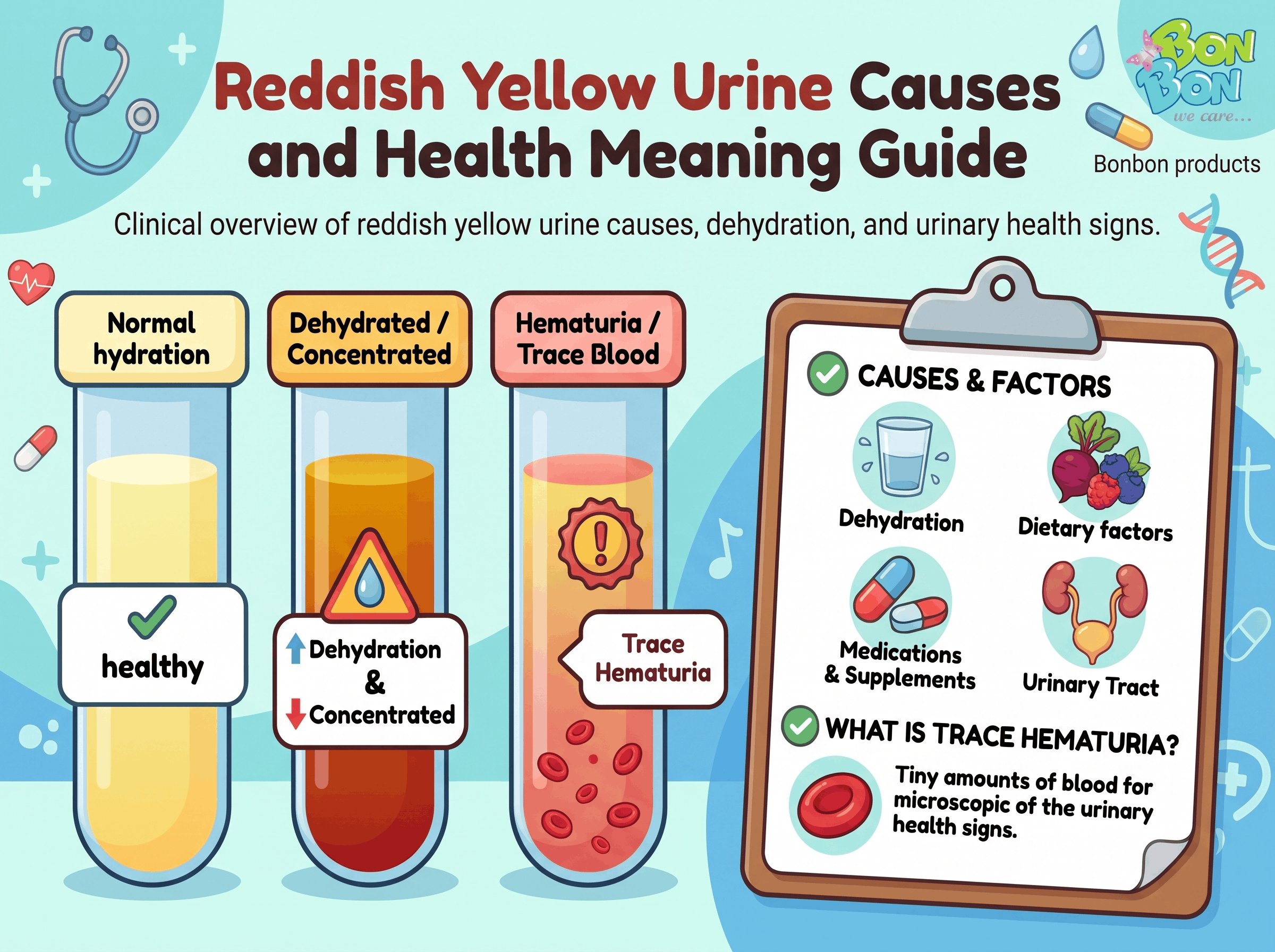
Passing reddish yellow urine (or yellowish red urine) occurs when natural yellow urochrome pigment mixes with red or orange compounds. Specifically, the most common causes include severe dehydration concentrating metabolic waste, trace microscopic hematuria from early urinary tract infections or kidney stone gravel, dietary pigments like beetroot, and medications such as Rifampicin or Phenazopyridine.
1. Reddish Yellow Urine vs. Normal Urine: Visual Differences
In a healthy individual, urine clarity ranges from pale straw to transparent yellow. However, when fluid balance shifts or urinary tissues suffer minor irritation, the shade warms into an unmistakable reddish-amber or yellowish-red hue. Therefore, recognizing visual nuances helps you determine whether your body needs water or medical evaluation.
When fluid intake drops, kidneys retain water and excrete highly concentrated solutes. Consequently, dense urobilin pigments deepen normal yellow into a glowing reddish-amber shade. Explore our guide on dark yellow and amber urine causes.
Even a tiny drop of blood contains millions of red blood cells. Consequently, when minimal blood mixes into normal yellow pee, the liquid turns distinctly yellowish-red rather than dark red. Furthermore, you can learn more in our clinical review of blood in urine (hematuria).
Certain common prescription drugs in India alter urine color dramatically. Specifically, antibiotics like Rifampicin or bladder painkillers like Phenazopyridine create bright fluorescent reddish-yellow tints. In addition, read our complete guide on orange urine causes.
For example, consuming beetroot (chukandar), blackberries, or excessive carrots introduces betalain and carotenoid pigments. In particular, in individuals with low stomach acid, these compounds pass directly into urine, creating harmless reddish-yellow discoloration.
2. The 5 Major Causes of Reddish Yellow Urine
Understanding the clinical mechanisms behind reddish yellow urine helps you take the right corrective action without panic. Specifically, physicians classify these causes into five primary groups:
1. Concentrated Urine from Acute Dehydration
First, fluid deficit is the leading non-medical explanation for warm-toned urine. During scorching Indian summer days, intense workout sessions, or prolonged religious fasting, your kidneys conserve every drop of moisture. Consequently, metabolic wastes concentrate heavily, producing dark yellowish-red urine with a distinct ammonia scent. Therefore, drinking two glasses of water or electrolyte fluids immediately helps restore healthy balance.
2. Urinary Tract Infections (Bacterial Cystitis)
Second, bacterial invasion from organisms like E. coli inflames delicate bladder capillaries. As a result, minute quantities of blood seep into the bladder, mixing with yellow urine to produce a hazy, reddish-yellow appearance. In addition, this condition is frequently accompanied by painful burning during voiding. If you experience stinging micturition, review our guide to burning sensation in urine.
3. Kidney Stones & Microscopic Sediment
Third, tiny mineral crystals (calculi) moving through the ureters can scratch sensitive mucosal linings. Consequently, microscopic bleeding occurs long before severe flank spasms begin. If you notice floating particles or grittiness alongside reddish-yellow pee, read our diagnostic breakdown of white particles and sediment in urine.
4. Benign Prostatic Hyperplasia (BPH in Older Men)
Fourth, an enlarged prostate gland constricts the male urethra and causes engorged veins at the bladder neck. During urination, strain can rupture these tiny microvessels, tinting the first morning void yellowish-red. Therefore, older men experiencing sudden night waking should also review our guide on frequent night urination causes.
5. Early Bilirubin Excretion (Liver & Gallbladder Congestion)
Fifth, before clinical jaundice fully turns urine into a dark tea or cola color, early bilirubin excess leaks into the bloodstream. In addition, this manifests initially as a deep reddish-yellow shade, often accompanied by pale stools or fatigue.
3. Clinical Comparison Table: Diagnostic Differentiation
To help you evaluate whether your symptoms require home hydration or a laboratory urinalysis, review the comparative matrix below:
| Suspected Cause | Visual Shade | Associated Symptoms | Doctor Action Needed? |
|---|---|---|---|
| Severe Dehydration | Dark amber to deep reddish-yellow | Dry mouth, headache, strong ammonia smell | No; clears within 3–4 hours of drinking water |
| Urinary Tract Infection (UTI) | Hazy yellowish-red or pinkish-yellow | Burning dysuria, frequent sudden urges, cloudy pus | Yes; order routine urinalysis and culture test |
| Kidney Stone Gravel | Reddish-yellow with sediment | Sharp one-sided back or pelvic pain, nausea | Yes; consult a doctor for ultrasound KUB scan |
| Medication Effect (Rifampicin) | Vivid fluorescent reddish-orange | Reddish sweat or tears, no physical pain | No; expected harmless medication side effect |
| Dietary Pigment (Beets) | Translucent pinkish-yellow | Recent consumption of beetroot salad or juice | No; resolves naturally within 24 to 36 hours |
| Early Liver Congestion | Frothy brownish-yellow to reddish-yellow | Pale stools, yellow sclera, persistent fatigue | Yes; request Liver Function Tests (LFT) promptly |
4. Reddish Yellow Urine and Sudden Bladder Leakage
When bacterial infections, stone crystals, or concentrated acidic urine irritate the bladder lining, they frequently trigger involuntary muscle contractions. Consequently, this medical condition—known as urge incontinence—leads to sudden accidental leaks before an individual can reach the bathroom.
Why Incontinence Protection Is Essential
Specifically, acidic, concentrated reddish-yellow urine contains caustic urea compounds that irritate external skin folds within minutes. For instance, for active adults dealing with sudden leaks, BonBon Adult Diaper Pants offer underwear-style dignity with rapid Japanese Super Absorbent Polymers (SAP) that neutralize moisture instantly.
Meanwhile, bedridden patients benefit from BonBon Tape-Style Diapers with refastenable side tabs that make caregiver inspection and hygiene changes effortless. Furthermore, discover more in our clinical review of tape vs. pull-up adult diapers.
5. When to Seek Immediate Medical Attention
Although occasional reddish-yellow urine clears after drinking water or stopping offending foods, certain warning signs demand immediate clinical examination:
- Persistent Discoloration: Specifically, the reddish-yellow shade continues for more than 48 hours despite drinking 2.5 liters of clean water daily.
- Fever and Shivering Chills: This typically indicates a spreading bacterial kidney infection (pyelonephritis).
- Severe Flank or Abdominal Cramps: Furthermore, this is characteristic of an obstructing renal calculus requiring medical intervention.
- Visible Blood Clots: In addition, passing distinct jelly-like red clots in urine requires urgent urological investigation. Reference our complete urine color chart guide for visual assessment.
Frequently Asked Questions: Reddish Yellow Urine
1. Is reddish yellow urine a sign of dehydration?
Yes. In many cases, reddish-yellow urine indicates concentrated urochrome pigments resulting from acute dehydration. When fluid intake drops, kidneys concentrate liquid waste, causing yellow urine to deepen into a warm reddish-amber tone. Drinking 2 to 3 glasses of water usually clears the shade within a few hours.
2. What is the difference between reddish yellow urine and blood in urine?
Reddish yellow urine represents a blend of normal yellow urine with either concentrated solutes or trace microscopic red blood cells. In contrast, gross hematuria produces distinctly pink, bright red, or dark cola-colored liquid. A simple lab urinalysis easily distinguishes between food pigments and true blood cells.
3. Can high blood pressure or diabetes cause reddish yellow urine?
Yes. Uncontrolled diabetes can cause osmotic fluid loss and secondary dehydration, producing concentrated reddish-amber urine. Furthermore, chronic hypertension can damage renal microvessels, leading to trace blood leakage. Review our complete guide on diabetes urine color and smell signs.
4. Can eating beetroot turn urine reddish yellow?
Yes. In fact, beetroots contain betacyanin pigments that resist complete digestion in individuals with low stomach acid. As a result, when absorbed through the gut, these pigments filter into urine, producing a harmless reddish-yellow or pinkish tint known clinically as beeturia.
5. Which diagnostic test checks for blood in reddish yellow urine?
Specifically, the most standard and affordable test is a Routine & Microscopy Urinalysis (Urine R/M). Consequently, this test evaluates red blood cells (RBCs), white blood cells (pus cells), bilirubin, and protein levels under a microscope to pinpoint the exact cause.
