


Tape-Style vs. Pull-Up Adult Diapers: Complete Comparison & Buying Guide

Types of Adult Diapers: Tape vs. Pant vs. Cloth Diapers (Which is Best?)
Diapers Ke Kitne Types Hote Hain? Which One is Best for You?
Many first-time buyers ask: “Diapers ke itne types hote hain mujhe pata hi nahi tha. Tape, pant-style ya cloth diapers mein se kaunsa best rahega?”
Specifically, the right choice depends on mobility, urine volume, and skin health:
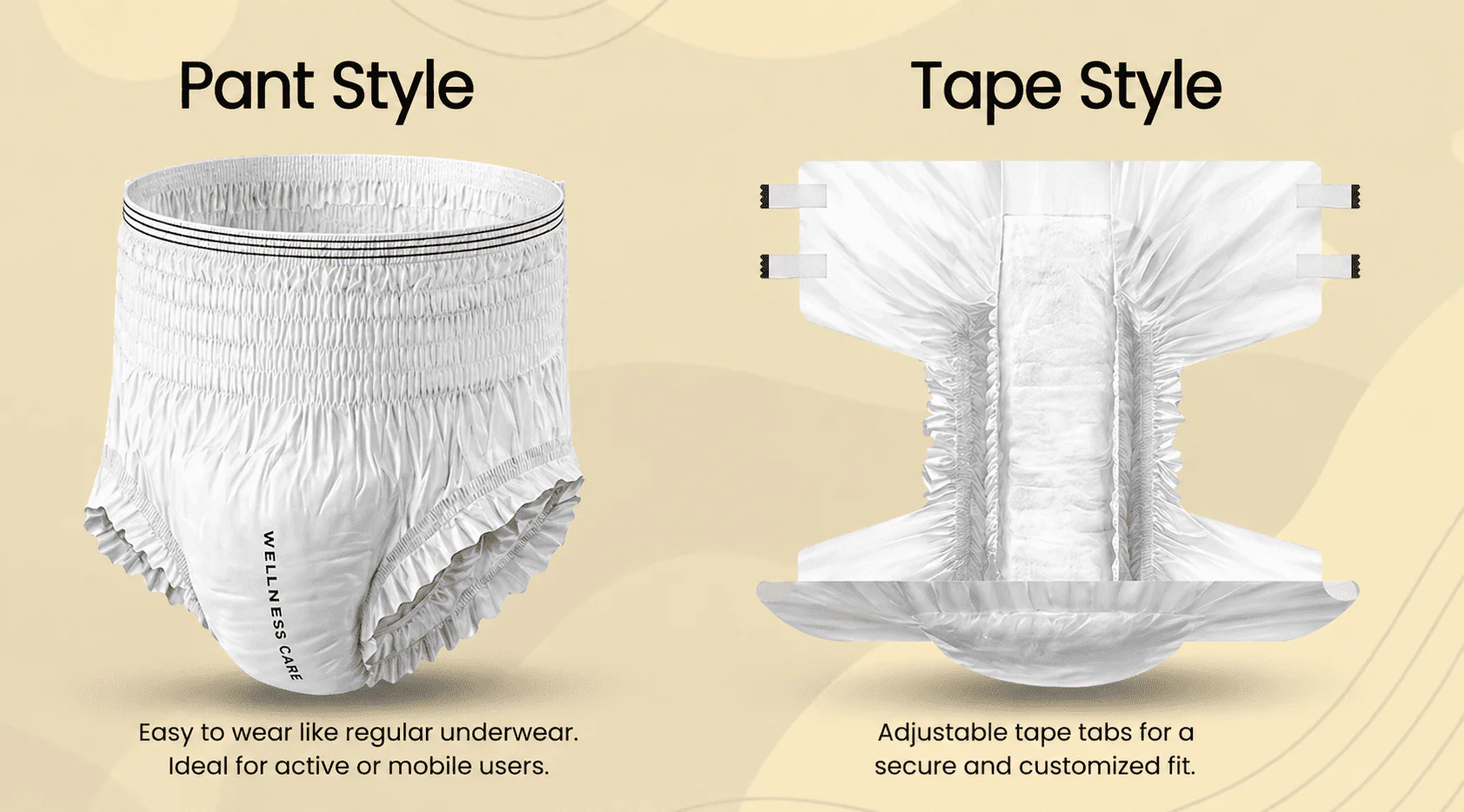
- 1. Pant-Style Diapers (Pull-Ups): Worn like regular underwear with a 360° waistband. Best for: Active adults who walk and use toilets independently.
- 2. Tape-Style Diapers (Chipkane Wale Diaper): Opens flat and fastens with adhesive tabs. Best for: Bedridden, paralyzed, or post-surgery patients needing caregiver bed changes.
- 3. Washable Cloth Diapers: Reusable fabric covers with cotton inserts. Best for: Very mild daytime dribbling only. However, wet cloth triggers painful rashes during heavy leaks.
Golden Rule: If your loved one walks independently, choose Pant Style. If they remain in bed, choose Tape Style. Avoid cloth diapers for heavy overnight care.
Choosing an adult diaper is about matching the product to your loved one’s daily mobility and dignity. For instance, putting pull-up pants on a bedridden elder leads to painful hip twisting. Conversely, forcing an active senior to wear a bulky tape diaper damages their confidence.
In this guide, we break down the clinical differences between tape-style adult diapers vs pull-up diapers vs cloth diapers. Furthermore, we address common absorbency myths and outline the Mobility-First Framework to help you choose the best diaper.
1. Tape vs. Pant vs. Cloth Diapers: Complete 3-Way Comparison
The comparison matrix below details how all three diaper formats perform across absorbency, caregiver ergonomics, and rash safety:
| Feature | Pant-Style Diapers (Pull-Ups) | Tape-Style Diapers (Chipkane Wale) | Washable Cloth Diapers |
|---|---|---|---|
| Wearing Method | Stepped into and pulled up like regular underwear. | Opens flat; fastened around the waist with adhesive tabs while lying down. | Fastened with snap buttons or velcro ties like a reusable cover. |
| Ideal Mobility Level | Active to Moderate: Walking, traveling, or visiting toilets independently. | Low to Bedridden: Immobile, post-stroke, fracture, or paralyzed patients. | Mobile: Mild dribbling only; unsuited for heavy flow. |
| Caregiver Assistance | None to minimal; preserves user privacy. | Essential; allows a solo caregiver to change the brief using a side-roll. | Requires frequent daily changes plus heavy laundry washing. |
| Absorbency Technology | 1,800 – 2,400 ml (Japanese Sumitomo SAP locks liquid into dry gel). | 1,800 – 2,400 ml (High-density SAP core with wide back leak wings). | 300 – 600 ml (Cotton or microfiber inserts; saturates rapidly). |
| Overnight Leak Protection | Up to 12–14 hours of continuous dryness. | Up to 14–16 hours of overnight leak lock. | Leaks within 2 to 3 hours under adult urine volume. |
| Skin Health & Rash Risk | Low risk; 100% breathable fabric keeps moisture away from skin. | Low risk; breathable backsheet prevents bedsores and diaper rash. | High Risk: Wet cloth stays pressed against skin, causing severe rash (IAD). |
| Bowel Incontinence Handling | Tear-away side seams allow quick removal. | Opens completely flat for clean fecal cleanup without touching sheets. | Difficult and unpleasant to rinse and sanitize soiled fabric. |
| Cost & Convenience | Affordable factory-direct disposable care (₹27–₹33/piece). | Affordable disposable convenience (₹27–₹33/piece). | Reusable, but high water, detergent, and physical labor burden. |
2. The Truth About Cloth Diapers for Adults: Are They Worth It?
Many family caregivers consider reusable cloth diapers to save money. However, caring for an adult with incontinence is biologically different from diapering an infant:
Why Cloth Diapers Fail in Heavy Adult Incontinence
An adult releases 250 to 400 ml of urine in a single bladder void. While cloth diapers can absorb mild infant urine, they cannot handle adult volume:
- Lack of Super Absorbent Polymers (SAP): Specifically, cloth merely holds wetness like a sponge. When sitting, pressure forces urine back onto the skin.
- High Risk of Incontinence-Associated Dermatitis (IAD): Prolonged contact with wet cotton destroys the skin barrier. Consequently, this creates painful ulcers in elderly adults.
- Caregiver Laundry Fatigue: Moreover, washing 4 to 6 soiled adult cloth diapers daily requires immense time, hot water, and sanitization.
Conclusion: Cloth diapers are suitable only for very light daytime dribbling. In contrast, for moderate to heavy incontinence, disposable pull-up pants or tape diapers are medically superior.
3. The Absorbency Myth: Which Diaper Holds More Urine?
A common misconception in India is that tape-style diapers inherently hold more urine than pant-style diapers. Clinically, this is untrue.
Specifically, absorbency is determined solely by the volume of its Super Absorbent Polymer (SAP) core. It is not determined by the fastening method. Therefore, both BonBon Adult Diaper Pants and BonBon Tape Diapers feature Japanese Sumitomo SAP. They absorb 1,800 to 2,400 ml of fluid and lock wetness into dry gel within seconds.
The reason tape diapers are recommended for bedridden overnight care is gravitational positioning. When an elder sleeps on their side, tape diapers have wider back wings. As a result, these wings catch sideways pooling more effectively.
4. Decision Matrix: Match Your Situation to the Best Style
Therefore, match your loved one’s medical situation to our recommendation table below to choose the best style:
| Patient Situation / Requirement | Recommended Style | Clinical Reason |
|---|---|---|
| Walking Independently / Social Outings | PANT STYLE | Feels like normal underwear; preserves dignity and allows normal bathroom visits without assistance. |
| Completely Bedridden / Paralyzed | TAPE STYLE | Changed easily using the side-roll technique without lifting the patient. Read our guide to adult diapers for bedridden patients. |
| Solo Caregiver / Back Strain | TAPE STYLE | A single caregiver can roll the patient, replace the brief, and fasten tabs without heavy lifting or spinal strain. |
| Dementia / Alzheimer’s (Undressing Risk) | TAPE STYLE | Patients with cognitive decline often pull off pant diapers. Tape diapers can be secured firmly under clothing, deterring unfastening. |
| Post-Surgery Recovery (Prostate / Fracture) | TAPE STYLE | Eliminates the risk of dislodging urinary catheters or straining painful surgical incisions. Check our post-prostate surgery recovery guide. |
| Postpartum / Maternity Bleeding | PANT STYLE | Convenient pull-up fit provides comfortable, leak-free recovery for new mothers. See our incontinence after delivery guide. |
| Dual Urine & Bowel Incontinence | TAPE STYLE | Tape briefs open completely flat, allowing hygienic fecal cleanup without dragging stool along thighs. |
| Frequent Nighttime Urination (Nocturia) | HYBRID APPROACH | Use pant diapers during the day for active mobility, and switch to tape diapers at night for 14 hours of sleep. Read our nocturia solutions guide. |
5. Step-by-Step Wearing Instructions
How to Wear Pull-Up Pant Diapers (Self-Wear Method)
- Verify Size & Orientation: First, locate the colored waist threads or “FRONT” indicator on the waistband.
- Step In While Seated: Next, sit down comfortably and slip both feet through the leg openings.
- Pull Up Smoothly: Then, stand up and pull the brief up over the thighs to the waist.
- Adjust Leg Cuffs: Run your finger along the inner groin to ensure the 3D standing leak barriers are upright.
- Tear-Away Removal: Finally, tear the side seams from top to bottom, roll the diaper up, and discard.
How to Wear Tape-Style Diapers (Solo Caregiver Side-Roll Method)
- Prepare the Brief: First, unfold the clean tape diaper lengthwise to activate the inner leak guards.
- Side-Roll Position: Next, roll the patient onto their side with knees bent. Tuck the folded edge of the diaper beneath their back.
- Roll to Opposite Side: Next, roll the patient over, remove the soiled brief, and unfold the clean wings flat.
- Fasten Lower Tabs: Then, roll the patient onto their back and fasten lower tapes angled upward.
- Fasten Upper Tabs: Finally, fasten upper tapes angled downward across the waist for a secure seal.
6. Skin Health: Preventing Diaper Rash in Both Styles
Trapped moisture can trigger Incontinence-Associated Dermatitis (IAD). Therefore, follow these dermatological rules to protect fragile elderly skin:
⚠️ 4 Non-Negotiable Skin Protection Rules
- Change Every 4 to 5 Hours: First, monitor the color-changing wetness indicator. Do not wait for complete overflow.
- No-Rinse Gentle Cleansing: Next, cleanse with warm water or pH-balanced wet wipes. Avoid harsh soaps that dry out skin.
- Apply Zinc Oxide Barrier Cream: Then, coat the groin area with zinc oxide barrier cream at diaper changes. Read our clinical guide on treating and preventing adult diaper rash (IAD).
- Choose Breathable Materials: Finally, ensure your diapers use non-woven, cloth-like backsheets rather than hot plastic films.
Frequently Asked Questions: Tape vs. Pull-Up vs. Cloth Diapers
1. Chipkane wale diaper ko kya kahate hain?
Chipkane wale diaper ko English mein Tape-Style Diaper ya Adult Brief with Tabs kaha jata hai. Isme dono taraf refastenable adhesive tabs hote hain. Isliye, bedridden ya bujurg mareezon ko bina khada kiye aasani se pehnaya ja sakta hai.
2. Are cloth diapers better than disposable tape or pant diapers?
Cloth diapers are eco-friendly for very light dribbling. However, for moderate to heavy adult incontinence, disposable tape and pant diapers are far superior. Specifically, disposable diapers lock fluid into dry gel using Japanese SAP. Consequently, this protects fragile senior skin from bedsores and rashes.
3. Which diaper holds more urine: tape-style or pull-up?
Neither style automatically holds more urine. Specifically, total absorbency depends entirely on the SAP core volume. Both BonBon Adult Diaper Pants and BonBon Tape Diapers feature high-capacity SAP cores. They hold 1,800 to 2,400 ml with up to 16 hours of dry protection.
4. Can a bedridden patient wear pull-up diapers?
While possible, pull-up diapers are not recommended for bedridden patients. Specifically, pulling a pant diaper over legs requires lifting the patient’s body weight. This puts severe physical strain on the caregiver’s back. In contrast, tape-style diapers are designed specifically for bedridden care.
5. What is the hybrid diapering routine?
The hybrid routine is a popular and cost-effective care approach used by Indian families. For instance, families use pull-up pants during the day to encourage active mobility. Subsequently, they switch to tape diapers at night for maximum containment and easier bed changes.
Find the Perfect Diaper for Your Loved One
BonBon offers direct-from-factory pricing (₹27–₹33/piece) across 14-Hour Overnight Tape Diapers and Breathable Pull-Up Pants. Both styles feature 1,800–2,400 ml absorbency and standing leak guards.
📞 Call: +91 73046 46649 | 📧 Email: inquires@bonbonindia.com


