


Incontinence-Associated Dermatitis (IAD): What Caregivers Need to Know

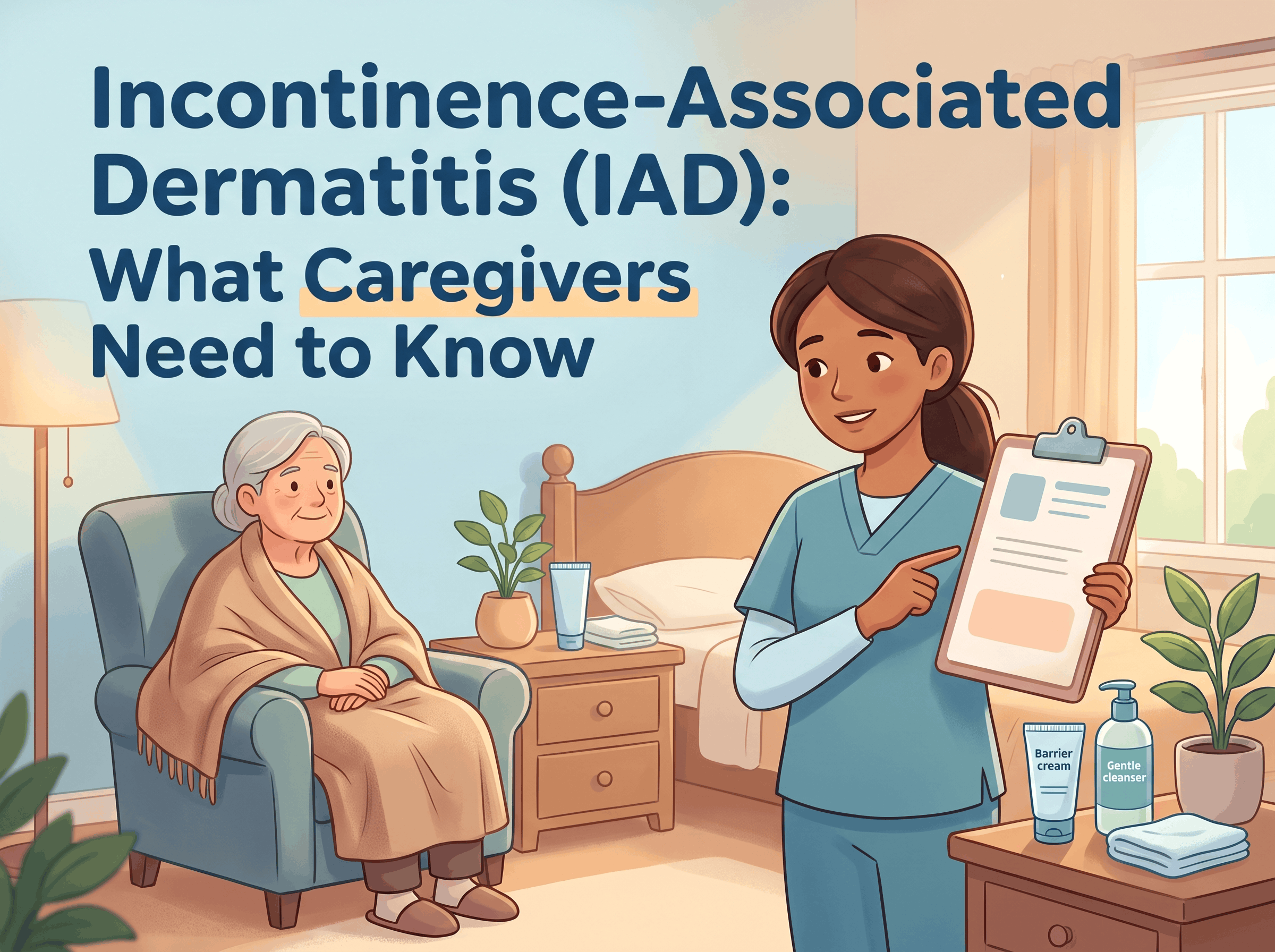
What it is: A painful skin condition caused by prolonged exposure to urine or faeces. It looks like redness, swelling, and sometimes blisters in the diaper area.
What to do today: Cleanse gently (no soap), apply a zinc oxide barrier cream, and change the diaper more frequently.
When to see a doctor: If the skin is broken, oozing, or shows signs of infection (foul smell, pus, spreading redness).
Best prevention: Breathable, high-absorbency diapers changed every 4-6 hours.
Incontinence-associated dermatitis (IAD) is one of the most common skin problems in people who use adult diapers. It affects up to 50% of patients in long-term care settings and is a leading cause of discomfort, infection, and pressure ulcers.
Medical journals describe it as “irritant contact dermatitis” with “erythema” and “maceration.” But if you’re a caregiver, here’s what matters: your loved one is in pain, and you can fix it.
What Is IAD? (In Plain English)
IAD is skin damage caused by sitting in urine or faeces for too long. It’s not an allergy. It’s not a hygiene failure. It’s a chemical burn.
Here’s what happens:
- Urine changes the skin’s pH — making it alkaline instead of slightly acidic.
- Faeces contain enzymes that literally digest the top layer of skin.
- Moisture softens the skin — like a raisin, it becomes wrinkled and fragile.
- Friction from the diaper rubs the weakened skin raw.
The result: redness, swelling, pain, and in severe cases, open weeping sores.
Who Gets IAD?
Anyone in diapers can develop IAD. But the risk is highest for:
- Older adults — skin thins with age.
- Bedridden patients — less air circulation, more friction.
- People with diarrhoea — stools are more irritating.
- People with dual incontinence (urine + stool) — highest risk.
- Patients on antibiotics — changes skin bacteria.
- People with diabetes — skin heals slower.
IAD vs Pressure Ulcer vs Diaper Rash
These three conditions look similar but need different treatments. Use this table to tell them apart.
| Feature | IAD | Pressure Ulcer | Diaper Rash |
|---|---|---|---|
| Where it appears | Buttocks, perineum, inner thighs | Over bony areas (tailbone, hips, heels) | Anywhere in diaper area |
| Cause | Moisture + friction + urine/stool | Pressure + shear (staying in one position) | Irritation, yeast, or bacteria |
| How it looks | Diffuse redness, shiny, may weep | Distinct edges, crater-like, may have black tissue | Red bumps, patches, usually superficial |
| Pain level | High — burns and stings | Varies — often less painful than it looks | Mild to moderate |
| What to do | Barrier cream + change more often | Repositioning + wound care | Barrier cream + air time |
Important: People with IAD are 10 times more likely to develop a pressure ulcer. Treating IAD early prevents this complication.
What Causes IAD?
IAD happens when the skin’s protective barrier is broken down. Four factors cause this:
- Moisture: Softens skin, making it fragile.
- Chemical irritation: Urine raises pH; stool enzymes digest skin.
- Friction: Diaper rubbing damages already weakened skin.
- Bacteria: Normal skin bacteria convert urea into ammonia, further damaging skin.
How to Treat IAD: The 3-Step Protocol
Every medical guideline (Springer, DermNet, Wounds International) agrees on the same three steps: Cleanse → Protect → Care.
Step 1: Cleanse
Do this:
- Clean the skin after every episode of incontinence.
- Use a pH-balanced, no-rinse cleanser or soft disposable wipes.
- Pat dry gently — do not rub.
Do NOT:
- Use regular soap. Soap strips the skin’s natural oils and raises pH.
- Use hot water. Warm water only.
- Use washcloths with texture — they cause friction.
Step 2: Protect
Do this:
- Apply a barrier cream after every cleanse.
- Look for creams containing zinc oxide, petrolatum, or dimethicone.
- Apply a thick, visible layer — this is a “protective coat,” not a moisturizer.
Do NOT:
- Skip the barrier cream because “it looks fine.” Prevention is key.
- Use heavily fragranced creams — they can cause allergic reactions.
Step 3: Care
Do this:
- Give the skin air time between changes (10-15 minutes when possible).
- Moisturize the rest of the body twice daily to keep skin resilient.
- Check the skin daily for early signs of redness or irritation.
How to Prevent IAD
Prevention is easier and cheaper than treatment. Here’s how:
- Change diapers every 4-6 hours — or immediately after soiling.
- Choose breathable, high-absorbency diapers. These wick moisture away from skin faster.
- Apply barrier cream at every change — even when skin looks healthy.
- Ensure proper fit. A diaper that’s too tight causes friction; too loose causes leaks.
- Avoid over-washing. Too-frequent cleansing damages skin.
- Monitor skin daily. Early detection makes treatment easier.
Choosing the Right Diaper to Prevent IAD
Not all adult diapers are equal when it comes to skin health. Look for these features:
| Feature | Why It Matters |
|---|---|
| Breathable materials | Allows air circulation, reduces moisture and heat buildup. |
| High absorbency (SAP core) | Locks moisture away from skin quickly. |
| pH-balanced top sheet | Maintains skin’s natural pH, reduces irritation. |
| Wetness indicator | Shows when a change is needed, prevents prolonged exposure. |
| Leak guards | Prevents side leakage, reduces friction. |
Our adult diaper pants and tape-style diapers are designed with breathable, skin-friendly materials. For bedridden patients, see our guide to changing diapers for bedridden patients. For more on skin health, see our diaper rash prevention guide.
Frequently Asked Questions
Q: Is IAD the same as a pressure ulcer?
A: No. IAD is caused by moisture and irritants. Pressure ulcers are caused by pressure and shear (staying in one position). They look different and need different treatment. However, people with IAD are 10x more likely to develop a pressure ulcer.
Q: How long does IAD take to heal?
A: With proper treatment (cleansing + barrier cream), mild IAD can improve in 3-7 days. Severe IAD may take 2-4 weeks. If it doesn’t improve, see a doctor.
Q: Can IAD be prevented?
A: Yes. Frequent changes, gentle cleansing, barrier creams, and breathable diapers can prevent most cases.
Q: When should I see a doctor?
A: See a doctor if the skin is broken, oozing, bleeding, or shows signs of infection (pus, foul odor, spreading redness). Also see a doctor if IAD doesn’t improve after 1 week of home care.
Q: What is the best barrier cream for IAD?
A: Zinc oxide, petrolatum, or dimethicone-based creams are recommended. Avoid heavily fragranced products. The most important thing is to apply a thick layer at every change.
Q: Can adult diapers cause IAD?
A: Diapers don’t cause IAD directly — but prolonged exposure to urine and stool does. Wearing a diaper that’s too small, doesn’t breathe, or is left on too long increases the risk.
Need Help Choosing Skin-Safe Adult Diapers?
BonBon offers breathable, high-absorbency diapers designed for sensitive skin. Free delivery across India.
🛒 Shop Adult Diapers 💬 Ask on WhatsApp