


Brown Urine Causes: Tea-Colored Pee, Liver & Kidney Signs

What Causes Brown or Tea-Colored Urine?
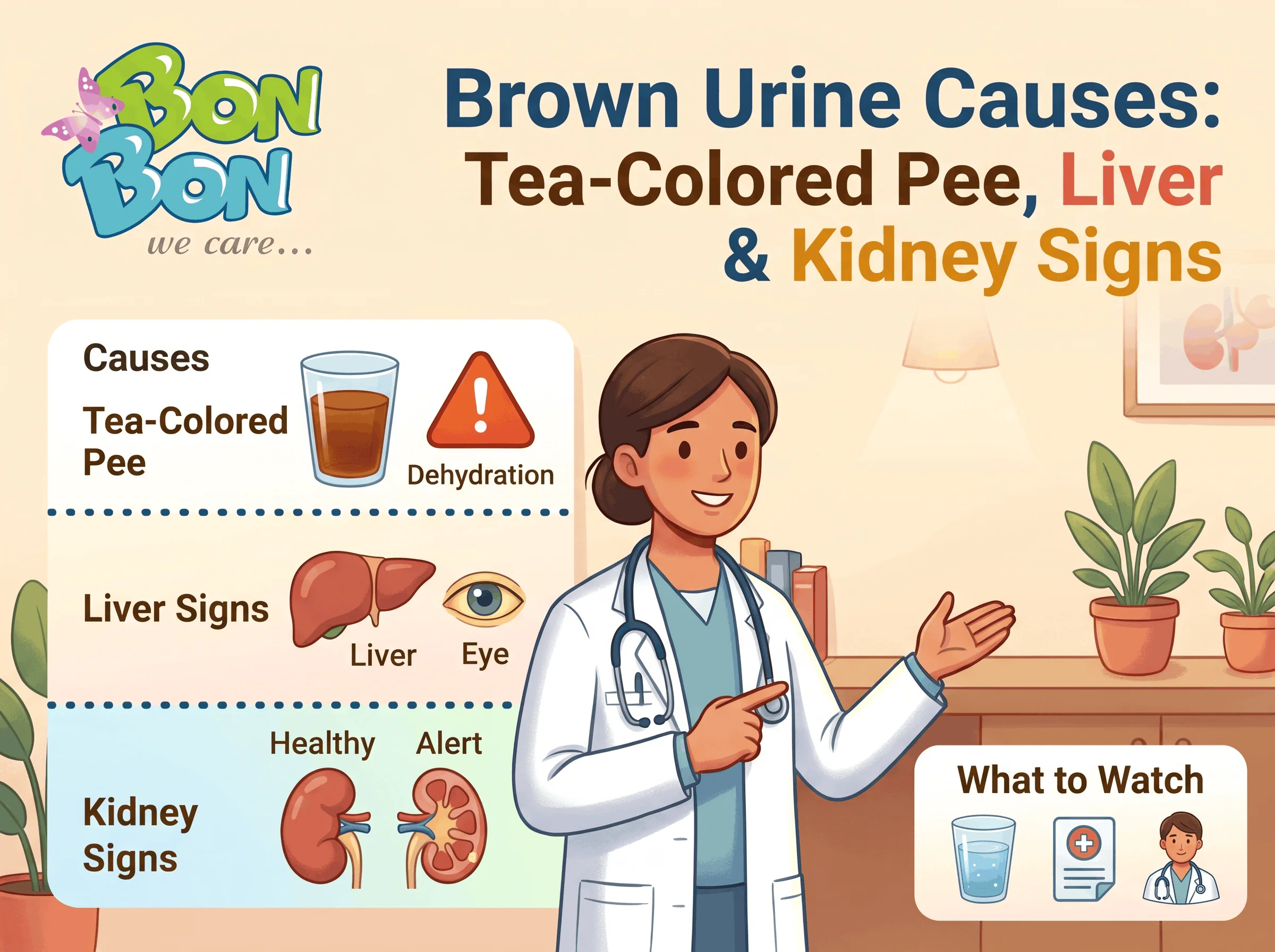
Brown urine causes range from benign dehydration and dietary factors to critical liver, kidney, and muscular disorders. While dark amber urine often clears with rehydration, persistent tea-colored, cola-colored, or muddy brown urine is primarily caused by:
- Liver and Bile Duct Disorders: High blood levels of bilirubin leaking into urine due to hepatitis, cirrhosis, or gallstone obstruction (frequently accompanied by pale clay-colored stools and yellow eyes/skin).
- Kidney Disease & Glomerulonephritis: Old, oxidized red blood cells leaking through damaged renal filters (Post-Streptococcal Glomerulonephritis, IgA Nephropathy, or Stage 4–5 CKD).
- Rhabdomyolysis (Severe Muscle Breakdown): Release of toxic myoglobin protein into the bloodstream following intense workouts, elderly falls with prolonged lying down, trauma, or statin medications.
- Prescription Medications: Antibiotics like Metronidazole (Flagyl) and Nitrofurantoin, antimalarials (Chloroquine/Primaquine), senna laxatives, and iron supplements.
- Severe Dehydration: Extreme concentration of natural urochrome pigments during heat exhaustion or severe illness.
Immediate Rule: If drinking 3–4 glasses of water does not lighten your urine within 4 to 6 hours, or if brown urine is accompanied by pale stools, jaundice, or muscle aches, seek prompt medical evaluation.
Discovering brown or dark brownish urine in the toilet can be deeply alarming. In medical urology and nephrology, brown urine is categorized into distinct clinical patterns: tea-colored urine (associated with bilirubin and liver inflammation), cola-colored urine (hallmark of kidney glomerular bleeding), and muddy-brown or burgundy urine (typical of muscle-breakdown myoglobinuria).
This comprehensive clinical guide breaks down the primary brown urine causes, outlines how to differentiate liver issues from kidney disease, reviews common Indian prescription triggers, and provides clear care guidance for elderly patients experiencing sudden weakness and involuntary urinary leakage.
Master Diagnostic Matrix: Differentiating Brown Urine Causes
Because brown urine can stem from several completely different organ systems, physicians evaluate accompanying symptoms to identify the root cause:
| Underlying Cause | Visual Urine Appearance | Accompanying Symptoms | Key Diagnostic Tests |
|---|---|---|---|
| Severe Dehydration | Deep amber to light brown; clear consistency without sediment | Extreme thirst, dry mouth, dizziness, dark sunken eyes, infrequent urination | Urine Specific Gravity (> 1.025), Serum Electrolytes |
| Liver / Bile Duct Disease | Tea-colored, dark yellowish-brown; yellow foam when shaken | Pale/clay-colored stools, yellowing skin/eyes (jaundice), pruritus (skin itching), fatigue | Liver Function Tests (Total & Conjugated Bilirubin, SGOT, SGPT), USG Abdomen |
| Kidney Glomerulonephritis | Cola-colored, dark reddish-brown, smoky appearance | Facial/leg swelling (edema), high blood pressure, reduced urine output, foamy bubbles | Urinalysis (RBC casts, Proteinuria), KFT/Creatinine, Complement C3, ASO titer |
| Rhabdomyolysis (Muscle Injury) | Dark reddish-brown to muddy brown / Pepsi-colored | Severe muscle tenderness, stiffness, profound weakness, history of fall or heavy workout | Serum Creatine Kinase (CPK/CK > 5x normal), Urine Myoglobin, Serum Potassium |
| Prescription Medications | Uniform brown or rust-tinted; no sediment or pain | No systemic illness; started new antibiotic (Flagyl), senna, or antimalarial drug | Drug history review; color normalizes 24–48 hrs after stopping medication |
| Old Blood (Hematuria) | Dark brown, brownish-pink with occasional small clots | Flank or groin pain (stones), burning during urination (cystitis), prostate enlargement | Routine Urinalysis (intact RBCs), USG KUB, Urine Culture |
Visual Shade Guide: What Your Brown Urine Shade Reveals
1. Deep Amber to Light Brown (Hyper-Concentrated Urine)
Occurs when water deprivation, hot Indian weather, fever, or fluid loss from diarrhea drastically concentrates urochrome pigments. Unlike liver or muscle conditions, rehydrating with 1 to 1.5 liters of clean water, coconut water, or ORS typically dilutes the urine back to pale yellow within hours. Learn more in our guide on dark yellow and amber urine causes & remedies.
2. Tea-Colored Urine (Bilirubin & Liver Dysfunction)
A classic brownish-orange or strong black-tea color is the hallmark of bilirubinuria. Normally, bilirubin is processed by the liver and excreted through bile into the intestines (giving stool its brown color). When liver cells are inflamed (hepatitis) or bile ducts are blocked (gallstones or pancreatic compression), conjugated bilirubin spills into the bloodstream and filters through the kidneys. Stools frequently turn chalky or pale gray. If your urine has a brighter citrus tone, read our guide on orange urine causes.
3. Cola-Colored Urine (Glomerular Bleeding & Kidney Damage)
Urine resembling dark Coca-Cola or iced tea indicates glomerular hematuria. When the kidney’s microscopic filtering units (glomeruli) become acutely inflamed, red blood cells escape into the renal tubules. As these RBCs travel through acidic tubular fluid, their hemoglobin oxidizes into dark methemoglobin, creating a smoky cola shade. If accompanied by frothy bubbles, explore our guide on foamy bubbly urine causes and kidney failure.
4. Muddy Brown / Burgundy Urine (Rhabdomyolysis & Myoglobinuria)
A dark muddy brown or burgundy color indicates myoglobinuria, caused by rapid skeletal muscle breakdown. Damaged muscle cells release vast quantities of myoglobin, which clogs delicate renal filters and triggers acute tubular necrosis (kidney shutdown). Common in elderly patients who fall and remain trapped on the floor for hours, patients taking statins combined with fibrates, or following heat stroke.
Top 6 Clinical Causes of Brown Urine in Detail
1. Liver Diseases and Obstructive Jaundice
The liver is responsible for clearing bilirubin from the breakdown of aging red blood cells. When hepatic function is compromised, water-soluble conjugated bilirubin accumulates in circulation and is filtered into the bladder:
- Viral Hepatitis (A, B, C, E): Common in India via contaminated water (Hepatitis A and E) or blood exposure. Tea-colored urine is often the very first clinical sign before obvious jaundice appears.
- Liver Cirrhosis: Advanced scarring from non-alcoholic fatty liver disease (NAFLD), chronic hepatitis, or alcohol consumption impairing bilirubin clearance.
- Biliary Obstruction: Gallstones lodged in the common bile duct or extrinsic compression causing dark urine accompanied by severe right upper quadrant abdominal pain and light-colored stools.
2. Kidney Diseases and Acute Glomerulonephritis
Kidney-related brown urine occurs when blood originates high up in the renal parenchyma rather than the lower urinary tract:
- Post-Streptococcal Glomerulonephritis (PSGN): Occurs 1 to 3 weeks after a strep throat or skin infection (impetigo), commonly producing classic cola-colored urine in children and young adults.
- IgA Nephropathy (Berger’s Disease): An autoimmune condition causing episodes of dark, tea-colored urine shortly after upper respiratory infections.
- Chronic Kidney Disease (CKD Stages 4 & 5): Advanced renal damage impairs fluid balance, creating highly concentrated, dark brownish urine alongside reduced urine volume (oliguria). For fresh red bleeding, consult our guide to blood in urine (hematuria).
3. Rhabdomyolysis: Muscle Trauma & Elderly Falls
Rhabdomyolysis is a medical emergency that directly threatens kidney function. Key causes include:
- “Long Lie” in Elderly Individuals: An older adult who suffers a fall and lies on the floor for several hours experiences pressure necrosis of muscle tissue, releasing massive amounts of myoglobin into the blood.
- Medication Interactions: Cholesterol-lowering statins (Atorvastatin, Rosuvastatin), especially when combined with fibrates, antifungals, or in patients with thyroid dysfunction.
- Extreme Physical Exertion: Strenuous marathon running, intense unaccustomed gym training, or high fever with severe heatstroke.
4. Medications That Turn Urine Brown
Several widely prescribed medications produce harmless, temporary brown discoloration due to metabolic breakdown products:
- Antibiotics: Metronidazole (Flagyl) for amoebiasis and gut infections; Nitrofurantoin (Macrobid) for UTIs.
- Antimalarials: Chloroquine and Primaquine, frequently prescribed across India for malaria treatment and prophylaxis.
- Laxatives: Senna-based herbal teas and tablets (Senokot, Ayurvedic constipation churnas) oxidize into dark brown or reddish-brown compounds in alkaline urine.
- Muscle Relaxants & Neurological Drugs: Methocarbamol, Phenytoin (Dilantin), and Levodopa (for Parkinson’s disease).
- Iron Supplements: High-dose oral iron tablets or intravenous iron sucrose infusions.
5. Dietary Triggers
Consuming large quantities of specific foods can transiently tint urine brownish: fava beans (bakla), rhubarb, large amounts of aloe vera juice, or heavily brewed dark teas. If dietary in origin, urine color normalizes within 24 hours after discontinuing the food.
6. Old Blood from Lower Urinary Tract Infections & Stones
While fresh bleeding from bladder stones or bacterial cystitis appears pink or bright red, slow bleeding that pools in the bladder oxidizes over several hours into dark brownish flakes or cloudy iced-tea colored urine. Read our guide to cloudy urine causes and pus cells or review burning sensation in urine.
- Yellowing of eyes, tongue, or skin (jaundice) + confusion (hepatic encephalopathy).
- Inability to pass urine for more than 8–12 hours (acute renal anuria).
- Profound muscle weakness where the patient cannot stand or lift limbs.
- High fever (>101°F) with shaking chills and severe lower flank pain.
- Coughing up blood or widespread unexplained bruising.
Medical Tests: How Doctors Diagnose Brown Urine in India
When you present to a clinic or hospital with dark brown urine, physicians run a targeted diagnostic battery to pinpoint the source:
| Diagnostic Investigation | What It Evaluates | Clinical Interpretation |
|---|---|---|
| Routine Urinalysis & Microscopy | Urine dipstick, RBCs, pus cells, casts, and chemical markers | Positive for bilirubin = liver issue; positive for blood without RBCs on microscope = myoglobinuria; RBC casts = glomerulonephritis. |
| Liver Function Tests (LFT) | Total Bilirubin, Direct/Indirect Bilirubin, SGOT (AST), SGPT (ALT), Alkaline Phosphatase | High conjugated bilirubin and elevated transaminases confirm acute hepatitis or biliary tract obstruction. |
| Kidney Function Test (KFT / RFT) | Serum Creatinine, Blood Urea Nitrogen (BUN), eGFR, Electrolytes | Elevated creatinine and urea indicate acute kidney injury (AKI) or advancing chronic kidney failure. |
| Serum Creatine Kinase (CPK / CK) | Muscle enzyme levels in blood | Levels exceeding 1,000–10,000 U/L definitively diagnose active rhabdomyolysis and severe muscle damage. |
| Ultrasound Abdomen & Pelvis (USG KUB) | Acoustic imaging of liver, gallbladder, kidneys, and urinary bladder | Detects gallstones, bile duct dilation, kidney stones, hydronephrosis, or structural organ masses. |
Managing Bladder Leaks & Incontinence in Acute Illness
Underlying causes of brown urine—such as severe liver failure, acute kidney impairment, elderly post-fall trauma, and diabetic complications—frequently cause profound physical exhaustion, altered consciousness, and involuntary urinary incontinence. Concentrated, toxic urine rapidly irritates fragile skin, leading to severe incontinence-associated dermatitis (IAD) and painful bedsores:
To decode medical terms on hospital admission records, read our clinical guide on incontinence meaning, types, and management.
- For Bedridden or Recovering Patients: Use BonBon 12-Hour Tape Diapers. Refastenable side tabs allow caregivers to change briefs using the gentle side-rolling technique without painful lifting. Built-in color-changing wetness indicators let you monitor diaper saturation instantly. Read our complete care guide for bedridden patients.
- For Mobile Adults Experiencing Urgency: BonBon Pull-Up Diaper Pants offer underwear-like discretion with high-capacity Japanese SAP cores (1,000–1,600 ml) for 10–12 hours of dry leak protection.
- Diaper Style Dilemma? Compare both designs in our clinical breakdown of tape style vs pull-up adult diapers.
- Check Correct Sizing: Prevent groin leakage by referencing our verified adult diaper size chart guide.
- Brand Comparison: See how BonBon’s direct-from-factory pricing (₹27–₹33/piece) compares with Friends, Lifree, and KareIn in our guide to the best adult diaper brands in India.
