


Jaundice Urine Color: Causes, Bilirubin Levels & Early Warning Signs

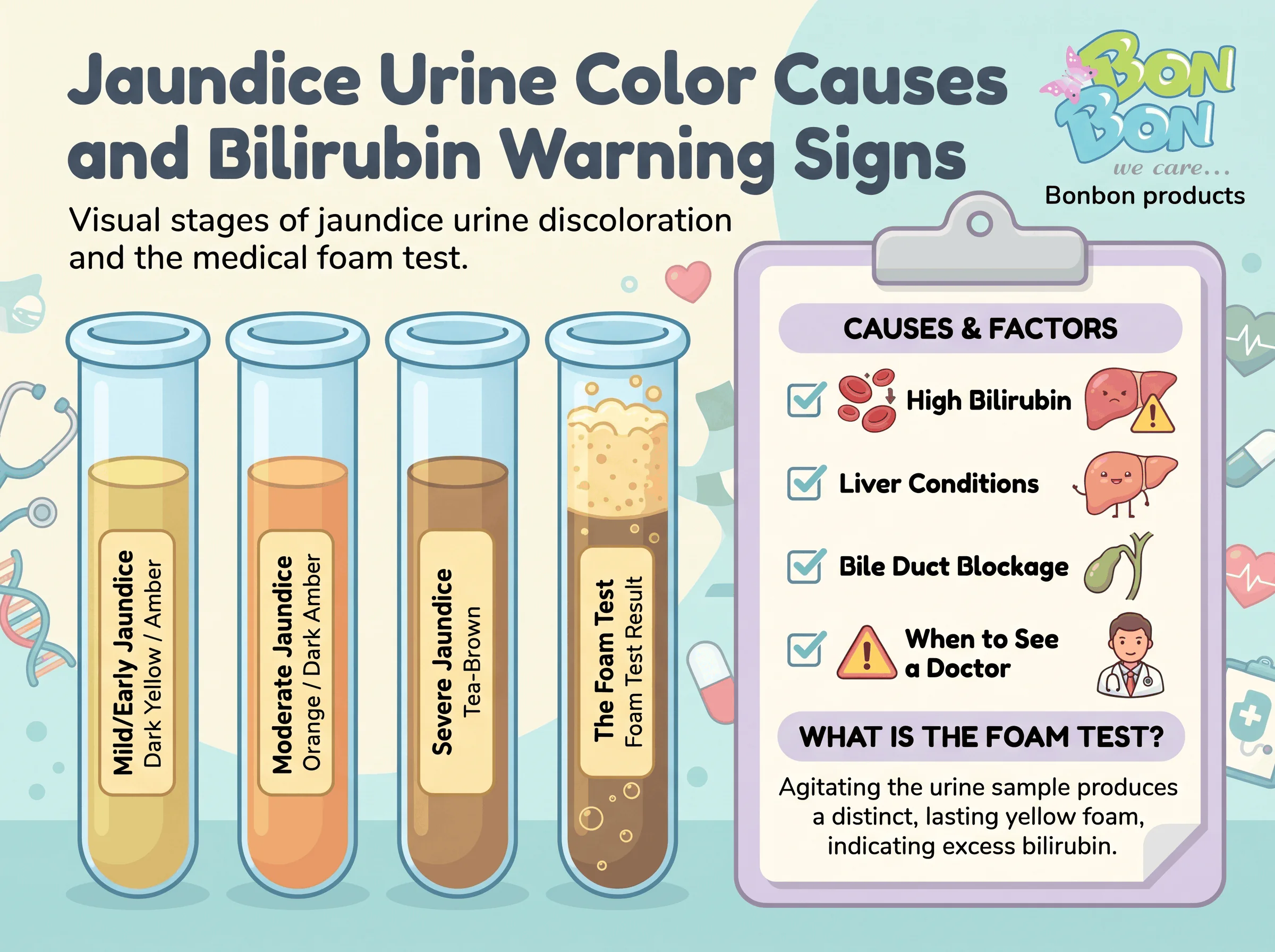
What Is the Urine Color in Jaundice?
In jaundice, the urine color typically transforms into deep golden-amber, dark orange, or dark tea/cola brown. Specifically, this discoloration—known clinically as bilirubinuria—occurs when an inflamed liver or obstructed bile duct causes water-soluble conjugated bilirubin to spill into the bloodstream and filter through the kidneys. In fact, dark urine is frequently the very first clinical sign of jaundice, appearing several days before visible yellowing of the eyes or skin.
1. What Does Jaundice Urine Look Like? (Visual Stages & The Foam Test)
Under healthy conditions, human urine displays a transparent pale straw or light yellow tint. However, when liver function suffers impairment, excess bile pigments rapidly flood the urinary tract. Consequently, the shade deepens predictably as blood bilirubin concentrations rise.
Initially, mild bilirubin elevation produces an unusually intense golden-amber shade. In fact, many individuals mistakenly attribute this early discolouration to ordinary morning dehydration. Explore our clinical review of dark yellow and amber urine causes.
As conjugated bilirubin levels exceed 2.0 mg/dL, the liquid darkens into a glowing orange or rusty tea hue. Furthermore, this stage often coincides with systemic fatigue and reduced appetite. Learn more in our guide on orange urine causes and remedies.
In severe obstructive jaundice, bile flow into the intestines is almost completely blocked. Consequently, heavy urinary bilirubin excretion turns pee into a dark cola or soy sauce shade. Read our comprehensive analysis of brown urine causes and liver symptoms.
The Classic Medical “Foam Test” for Bilirubinuria
Physicians frequently perform a simple visual test to confirm liver-related urine discoloration. Specifically, when you shake a sample of normal, concentrated urine, the resulting bubbles or foam remain pure white. In contrast, if your urine contains conjugated bilirubin from jaundice, the foam turns an unmistakable bright yellow or greenish-yellow. If your urine creates persistent white foam instead, reference our guide to foamy bubbly urine causes and kidney damage.
2. Why Does Jaundice Cause Dark Urine? (The Bilirubin Pathway)
Understanding the physiological mechanism behind jaundice helps demystify why urine changes color so abruptly. In the human body, red blood cells naturally degrade every 120 days, releasing an insoluble byproduct called unconjugated bilirubin. Subsequently, healthy liver cells absorb this pigment and bind it with glucuronic acid to produce water-soluble conjugated bilirubin.
Under normal circumstances, the liver excretes conjugated bilirubin through bile ducts directly into the intestines. In the digestive tract, intestinal bacteria convert it into stercobilin, which imparts the natural brown color to human stools. However, when liver cells become inflamed (as seen in viral hepatitis) or bile ducts are physically blocked by gallstones, conjugated bilirubin cannot exit into the gut. As a result, it backs up into the bloodstream, where the kidneys filter it into urine, causing dark bilirubinuria.
Consequently, this blockage produces the classic clinical hallmark of obstructive jaundice: dark tea-colored urine paired with pale, chalky, or clay-colored stools. Reference our master urine color chart guide for visual assessment across all bodily conditions.
3. Diagnostic Comparison: Jaundice Urine vs. Other Dark Shades
Because multiple conditions can darken urine, evaluating accompanying digestive and sensory symptoms is essential. For instance, the comparative matrix below outlines key differences between jaundice and common look-alikes:
| Condition | Urine Appearance | Foam Color When Shaken | Stool Appearance | Clears with Water? | Recommended Action |
|---|---|---|---|---|---|
| Jaundice (Bilirubinuria) | Dark amber, orange, or tea-brown | Bright yellow or greenish | Pale, grey, or clay-colored | No; persists regardless of hydration | Order Liver Function Tests (LFT) and abdominal ultrasound |
| Severe Dehydration | Golden yellow to dark amber | Pure white | Normal brown | Yes; normalizes within 2 to 4 hours | Drink 2–3 glasses of water, ORS, or coconut water |
| Blood in Urine (Hematuria) | Pink, crimson red, or smoky brown | Pinkish or white | Normal brown | No; requires diagnostic urinalysis | Consult a urologist promptly; see our blood in urine guide |
| Reddish Yellow Discoloration | Warm glowing amber-red | White or pale yellow | Normal brown | Partially; depends on cause | Explore our guide on reddish yellow urine causes |
| Medications (Rifampicin) | Vivid fluorescent orange-red | Orange or white | Normal brown | No; side effect of medication | Expected harmless pharmaceutical side effect |
4. The 5 Major Causes of Jaundice Urine in India
In clinical practice across India, physicians identify five primary hepatobiliary conditions that produce jaundice urine:
1. Acute Viral Hepatitis (Hepatitis A and E)
First, viral hepatitis A and E are widespread foodborne and waterborne infections, particularly following monsoon seasons. When the hepatitis virus inflames liver tissue, hepatocytes lose the ability to transport bile efficiently. Consequently, dark tea-colored urine appears alongside low-grade fever, nausea, loss of appetite, and upper right abdominal soreness.
2. Gallstones and Obstructive Jaundice (Choledocholithiasis)
Second, gallstones that slip out of the gallbladder can lodge firmly inside the common bile duct (CBD). Because bile cannot drain into the small intestine, conjugated bilirubin backs up rapidly into the vascular system. In addition, patients frequently suffer severe colicky abdominal cramps after consuming fatty meals.
3. Alcoholic Liver Disease and Cirrhosis
Third, chronic alcohol consumption causes progressive fatty liver infiltration, alcoholic hepatitis, and fibrous scarring (cirrhosis). As healthy liver cells diminish, bilirubin excretion fails, producing chronically dark urine, swollen abdominal ascites, and spider angiomas on the skin.
4. Drug-Induced Liver Injury (DILI)
Fourth, certain pharmaceutical regimens common in India can induce hepatotoxicity. Specifically, first-line anti-tuberculosis therapies (such as Isoniazid, Rifampicin, and Pyrazinamide) or excessive dosages of paracetamol can inflame hepatic cells. If you take TB medication and notice dark urine with abdominal discomfort, contact your treating physician immediately.
5. Hemolytic Jaundice (Malaria & Blood Disorders)
Fifth, conditions that trigger rapid red blood cell breakdown—such as severe Plasmodium falciparum malaria or thalassemia—overwhelm the liver with excess heme. Consequently, high levels of urobilinogen filter through the kidneys, resulting in dark, concentrated urine.
5. Medical Diagnosis: What Tests Detect Jaundice in India?
If you observe persistent dark amber or tea-colored urine, doctors routinely perform three affordable diagnostic investigations:
- Liver Function Test (LFT): This blood panel measures Total Bilirubin (normal is 0.2 to 1.2 mg/dL; visible jaundice occurs when levels surpass 2.5 to 3.0 mg/dL), Direct (Conjugated) Bilirubin, SGPT/ALT, SGOT/AST, and Alkaline Phosphatase (ALP).
- Routine Urine Test (Urine R/M): Specifically, this urinalysis checks for bile salts and bile pigments (Fouchet’s reaction) to confirm true bilirubinuria. Check normal report ranges in our guide to routine urine test reports & microscopy.
- Ultrasound Whole Abdomen (USG Abdomen): This non-invasive soundwave scan examines gallbladder stones, liver size, and biliary duct dilatation to rule out surgical blockages.
6. Jaundice, Senior Care & Incontinence Management
Patients recovering from acute hepatitis or chronic liver disease often experience severe physical weakness, nausea, and disorientation. Furthermore, clinical fluid management and diuretic medications frequently provoke sudden, uncontrollable urinary urgency (urge incontinence).
Protecting Fragile Skin During Jaundice Recovery
Bile pigments and highly concentrated urea irritate external skin folds rapidly, heightening the risk of painful incontinence-associated dermatitis (IAD). For active recovering seniors, BonBon Adult Diaper Pants provide breathable cloth-like softness and Japanese Super Absorbent Polymers (SAP) that lock caustic moisture away instantly.
Meanwhile, bedridden patients benefit from BonBon Tape-Style Diapers with a clean white inner lining that allows caregivers to visually inspect daily urine lightening or darkening without difficulty. Discover how to choose the right style in our comparison of tape vs. pull-up adult diapers.
7. When to Seek Immediate Medical Attention
Although some viral hepatitis cases resolve with supportive care and hydration, certain symptoms demand emergency medical consultation:
- High Fever with Shaking Chills: Suggests an infected, obstructed bile duct (acute cholangitis), which requires urgent antibiotics.
- Severe Persistent Abdominal Pain: Localized cramping in the right upper abdomen under the ribs.
- Confusion, Drowsiness, or Memory Lapses: Indicates toxic waste buildup affecting the brain (hepatic encephalopathy).
- Yellowing of Sclera (Eye Whites) & Clay-Colored Stools: Confirms active systemic cholestasis.
Frequently Asked Questions: Jaundice Urine Color
1. What is the difference between dehydration urine and jaundice urine?
Dehydration urine is caused by concentrated urochrome pigments, which clear to pale yellow within 2 to 4 hours of drinking 2 to 3 glasses of water. In contrast, jaundice urine contains conjugated bilirubin that does not lighten with hydration and produces yellow foam when shaken.
2. Does urine turn dark before the eyes turn yellow in jaundice?
Yes. In fact, dark amber or tea-colored urine is typically the earliest detectable sign of jaundice. Kidneys begin filtering water-soluble conjugated bilirubin when blood levels exceed 1.5 to 2.0 mg/dL, whereas yellowing of the eye whites (scleral icterus) usually becomes visible only after bilirubin exceeds 2.5 to 3.0 mg/dL.
3. What does yellow foam in urine indicate?
Yellow or greenish foam in urine strongly indicates the presence of bile pigments, particularly conjugated bilirubin. While normal urine foam is white and disperses quickly, bilirubin significantly lowers surface tension and imparts a vivid yellow froth.
4. How long does it take for urine color to return to normal after jaundice?
In acute viral hepatitis (Hepatitis A or E), urine color typically begins lightening within 1 to 2 weeks as hepatic inflammation subsides. However, complete normalization of liver enzymes and urine transparency can take 3 to 6 weeks depending on overall health and nutrition.
5. Can eating certain foods cause urine that looks like jaundice?
Yes. Consuming high quantities of carrots, pumpkin, or dietary beta-carotene supplements can cause carotenuria, creating bright yellow-orange urine. However, unlike true jaundice, carotenoids do not turn the sclera (eye whites) yellow and produce white, not yellow, foam.
